
CIVILISATIONS OF THE MEDITERRANEAN
By Publisher Ray Carmen
The Mediterranean’s greatest creation was not one empire, but the continuous exchange between many.
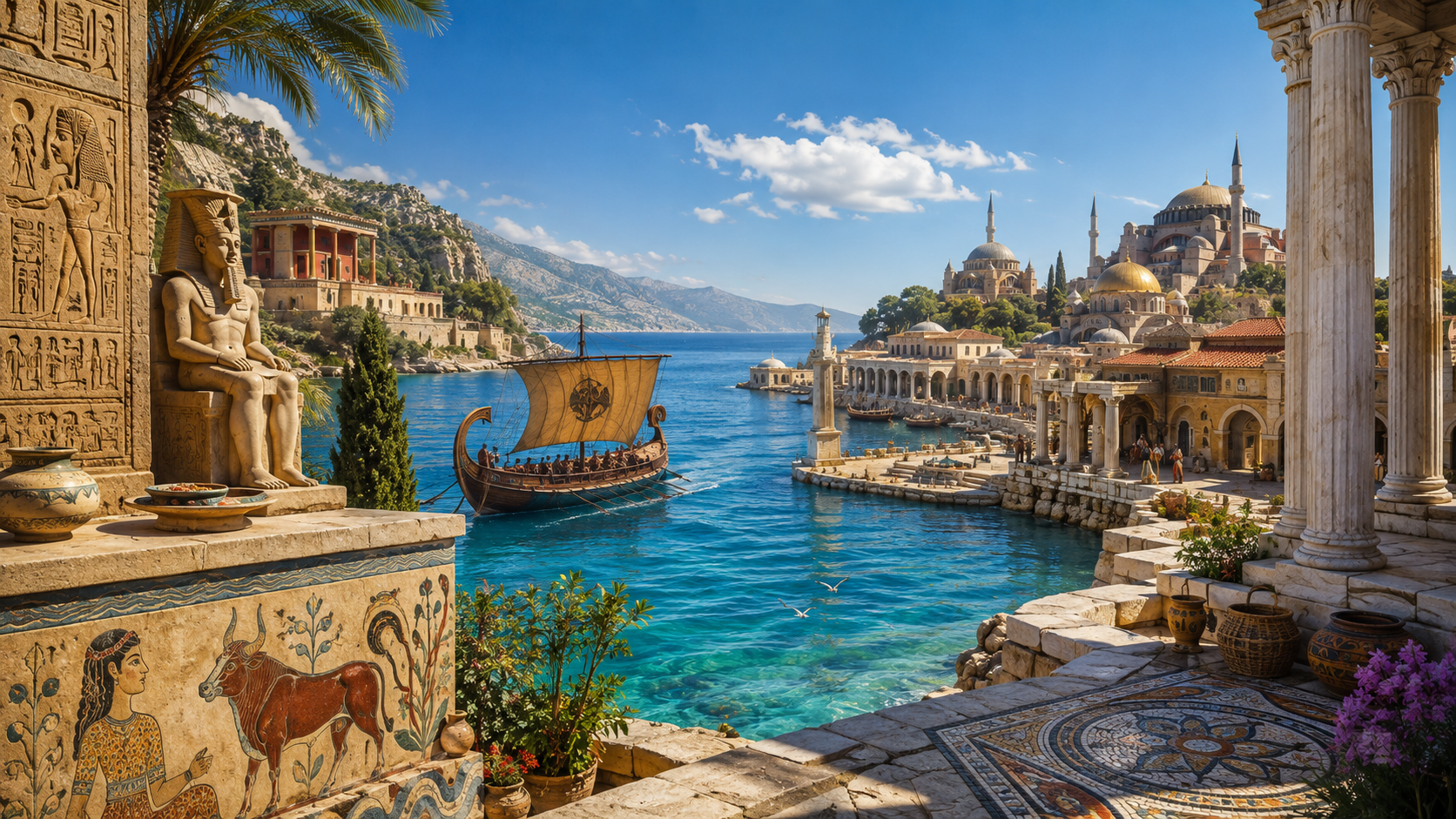
Egyptian ports looked north from the Nile Delta. Minoan Crete built a maritime culture whose palaces still inspire mystery. Phoenician sailors carried goods and alphabets westward from the Levant, founding trading settlements that included Carthage. Greek communities established cities around the sea, while Rome connected territories through law, roads, ports and an appetite for grain, wine and olive oil.
When western Roman authority fractured, Constantinople and the Byzantine world preserved an eastern imperial tradition. From the seventh century, Arab and Islamic civilisation transformed the southern and eastern shores and reached Iberia and Sicily. Scholarship, medicine, mathematics, architecture, agriculture and commerce crossed languages and faiths. Venice, Genoa and other maritime republics later built trading empires, while Ottoman power reshaped the eastern Mediterranean for centuries.
This was never a simple story of peaceful exchange. War, slavery, conquest, forced migration and colonial rule also marked the sea. Yet even rivals borrowed from one another. Architectural forms travelled; recipes absorbed new ingredients; scientific works were translated; merchants created practical relationships across political borders.
The result is visible everywhere — in mosaics, fortresses, domes, courtyards, scripts, music and food. Mediterranean World’s civilisation series will connect the great empires with everyday inheritance.
History becomes most powerful when readers see that an old harbour, a family dish or a street plan is not an isolated relic, but part of a conversation lasting thousands of years.