
THE MEDITERRANEAN TABLE
By Publisher Ray Carmen
Olive oil, bread, wine and the generosity of sharing turn the region’s food into a civilisation of its own.
There is no single Mediterranean cuisine. Spain gives us tapas, rice dishes and the produce of coast and interior. Southern France brings markets, herbs and seafood. Italy changes its kitchen from region to region. Greece and Cyprus celebrate grills, vegetables, cheese and meze. Türkiye, the Levant and North Africa add spice, grains, pulses, preserved lemons, couscous and an extraordinary culture of hospitality.
What connects these tables is not a fixed recipe but a pattern: seasonal produce, olive oil, grains, legumes, fruit, fish and meals that create social time. UNESCO recognises the Mediterranean diet as living heritage shared by communities across several countries. That heritage belongs not only to restaurants, but to growers, fishers, bakers, home cooks and the rituals through which knowledge passes between generations.
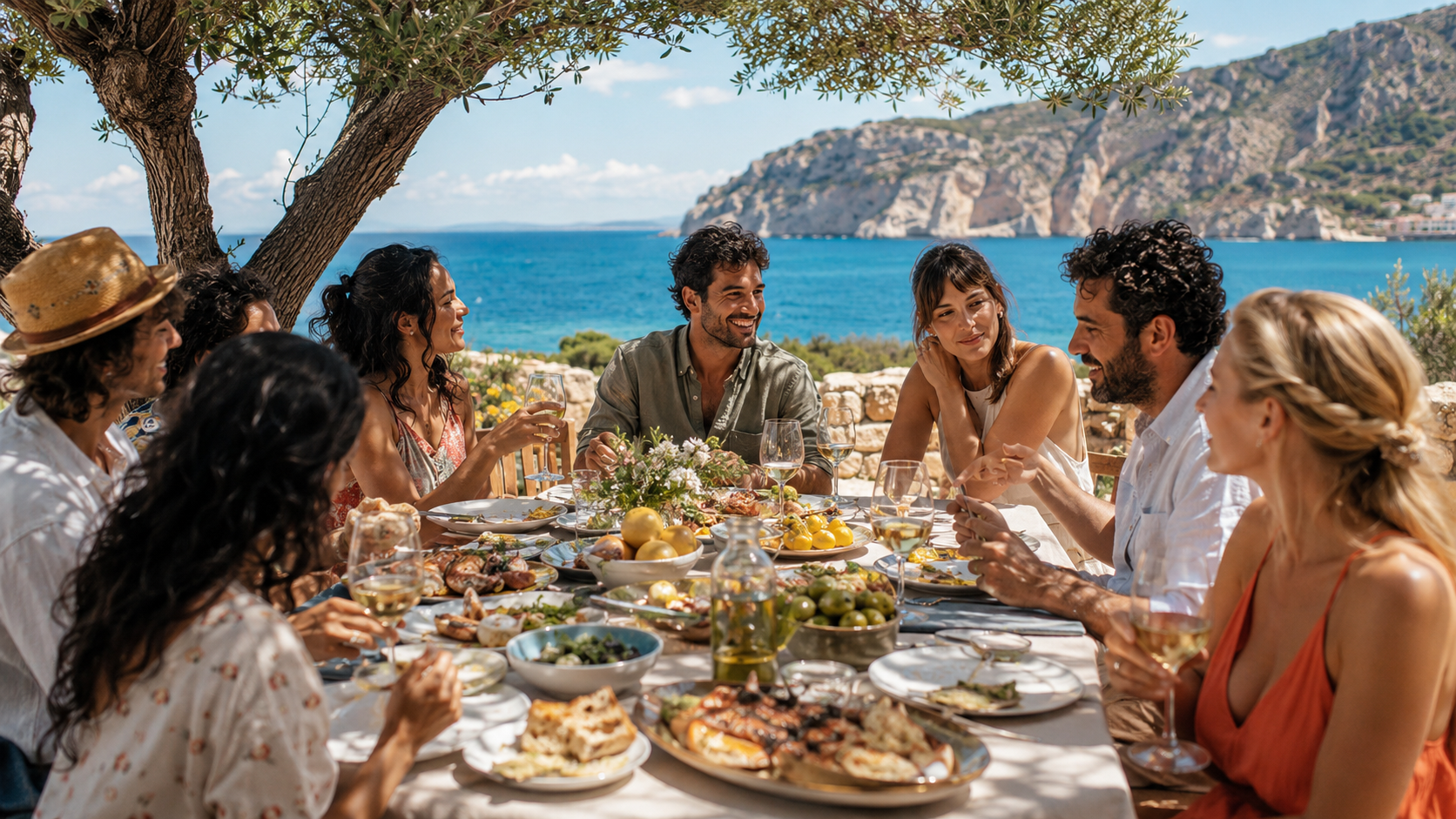
The modern traveller can experience this world through morning markets, vineyard lunches, harbour tavernas, street food, farm stays and ambitious restaurants reinterpreting local traditions. The most memorable meal may be technically simple: tomatoes at their peak, bread still warm, fish landed that morning and oil from the neighbouring grove.
Mediterranean World will follow flavour across borders while respecting its origins. We will profile chefs and producers, explain ingredients, visit food festivals and explore how climate, water and changing fisheries are affecting the table.
Food is one of the region’s strongest commercial attractions — but its deeper value is emotional. It tells visitors not merely what a place produces, but how its people live.