
WINES, ISLANDS AND ANCIENT VINEYARDS
By Publisher Ray Carmen
From volcanic slopes to sea-facing terraces, Mediterranean wine is geography poured into a glass.
The vine has travelled around the Mediterranean for millennia, carried by traders, settlers, monks and families. Today the region offers both famous appellations and remarkable local grapes that barely leave their home islands. Sicily and Sardinia combine scale with distinct landscapes; Santorini’s basket-trained vines survive wind and volcanic soil; Etna’s high slopes create a different expression of the same mountain that dominates eastern Sicily.
Spain, France and Italy remain giants, but discovery increasingly drives wine travel. Croatia, Slovenia, Greece, Cyprus, Türkiye and Lebanon offer ancient traditions with modern confidence. Islands such as Corsica, Mallorca, Crete and Pantelleria reward visitors with cellars rooted in local varieties, while coastal North Africa preserves a smaller but historically significant wine story.
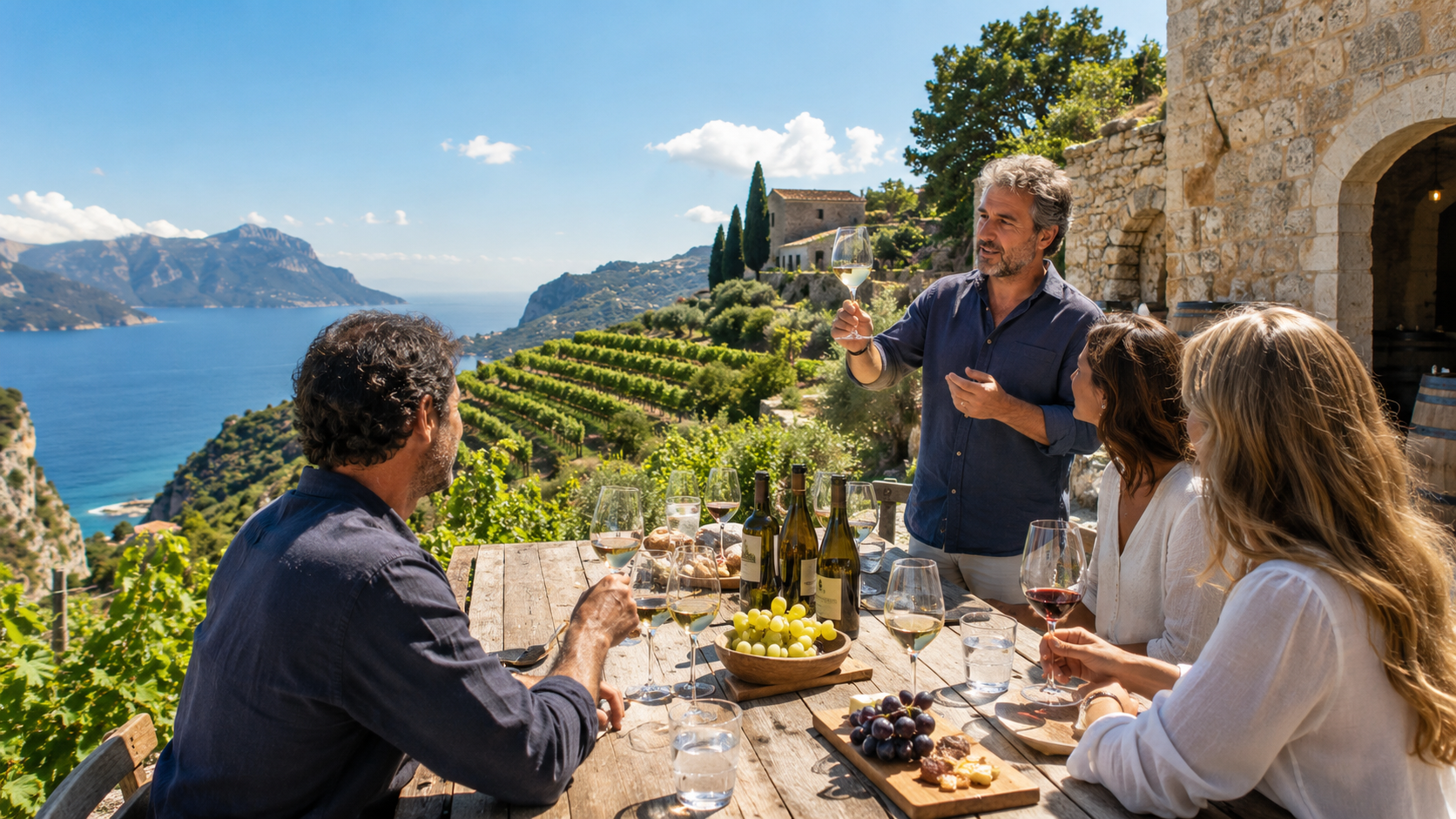
Wine tourism works best when it connects the glass to the landscape. A tasting becomes memorable when the visitor walks the terraces, meets the grower and understands how wind, drought, altitude and salt-laden air shape the harvest. Responsible tasting, designated transport and respect for working farms should be part of every itinerary.
Mediterranean World will explore estates, routes, harvests and the revival of indigenous grapes. We will also examine climate pressure and the innovations helping vineyards adapt.
The future of Mediterranean wine may depend on older knowledge: resilient varieties, careful water use and a renewed respect for place.