
PRINCESS DIANA IN PAKISTAN
THE ROYAL VISITS THAT WON HEARTSBy Publisher Ray Carmen
How the People’s Princess captivated a nation through compassion, elegance and an extraordinary connection with Pakistan.
THE PRINCESS WHO CROSSED CULTURES AND CAPTURED HEARTS
There are royal visits that make headlines, and there are royal visits that make history.
When Diana, Princess of Wales, travelled to Pakistan, she did something remarkable. She reached beyond the ceremonial grandeur of royalty to establish a deeply human connection with the people she met.
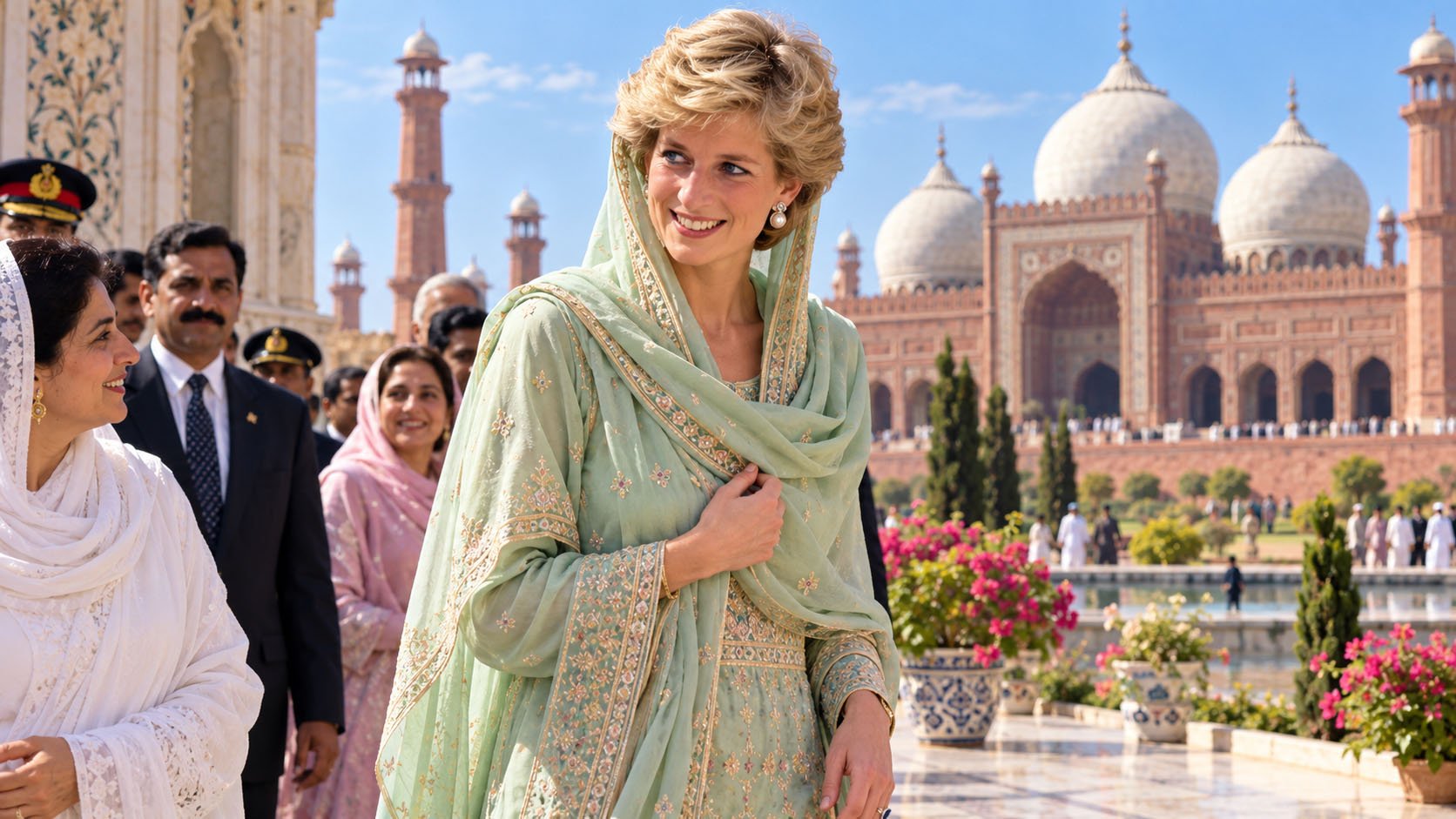
Dressed in elegant traditional Pakistani clothing, her unmistakable smile lighting up every room, Diana demonstrated that kindness and compassion could transcend nationality, religion and cultural differences.
Her three visits to Pakistan, in 1991, 1996 and 1997, became memorable chapters in her extraordinary life.
They also revealed a princess increasingly determined to use her international influence to help those who needed it most.
1991 — A PRINCESS ARRIVES IN PAKISTAN
In September 1991, Princess Diana embarked on her first official solo overseas tour to Pakistan.
It was a significant moment in her royal career.
Travelling without Prince Charles, she demonstrated growing confidence and independence as a representative of the British monarchy.
From Islamabad to Lahore and beyond, the young princess attracted enormous public interest.
Her natural warmth, particularly towards children and vulnerable people, helped distinguish her from the more formal traditions associated with royal visits.
But it was not simply her royal status that captivated Pakistan.
It was her humanity.
Diana approached people with an openness that made her seem approachable, even amid the extraordinary security and ceremony surrounding her.
THE PRINCESS WHO EMBRACED PAKISTANI FASHION
One of the most enduring images of Diana’s visits was her appearance in traditional Pakistani dress.
Her beautifully tailored shalwar kameez outfits, flowing scarves and carefully selected colours demonstrated a genuine appreciation of local fashion.
Rather than relying exclusively on European designer clothing, Diana embraced the elegance of South Asian style.
The result was unforgettable.
She appeared simultaneously royal and approachable, glamorous yet respectful of the country she was visiting.
Her Pakistani wardrobe became an important part of her international fashion legacy.
Among the outfits remembered from her later visits was a striking blue ensemble associated with Indian designer Ritu Kumar.
Decades later, photographs of Diana wearing South Asian clothing continue to circulate around the world.
1996 — A MISSION OF COMPASSION
By February 1996, Diana’s relationship with Pakistan had acquired a more personal and humanitarian dimension.
She travelled to Lahore in support of the Shaukat Khanum Memorial Cancer Hospital and Research Centre.
The hospital, founded by former international cricketer Imran Khan in memory of his mother, represented an ambitious effort to improve cancer treatment in Pakistan.
Diana’s involvement brought valuable international attention to its mission.
Her visits to patients demonstrated the qualities that had made her beloved across the world.
She listened.
She smiled.
She offered comfort.
And, importantly, she treated patients as individuals rather than as subjects of a royal engagement.
For families confronting the uncertainty and suffering associated with cancer, her presence carried a significance far beyond publicity.
It was another example of Diana using her global recognition to draw attention to human suffering.
1997 — THE FINAL VISIT
In May 1997, Diana returned to Pakistan once more.
Again, her visit was closely associated with charitable support for the Shaukat Khanum cancer hospital.
By this stage, she was no longer a working member of the Royal Family in the traditional sense.
Her divorce from Prince Charles had been finalised in August 1996.
Nevertheless, her international popularity remained extraordinary.
Indeed, Diana’s humanitarian identity had become increasingly independent of the institution into which she had married.
Her final Pakistan visit reflected that transformation.
She was a woman pursuing causes she believed in, using her personal influence to raise awareness and support.
Only a few months later, on 31 August 1997, Diana died following a car crash in Paris.
She was just 36 years old.
The news produced an extraordinary outpouring of grief across the world, including in Pakistan.
DIANA AND THE PEOPLE OF PAKISTAN
Why did Diana establish such a powerful connection with Pakistan?
Part of the answer lies in her willingness to engage with people beyond the boundaries of royal protocol.
She showed an interest in local culture.
She embraced traditional clothing.
She visited hospitals and charitable institutions.
Most importantly, she demonstrated compassion without appearing to distinguish between people according to wealth, nationality or social position.
Pakistanis saw not merely a British princess, but a woman capable of understanding suffering and responding with kindness.
Her friendship with Imran Khan and his then-wife Jemima also brought her into contact with Pakistani society beyond formal diplomatic engagements.
Yet the enduring significance of Diana’s visits lies primarily in her charitable work and her ability to communicate across cultures.
A FASHION LEGACY THAT LIVES ON
Diana’s influence on fashion remains immense.
Her Pakistani outfits occupy a particularly memorable place in that legacy.
The graceful silhouettes, embroidered fabrics and flowing dupattas she wore helped introduce traditional South Asian fashion to audiences who might otherwise have known little about it.
Today, images of Diana in Pakistani dress continue to inspire designers, fashion enthusiasts and admirers of the late princess.
They also provide a reminder that fashion can serve as a powerful expression of cultural respect.
Diana understood that clothing could communicate something words could not.
A ROYAL LEGACY BEYOND BORDERS
Nearly three decades after her death, Diana remains one of the most recognisable women of the twentieth century.
Her work with people affected by HIV/AIDS, her campaigning against landmines and her support for children and vulnerable communities helped redefine public expectations of royal humanitarian work.
Her visits to Pakistan formed part of that wider legacy.
They demonstrated how international recognition could be used to encourage compassion and support charitable causes.
She arrived as a princess.
She left behind memories of a woman who cared.
THE PEOPLE’S PRINCESS — FOREVER REMEMBERED
History remembers royal ceremonies, diplomatic meetings and official photographs.
But sometimes the most enduring memories are the simplest.
A princess sitting beside a sick child.
A reassuring smile.
A hand extended in friendship.
A British royal figure wearing the traditional clothing of another nation with elegance and respect.
These were the images that helped make Diana’s visits to Pakistan so memorable.
And they remain a reminder that the greatest influence of royalty does not necessarily come from crowns, palaces or titles.
Sometimes it comes from the extraordinary power of ordinary human kindness.
Princess Diana belonged to Britain, but her compassion belonged to the World.