
Retiring in Cyprus
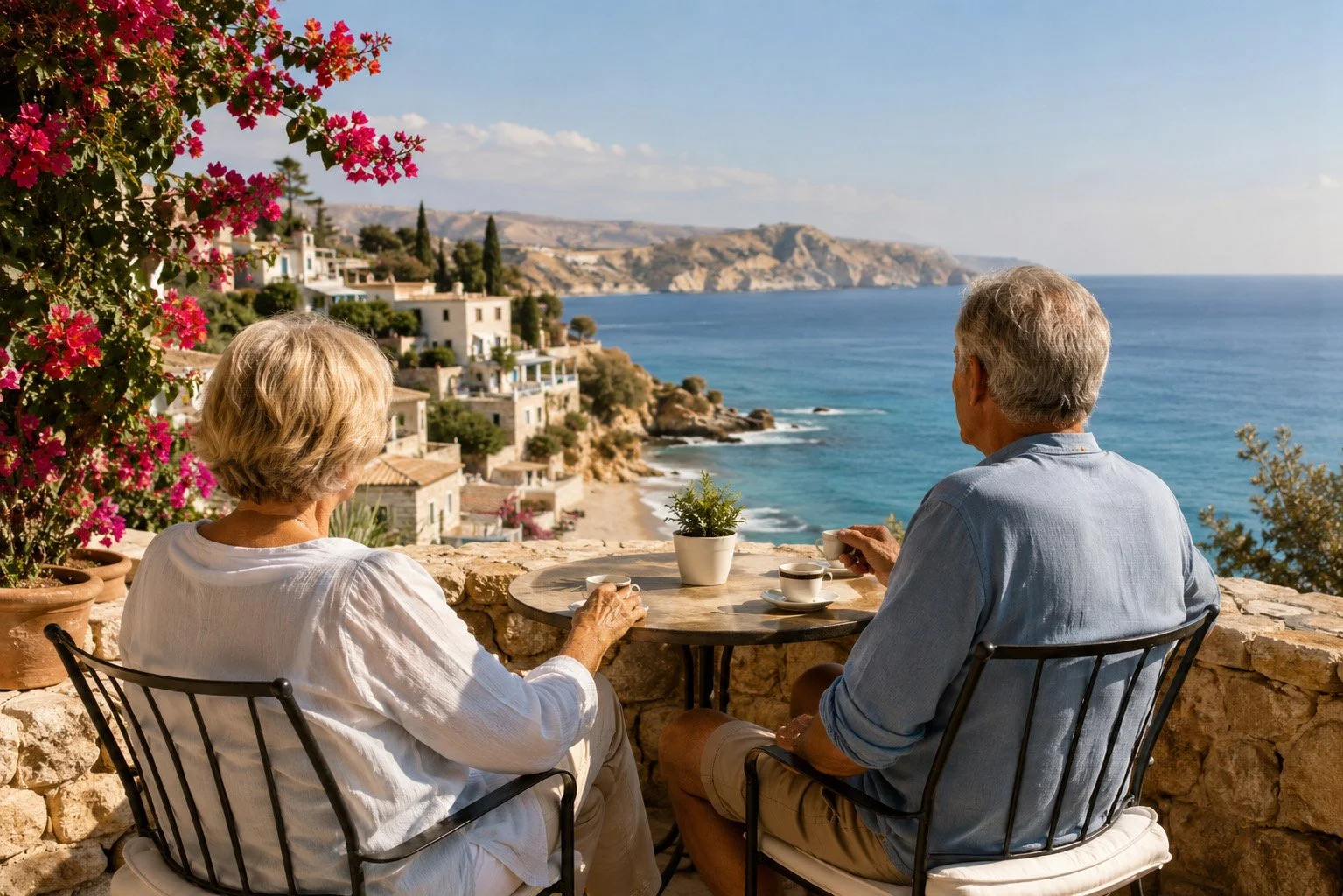
Sunshine, sea and a slower Mediterranean rhythm — with the practicalities mapped out
By Publisher Ray Carmen
Cyprus has long held a special pull for people imagining retirement somewhere brighter. The island combines warm weather, outdoor living and compact distances with the reassuring infrastructure of an EU member state. English is widely used in tourism, business and private healthcare, while daily life still feels unmistakably Mediterranean: coffee in the square, long lunches, village festivals and the sea never very far away.
Cyprus can be an excellent retirement base for people who value sunshine, community and a relaxed pace — provided they budget carefully for housing, choose the right residence route and arrange healthcare before moving.
Why Cyprus keeps appearing on retirement wish lists
The appeal is not built on one headline perk. It is the combination: abundant sunshine, mild winters, beaches and mountain villages within easy reach, a familiar legal and banking environment for many Europeans, and large international communities in the main coastal towns.
Cyprus Tourism reports approximately six hours of bright sunshine even during December and January, rising to around 11.5 hours throughout the six summer months.
The island’s principal attractions include:
Long, dry summers and mild winters that make outdoor living possible throughout much of the year.
Compact distances that allow residents to enjoy the coast, cities and mountains during the same week — sometimes on the same day.
Mediterranean food, café culture, swimming, walking and village life.
English being widely spoken, particularly in services, healthcare and established expatriate areas.
Two international airports serving the Republic of Cyprus, although flight frequency and winter routes vary by destination.
The summer heat should not be underestimated, however. July and August can be intensely hot, making shade, insulation and reliable air-conditioning essential.
Where might you feel at home?
Paphos: the classic retirement favourite
Paphos is often the easiest landing place for English-speaking retirees. It has an established international community, attractive coastal walks, archaeological sites, golf courses nearby and a broad selection of apartments and villas.
Some neighbourhoods can feel highly seasonal, however, and a car becomes useful once you move away from the central coastal strip.
Larnaca: easy-going and well connected
Larnaca offers a lived-in seafront city rather than a purely resort atmosphere. Its promenade is walkable, the airport is conveniently close and housing has historically been more affordable than in Limassol, although prices vary considerably according to neighbourhood and property condition.
Limassol: polished, lively — and expensive
Limassol combines restaurants, marinas, private medical facilities and a cosmopolitan social scene. It also carries the island’s highest housing premium.
Retirees who enjoy city energy and a sophisticated waterfront lifestyle may love it. Those prioritising value should compare its outer districts with Paphos, Larnaca and Nicosia before making a decision.
Nicosia and the villages: life beyond the beach
Nicosia is the administrative and cultural capital. It offers strong services, year-round activity and less dependence on tourism, but it does not have an immediate beach.
Mountain and foothill villages offer cooler evenings, character and additional space. They may also mean steep roads, limited public transport and longer journeys to hospitals, shops and specialist healthcare.
A sensible approach is to rent through a winter and at least part of a summer before committing to a property. Check noise, humidity, heating, internet reliability, parking and the genuine driving time to doctors, shops and the airport.
What does retirement in Cyprus cost?
Cyprus is not uniformly “cheap”. Housing is the decisive variable, particularly in Limassol and prime coastal locations.
Numbeo’s live national estimate in August 2026 placed the monthly costs of a single person at approximately €854 before rent. This is a useful starting point rather than a personal budget. Rent, air-conditioning, private medical insurance, car ownership and frequent flights can change the picture dramatically.
As a broad planning range, a single retiree renting modestly outside the most expensive districts might begin by testing a budget of approximately €1,500–€2,200 per month. A couple may require around €2,200–€3,200.
Premium coastal accommodation, extensive travel or comprehensive private healthcare could push the total considerably higher. Retirees whose pensions are not paid in euros should also allow for exchange-rate movements.
Before agreeing to a property:
Request recent electricity bills, as summer cooling and winter heating can surprise newcomers.
Compare genuine long-term rents rather than holiday-listing prices.
Confirm communal fees when considering an apartment complex.
Budget for a car if you choose a village, hillside development or area with limited public transport.
Maintain an emergency fund for dental care, private consultations, home maintenance and unexpected flights.
Residency: the route depends on your passport
EU, EEA and Swiss nationals
EU citizens can move to Cyprus under freedom-of-movement rules. Pensioners remaining for longer than three months will generally need to register their residence and demonstrate sufficient financial resources and comprehensive health insurance.
After five years of continuous legal residence, EU rules provide a right of permanent residence, subject to the applicable conditions and permitted absences.
UK nationals
The position for British citizens depends heavily on when they became resident.
People who were lawfully resident in Cyprus before the end of the Brexit transition period may be protected by the Withdrawal Agreement. New arrivals are treated under Cyprus rules for third-country nationals.
British retirees should therefore avoid relying on residency advice written before 2021.
Other non-EU nationals
Cyprus offers several residence pathways rather than one universal “retirement visa”.
Category F immigration permission is intended for people who possess a secure income from abroad and do not intend to work in Cyprus. Applicants should check the latest official financial requirements, processing arrangements and supporting-document rules before applying.
Visitor permits and investment-based permanent residence routes have different conditions, renewal requirements and financial commitments.
Residency rules, income thresholds, appointment systems and document lists can change. Confirm your route directly with the Cyprus Migration Department and obtain regulated immigration advice if your situation involves dependants, employment, property investment or lengthy absences from Cyprus.
Healthcare: arrange the paperwork before moving
The Republic of Cyprus operates the General Healthcare System, usually known as GESY or GHS.
Eligibility is not automatic simply because someone owns property or spends part of the year on the island. Access depends on residence and social-security status.
For many EU pensioners — and certain UK pensioners covered by coordination arrangements — the key document is the S1 form issued by the country responsible for their pension healthcare.
European Union guidance says eligible pensioners should request an S1 from the country paying their pension and register it in their new country of residence.
An EHIC provides access to necessary healthcare during temporary stays. It is not a substitute for arranging proper healthcare coverage after becoming resident.
Many retirees retain private insurance for faster specialist appointments, private hospital rooms or treatment outside GESY. Before purchasing a policy, compare:
Age limits.
Chronic-condition exclusions.
Excesses and co-payments.
Prescription coverage.
Overseas treatment or evacuation benefits.
Whether premiums increase substantially with age.
Anyone with complex medical needs should identify the nearest appropriate hospital before deciding where to live.
Tax: attractive possibilities, but personal circumstances matter
Cyprus can provide favourable tax treatment for certain foreign pension income.
Official Cyprus tax-return guidance states that foreign pensions may be taxed under the normal income-tax system or under a special rate of 5% on the amount exceeding €3,420.
The better option depends on the value and source of the pension, the retiree’s other income and the terms of any applicable double-taxation agreement.
Tax residence, domicile, investment income, property ownership, inheritance planning and healthcare contributions can interact. Before changing residence, obtain cross-border advice covering both Cyprus and the country you are leaving.
A tax-friendly rule is only valuable when the move has been structured properly and the treaty position is understood.
The realities worth knowing
Retirement brochures naturally concentrate on beaches and blue skies. Everyday life also involves a few less glamorous considerations.
Summer heat can be severe. On the hottest days, shade, insulation and air-conditioning may matter more than a sea view.
Public transport remains limited outside the main urban corridors. Many retirees find a car essential.
Coastal properties can experience humidity, winter damp and salt corrosion.
A professional property survey and careful legal inspection are money well spent.
Buying property does not automatically provide residence rights.
Title deeds, planning permission and legal ownership should be checked independently.
The island remains politically divided. The Republic of Cyprus exercises effective control in the south, while property and legal questions in the north can be particularly complicated.
Some resorts become very quiet during winter. Test whether the year-round community, healthcare access and flight schedule suit your preferred lifestyle.
A sensible move-in plan
Spend an extended trial period in two contrasting locations.
Experience both the winter and the hottest part of summer.
Build a euro budget using actual rents and utility bills.
Confirm your residence category and official document checklist.
Arrange healthcare entitlement or private insurance before arrival.
Obtain cross-border tax and estate-planning advice.
Rent first and consider buying only after experiencing everyday life on the island.
The verdict
Cyprus earns its place among Europe’s most appealing retirement destinations not because it is perfect, but because its fundamentals are unusually persuasive: sunshine, sea, outdoor living, welcoming communities and a manageable scale.
For the right person, mornings on the terrace can become ordinary life rather than an annual escape.
The best retirement move is not necessarily the most romantic one. It is the one that still works during the August heat, after a January rainstorm, on the journey home from a medical appointment and when the electricity bill arrives.
Approach Cyprus with that clear-eyed optimism, and the island can offer a retirement that feels both adventurous and deeply liveable.