
US IS BUILDING DRONES POWERED BY NUCLEAR WASTE THAT COULD FLY FOR 30 YEARS NON-STOP
By Publisher Ray Carmen
The United States is backing a remarkable new technology that could transform the future of long-range surveillance, defence systems and remote operations.
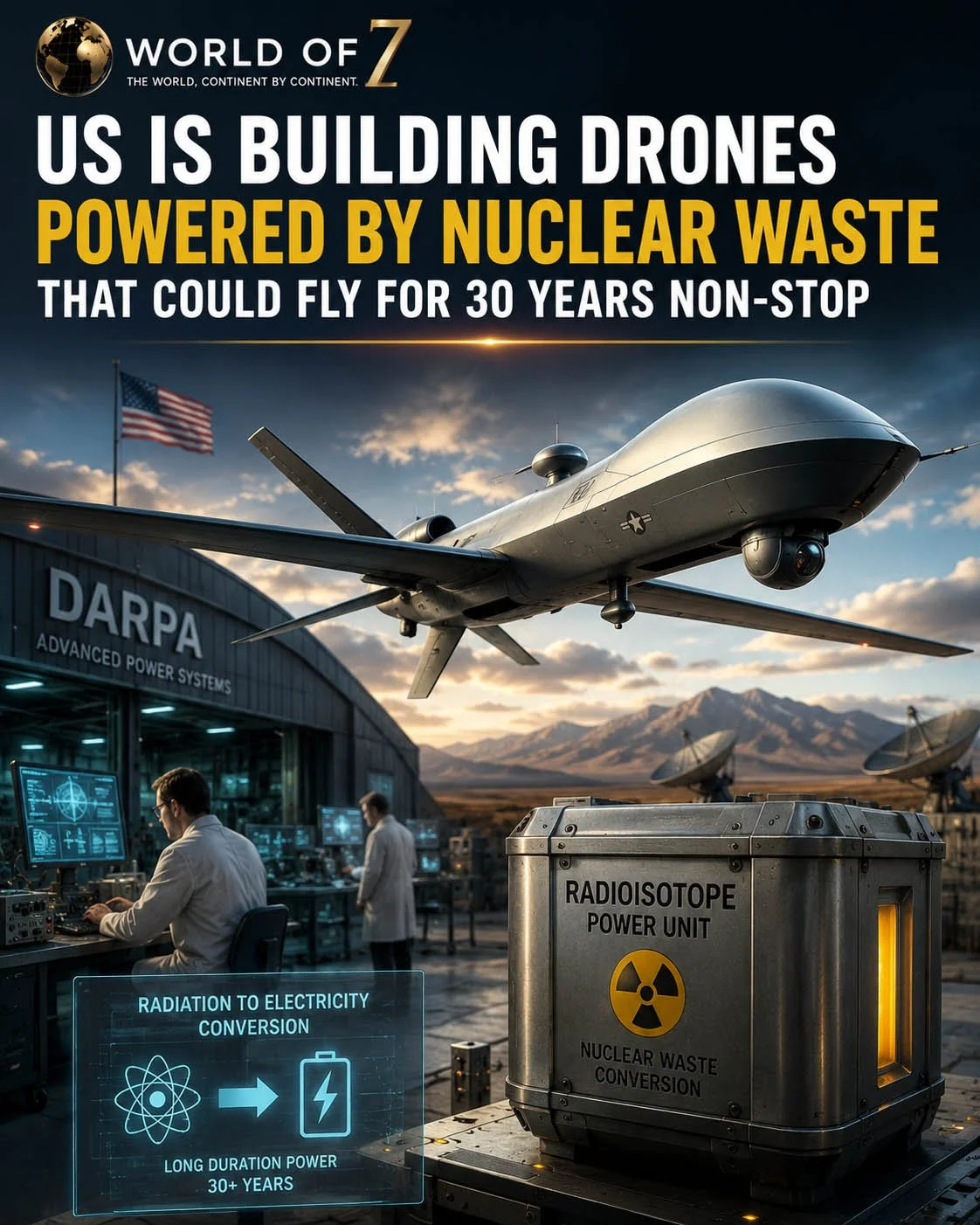
Through DARPA’s “Rads to Watts” programme, American researchers are exploring ways to convert nuclear radiation directly into electricity using advanced radiovoltaic devices. DARPA says the goal is to create long-lived, unattended high-power sources for environments where traditional battery replacement or refuelling is difficult or impossible.
A major step forward came when Morgan State University and its partners secured a US$3.37 million DARPA contract to develop SYMPHONEE, a next-generation nuclear micro-power system. According to Morgan State, the project is designed to turn radioisotopes such as Strontium-90 into electricity, with the end result being systems that could operate for decades without refuelling for space, remote sensing, undersea infrastructure and defence uses.
In simple terms, the technology aims to turn part of what has long been treated as nuclear waste into a strategic energy asset.
That has led to growing excitement over the possibility that future drones — especially military or surveillance platforms — could remain operational for extraordinarily long periods without the need for conventional charging or fuel stops.
However, it is important to state the position carefully.
The United States is not yet fielding fleets of nuclear-waste-powered drones flying around the world for 30 years non-stop. What is happening is that DARPA is funding the development of a new power technology that could one day make such endurance possible if the engineering, safety and deployment challenges are overcome
If successful, the implications would be enormous.
It could change how the world thinks about drones, satellites, remote sensors and defence systems. It could reduce dependence on frequent battery replacement, extend the reach of unmanned systems and open up new possibilities in areas where energy supply has always been a major limitation.
It is also a reminder that some of the technologies shaping tomorrow’s world are being born not in public view, but quietly inside advanced research programmes.
Today it is an experimental concept.
Tomorrow, it could redefine endurance in the skies.
WORLD OF 7 — THE WORLD, CONTINENT BY CONTINENT.