
THE GOLDEN AGE OF SAIL
By Publisher Ray Carmen
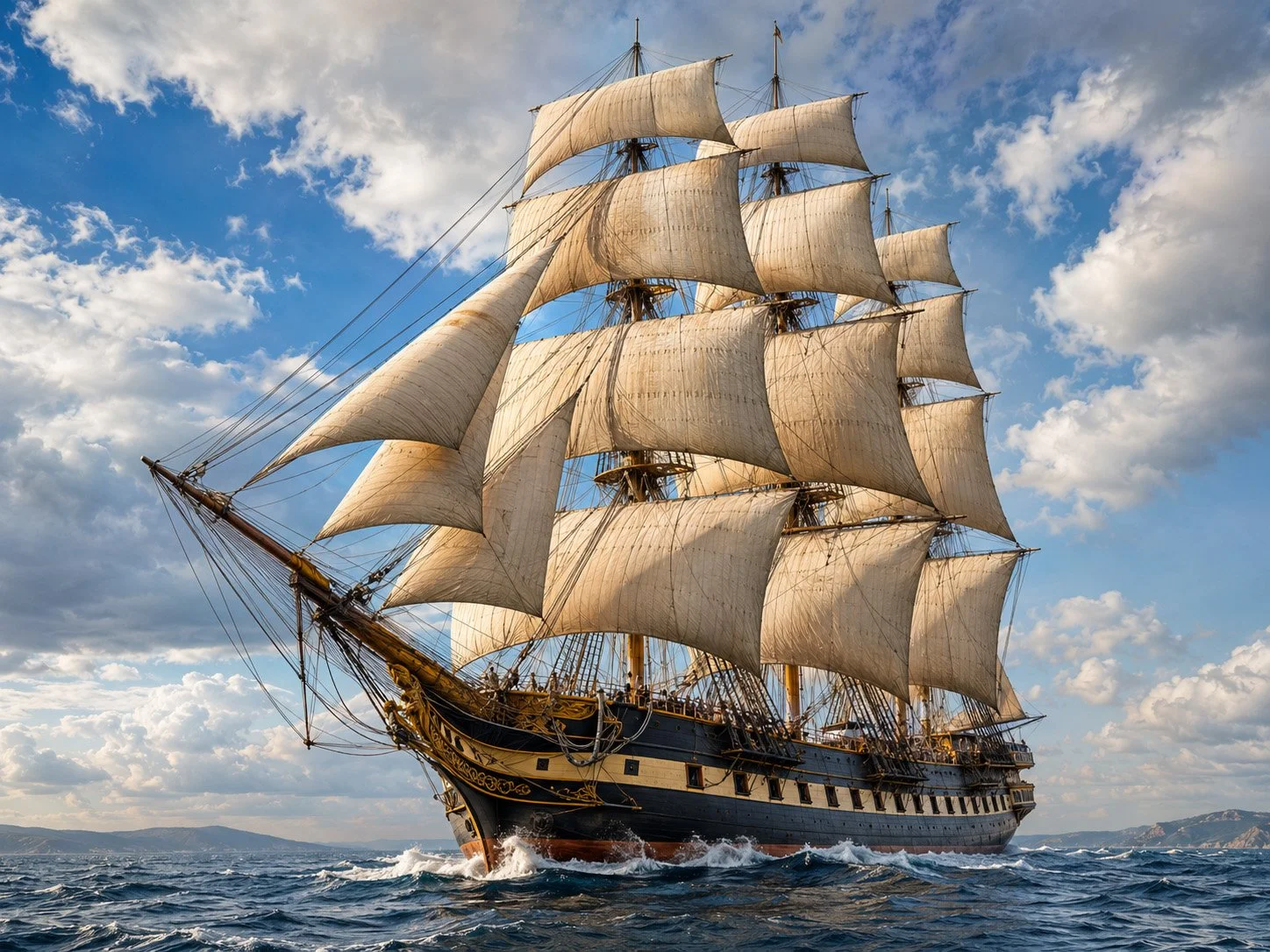
Before aircraft, engines and modern communication systems, the great sailing ships connected continents and carried people, goods, ideas and empires across the world.
The period commonly described as the Golden Age of Sail stretched across several centuries and reached its commercial height during the eighteenth and nineteenth centuries.
Merchant vessels crossed the Atlantic, Indian and Pacific Oceans carrying tea, spices, timber, cotton and manufactured goods. Naval fleets protected trade routes and competed for control of strategic waters.
The great clippers were designed for speed. With tall masts and vast areas of canvas, ships such as Cutty Sark raced to deliver valuable cargoes while market prices remained high.
Sailing ships also played a central role in migration and exploration. They carried settlers, soldiers, scientists and adventurers to distant lands.
But the history of sail was not always romantic.
Ships were also used in conquest, colonial expansion and the transatlantic slave trade. Countless people suffered or died aboard vessels operating within brutal systems of exploitation.
Life at sea could be extremely dangerous. Crews faced disease, storms, poor food, primitive medical care and voyages lasting many months.
Steam power eventually replaced sail on most commercial routes because steamships could travel more predictably and were less dependent on wind.
Yet the great sailing tradition never disappeared.
Historic ships are preserved in museums, traditional vessels continue to sail, and modern yachts still draw inspiration from the elegance and courage of the age of canvas.
THE WIND BUILT TRADE ROUTES, CONNECTED CONTINENTS AND CHANGED HISTORY.