
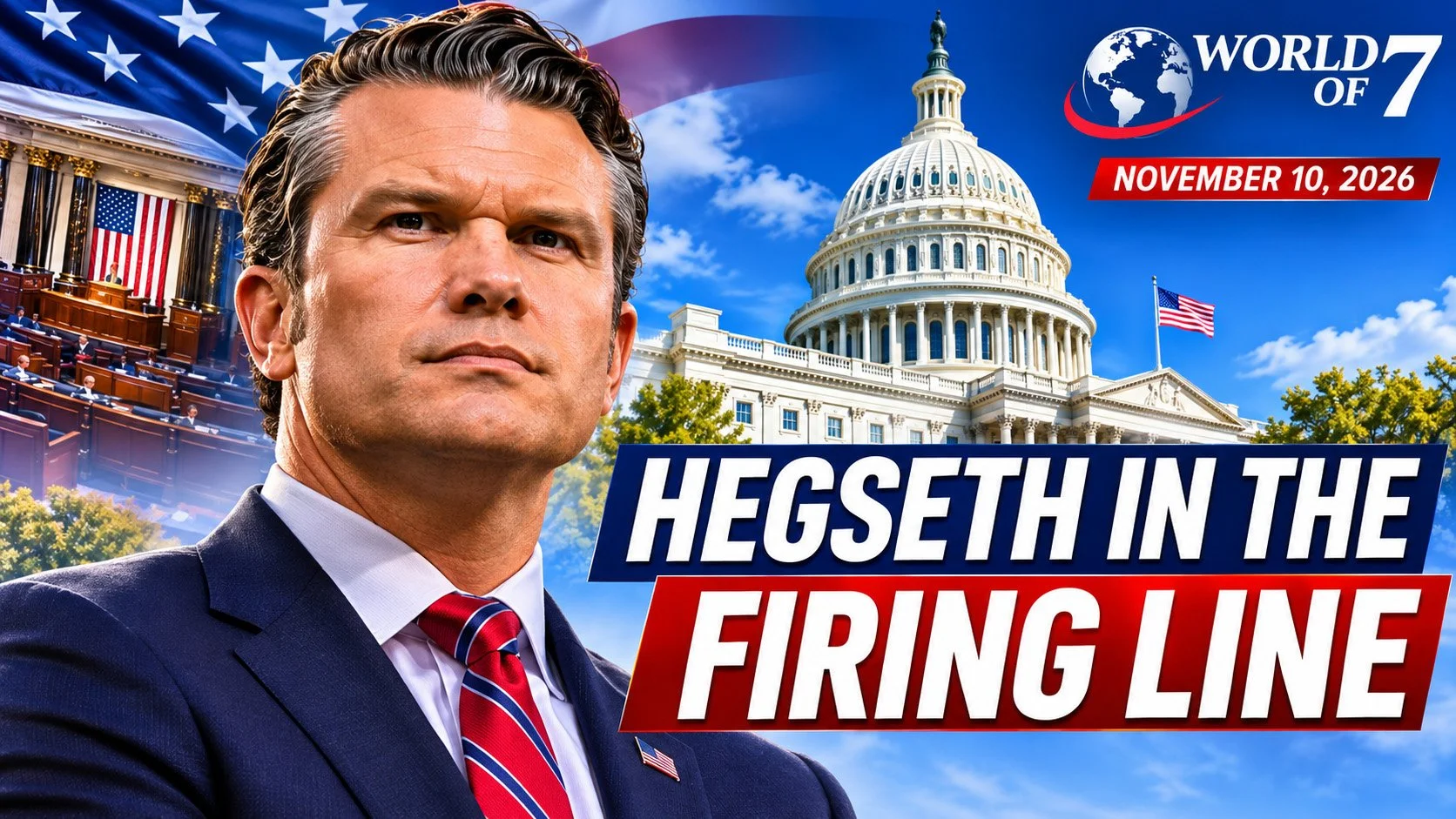
Official House Roll Call 317 confirms a procedural referral, not impeachment or a verdict on eight disputed allegations.
By Publisher Ray Carmen
Original AI editorial illustration, reused from the pre-vote package; not a documentary photograph or depiction of a completed impeachment vote.
WASHINGTON | 11 NOVEMBER 2026
The US House of Representatives voted 211–204 on Tuesday, 10 November, to refer a resolution seeking to impeach Defence Secretary Pete Hegseth to the House Judiciary Committee. The procedural motion passed at 6:02 p.m. Eastern Time (11:02 p.m. GMT), according to the official House Clerk record, Roll Call 317, on H. Res. 1655. The referral prevented an immediate floor vote on the impeachment articles; it did not impeach Hegseth, remove him from office or determine the truth of the allegations.
WHAT THE HOUSE ACTUALLY DECIDED
The House Clerk identifies the question as “On Motion to Refer” and records the result as passed: 211 yeas, 204 nays, none present and 18 not voting. The votes for referral comprised 210 Republicans and one independent; against were 203 Democrats and Republican Thomas Massie of Kentucky, the sponsor of the resolution. Voting to refer meant sending the proposal to committee rather than proceeding immediately to a floor decision on impeachment.
The distinction is central. Impeachment would require the House to approve articles against the secretary. A House impeachment is a formal accusation, not a conviction. Removal would require a separate Senate conviction by a two-thirds majority of senators present. No such House impeachment or Senate conviction occurred in this vote.
EIGHT ARTICLES — ALLEGATIONS, NOT FINDINGS
Massie introduced eight articles alleging misconduct associated with the Iran conflict, congressional war powers, protections for civilians, strikes on vessels suspected of drug trafficking, actions concerning Senator Mark Kelly, the US operation in Venezuela and military operations in Yemen. The resolution expresses the congressman’s accusations; they are not established legal findings. Questions about the lawfulness of particular operations remain disputed.
HEGSETH AND TRUMP REJECT THE CASE
Hegseth rejected the impeachment effort as a political attack and maintained that the military actions were lawful and undertaken under presidential authority. President Donald Trump backed his defence secretary and celebrated the procedural outcome. Massie argued that the allegations warranted congressional scrutiny, while Democratic lawmakers opposing referral sought to keep the impeachment proposal moving toward a floor vote. These are competing political and legal positions, not conclusions reached by the House in Roll Call 317.
WHAT HAPPENS NEXT?
The resolution is now with the House Judiciary Committee, which could examine the matter, take further action or leave it pending. A later Congress could revisit the issue, but future proceedings are not guaranteed. For the moment, the immediate impeachment effort has been stopped procedurally. Hegseth remains in office; the House has neither impeached nor exonerated him on the merits.
WHY THE WORLD IS WATCHING
The debate has implications beyond Washington: decisions over Iran, Yemen and military action at sea affect regional security, civilian protection and international relationships, including in the Caribbean and Latin America. The vote also exposes a sharp disagreement over how Congress should exercise oversight of military operations and senior executive officials.