
FRANCE, GERMANY AND DENMARK ARE FINALLY DITCHING US TECH GIANTS
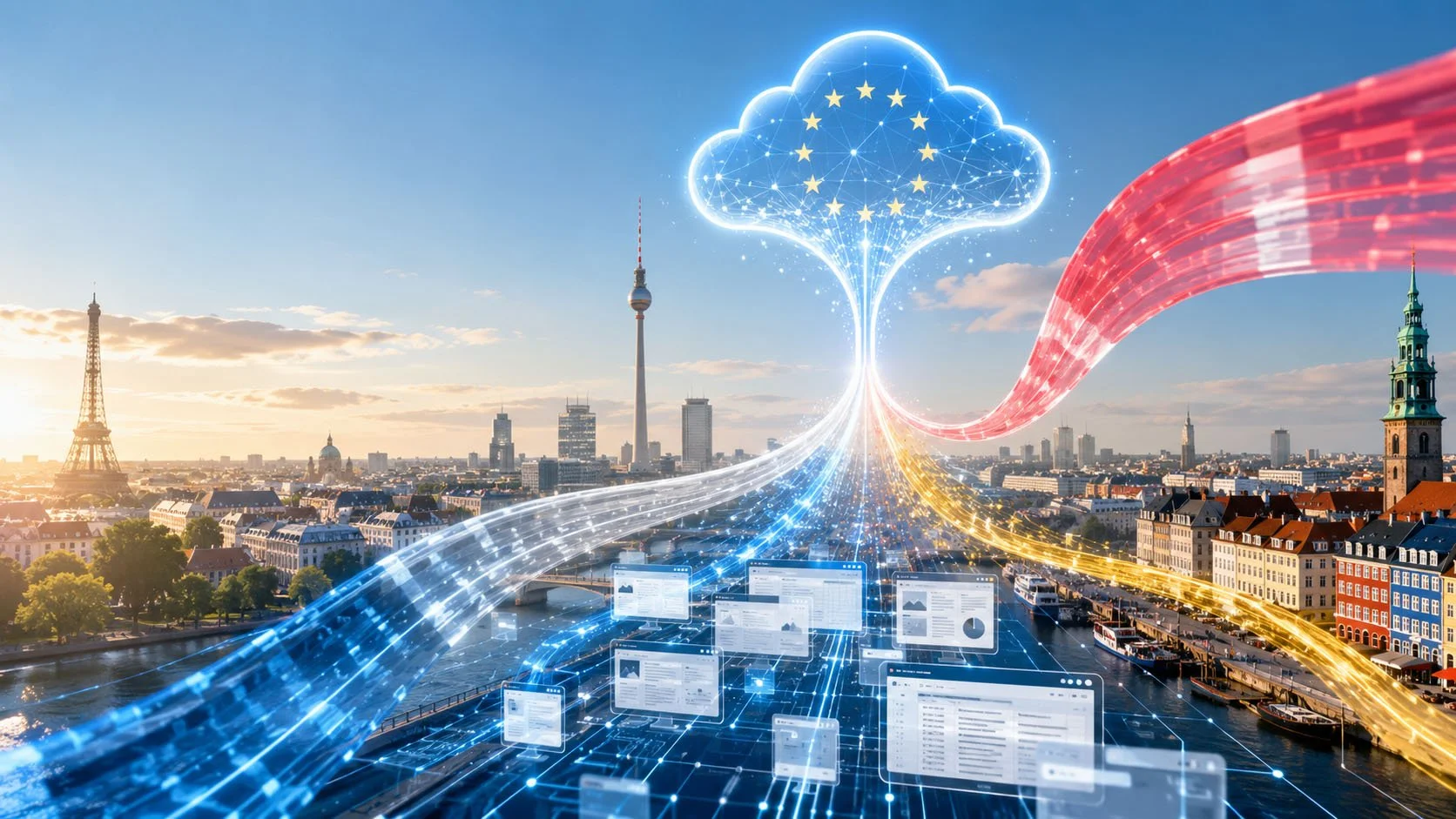
Europe’s digital independence drive gathers pace
By Publisher Ray Carmen
A quiet technological revolution is moving through Europe’s public sector. France, Germany and Denmark are reducing their dependence on American platforms and turning instead to sovereign, European and open-source systems—placing data control, security and resilience at the heart of government technology.
EUROPE DRAWS A NEW DIGITAL LINE
For years, Europe’s governments have relied heavily on software, cloud infrastructure and communications platforms supplied by a small group of American corporations.
These systems are deeply embedded, highly capable and difficult to replace. But the strategic calculation is changing.
Data sovereignty has moved from a specialist concern to a matter of national resilience. European officials are increasingly asking where sensitive information is stored, which laws can reach it, whether a foreign supplier could restrict access and how much public money leaves Europe through recurring licence fees.
This is not a sudden continent-wide boycott of American technology. It is a deliberate reduction of dependency—beginning with government workplaces, communications and cloud services where control matters most.
FRANCE: VISIO REPLACES FOREIGN MEETING PLATFORMS
France has announced that its secure, state-developed videoconferencing service, Visio, will be introduced across government departments by 2027.
The stated objective is to end the use of non-European videoconferencing solutions within public administration and protect the security and confidentiality of official communications.
Visio had already reached 40,000 regular users when the national rollout was announced and was being deployed to approximately 200,000 public servants.
The platform is hosted in France in a SecNumCloud environment and forms part of LaSuite, France’s broader open-source digital workplace.
The French Government estimates that leaving paid platforms could save approximately €1 million every year for each 100,000 users who migrate.
This is considerably more than a simple software substitution. France is using public procurement to nurture a domestic and European technology ecosystem built around interoperable tools, secure hosting and reduced dependence on individual suppliers.
GERMANY: OPEN SOURCE BECOMES THE WORKING STANDARD
Germany’s clearest example comes from Schleswig-Holstein.
The northern state has made LibreOffice the binding standard for office applications throughout its ministries and government agencies.
By December 2025, the state reported that almost 80 per cent of relevant workstations outside the tax administration were using the open-source office suite.
The programme extends beyond word processing. Schleswig-Holstein’s digital-sovereignty strategy includes open-source collaboration, file-sharing and operating-system components.
The attraction is straightforward: public authorities can inspect the software, influence its development, avoid dependence on one vendor and retain greater control over their information systems.
DENMARK: TESTING A DIFFERENT PUBLIC-SECTOR FUTURE
Denmark’s Ministry of Digital Government launched a pilot project in 2025 to replace Microsoft Office for a group of employees with Collabora, an open-source platform based on LibreOffice.
The trial is measured rather than theatrical, but it signals that even one of the world’s most highly digitised administrations is reassessing whether convenience should outweigh strategic control.
Denmark’s approach also illustrates the practical reality of such a transition.
Governments must examine compatibility, staff experience, cybersecurity, document exchange and long-term costs before attempting migration on a national scale.
Digital sovereignty can succeed only when the alternative system is reliable enough to support everyday government work.
A MAJOR COMMERCIAL OPPORTUNITY FOR EUROPEAN TECHNOLOGY
This shift could create one of Europe’s most important growth markets.
Demand is rising for sovereign cloud hosting, cybersecurity, open-source support, workplace software, data centres, artificial intelligence, secure communications and systems integration.
European technology companies that can combine strong security with intuitive design and dependable service now have an exceptional commercial opportunity.
The market will not be confined to governments. Banks, healthcare providers, universities, defence organisations and major corporations face similar questions concerning jurisdiction, continuity and control.
Successful public-sector deployments could become powerful reference projects for the wider commercial market.
American technology companies will remain central to Europe for years, and many European systems will continue to work alongside them.
Yet the direction is unmistakable: Europe wants credible alternatives, greater negotiating power and the ability to operate its most important digital services on its own terms.
THE BIGGER PICTURE
France, Germany and Denmark are not merely changing office applications. They are helping to redefine digital infrastructure as a strategic national asset.
Europe’s next technological chapter will be judged not by whether it rejects Silicon Valley, but by whether it can build excellent alternatives of its own—and give governments, businesses and citizens a genuine choice.
The era of automatic dependence on America’s largest technology companies may finally be drawing to a close.