
WATCHES OF THE WORLD
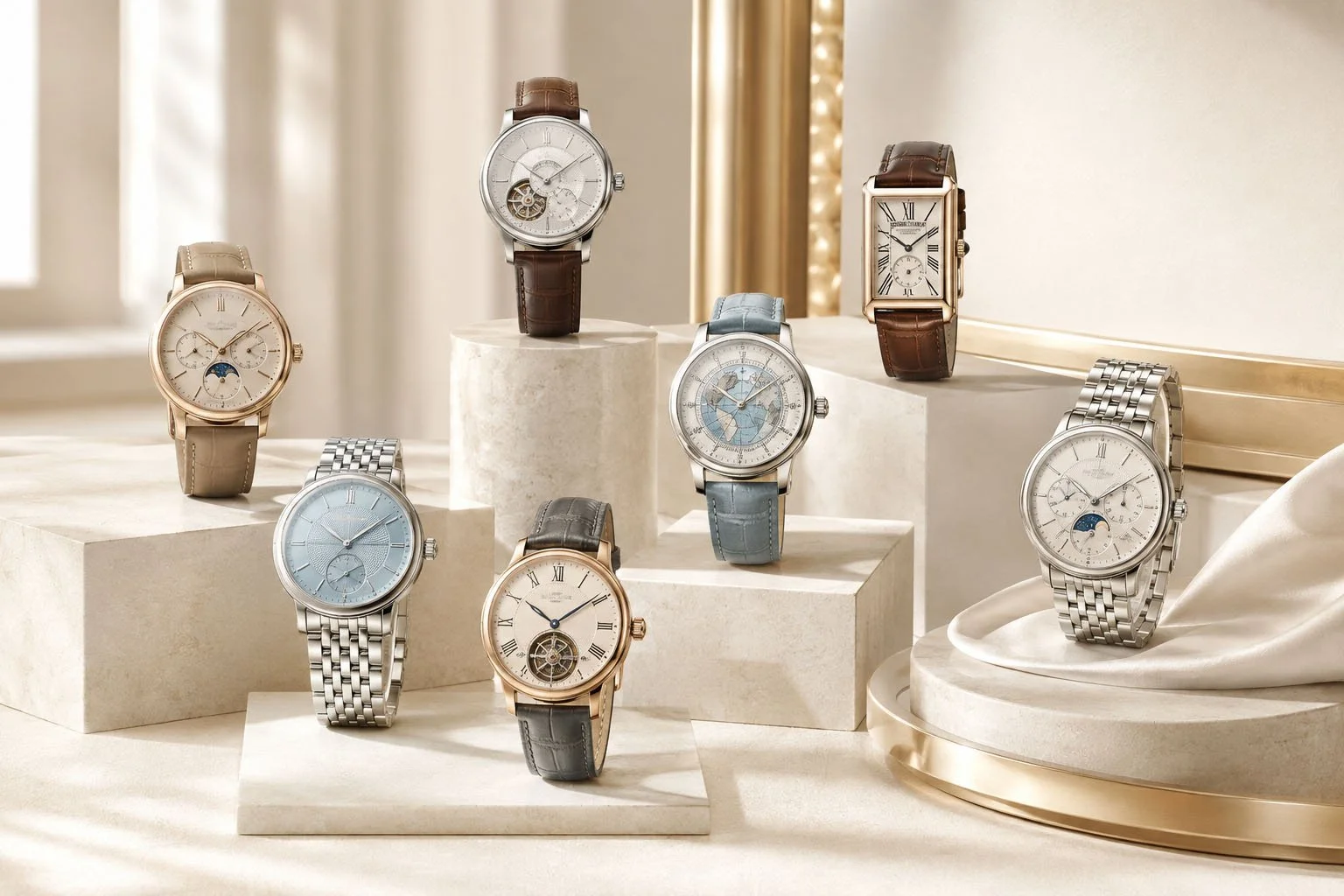
The Eternal Art of Time
By Ray Carmen
Time is the one luxury none of us can own. We can measure it, treasure it and sometimes waste it, but we can never stop it. Perhaps that is why the world’s most prestigious watches continue to fascinate us.
A fine mechanical watch is far more than an instrument that tells the time. It is a miniature work of architecture, an expression of personal style and a testament to the patience of the people who created it.
Hidden beneath a dial no larger than a coin may be hundreds of tiny components working together in perfect harmony. Wheels turn, springs breathe and carefully balanced mechanisms mark every passing second. Some watches display the phases of the moon, the date, two time zones or a calendar capable of recognising the different lengths of the months. Others use tiny hammers and gongs to sound the hours and minutes.
These extraordinary creations begin in the workshops of master watchmakers, engravers, enamellers, stone-setters and movement designers. Their work cannot be hurried. A single component may be polished repeatedly before it meets the required standard, while an intricate dial may take weeks or even months to complete.
The great watchmaking traditions of the world each possess their own character. Switzerland is internationally celebrated for its historic maisons, complicated movements and generations of accumulated expertise. Germany is admired for disciplined engineering and distinctive finishing. Japan has earned enormous respect for its combination of technical precision, restraint and close attention to nature. Britain, France, Italy and the United States have also contributed important ideas, designers and independent makers to the continuing story of time.
Yet geographical borders are becoming less important. Today, a new generation of independent watchmakers is creating highly individual pieces for collectors around the world. Some revive forgotten techniques, while others develop futuristic materials and mechanisms that would have seemed impossible only a few decades ago.
Collectors are often drawn to the story behind a watch as much as to the object itself. A timepiece may celebrate an important achievement, mark a wedding or anniversary, or pass from one generation to the next. The small scratches collected over a lifetime can become part of its beauty because they record the life of the person who wore it.
Prestige does not depend upon diamonds alone. True distinction can be found in the elegance of a perfectly proportioned dial, the curve of a hand-polished case or the quiet confidence of a movement made by one watchmaker from beginning to end.
The most remarkable watches reward close observation. Under magnification, surfaces that initially appear simple reveal hand-cut patterns, miniature paintings and bridges finished with astonishing precision. Every line, screw and edge has been considered.
There is also an intimate ritual to wearing a mechanical watch. It may need to be wound, adjusted and cared for. Unlike a disposable digital object, it asks something of its owner. In return, it offers a physical connection to centuries of human ingenuity.
Modern technology has made accurate time available everywhere. It appears on our telephones, computers, cars and kitchen appliances. We no longer need a mechanical watch in the practical sense—and yet the finest examples have rarely been more desirable.
Their appeal lies precisely in the fact that they are unnecessary. They represent the triumph of craftsmanship over convenience and permanence over disposability. They remind us that human hands can still create objects of extraordinary complexity and enduring beauty.
A prestigious watch does not merely count the hours. It carries memory, ambition and history on the wrist.
In a world that moves faster every day, perhaps the greatest luxury is not owning time, but taking the time to appreciate how beautifully it can be measured.