
IRAN: A CIVILISATION, A PEOPLE, A NATION THAT REFUSES TO BOW
Beyond the Headlines
By Ray Carmen
Long before many of today’s great nations were born, Iran—known throughout history as Persia—was one of humanity’s greatest centres of civilisation, learning and culture.
For thousands of years, Persian scholars, poets, scientists, architects and artists have helped shape the world we know today. Their influence can still be found in medicine, mathematics, astronomy, engineering, literature, government and architecture.
Yet modern Iran is too often presented to the world only through stories of sanctions, nuclear negotiations, political tensions and conflict.
Behind those headlines stands an ancient civilisation and millions of ordinary people whose lives are filled with family, friendship, education, creativity and hope.
A CIVILISATION THAT HELPED SHAPE THE WORLD
The ancient Persian Empire created one of history’s earliest great road networks and developed systems of administration that influenced later civilisations.
Persia connected East and West through trade and diplomacy. Its cities became centres of knowledge where ideas from different cultures could meet and develop.
Persian scientists made remarkable contributions to medicine, chemistry, mathematics and astronomy.
The physician and philosopher Avicenna—also known as Ibn Sina—wrote The Canon of Medicine, a work that was studied in universities for centuries.
Iran also gave the world an extraordinary literary inheritance.
The poetry of Hafez, Saadi, Omar Khayyam and Rumi continues to inspire readers across continents and generations. Ferdowsi’s Shahnameh helped preserve the Persian language and the memory of Iran’s ancient past.
These writers explored love, justice, mortality, wisdom and our shared humanity. Their words remain alive in Iranian homes, schools and family gatherings today.
A LAND OF REMARKABLE BEAUTY
Iran is a country of extraordinary natural diversity.
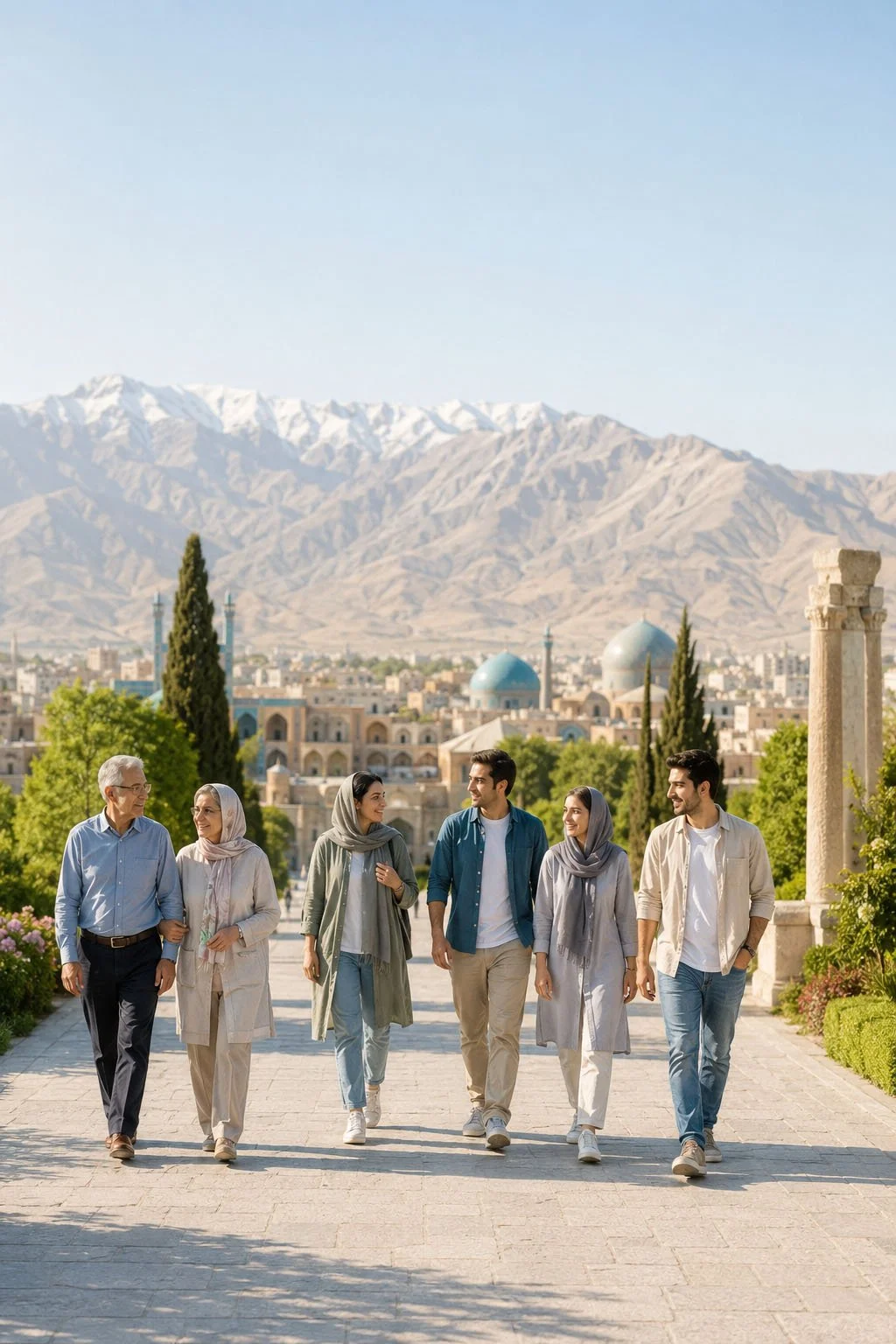
Its landscapes stretch from the snow-covered peak of Mount Damavand to the shores of the Caspian Sea, from green northern forests to central deserts and the warm waters of the Persian Gulf.
Cities such as Isfahan, Shiraz and Yazd preserve architectural masterpieces decorated with turquoise tiles, graceful arches, intricate geometry and peaceful courtyards.
Persian gardens, with their flowers, fruit trees and flowing water, were designed to create places of beauty, reflection and tranquillity.
Iran’s artistic traditions can also be seen in its handwoven carpets, miniature paintings, calligraphy, ceramics, metalwork and delicate craftsmanship.
This beauty is not simply part of Iran’s past. It remains woven into the daily life and identity of its people.
A NATION THAT HAS SURVIVED
Iran has been invaded, pressured, sanctioned and repeatedly misunderstood. Empires and dynasties have risen and fallen around it, yet Iran has never surrendered its cultural identity.
Conquerors crossed its mountains and deserts, but Persian language, literature and traditions survived. Those who conquered Persia often found themselves influenced by the civilisation they had defeated.
That ability to endure is one of Iran’s greatest strengths.
In modern times, Iranians have lived through revolution, an eight-year war with Iraq, international isolation and decades of economic sanctions.
Ordinary families have frequently carried the greatest burden. Rising prices, shortages and uncertainty have made life difficult, while many talented young people have struggled to find the opportunities they deserve.
Yet Iranian life continues.
Universities educate new generations. Scientists undertake research. Artists create, poets write and filmmakers tell powerful human stories. Families continue to gather around tables filled with food, tea, conversation and laughter.
Iran’s refusal to bow should not be mistaken for a desire for conflict.
True strength is not found only in governments, weapons or political speeches. It is also found in the ability of a civilisation and its people to preserve their dignity, culture and humanity through difficult times.
MORE THAN A GOVERNMENT
Iran must never be reduced to its government or the actions of political leaders.
The Iranian people hold a wide variety of political, religious and social beliefs. They debate their country’s direction and possess different hopes for its future.
Iran is the homeland of teachers, doctors, engineers, farmers, shopkeepers, students, musicians, craftspeople and writers.
It is home to Persians, Azerbaijanis, Kurds, Lurs, Arabs, Baluchis, Turkmen and many other communities, each contributing its own language, food, music and traditions.
What connects them is a profound attachment to family, homeland and cultural heritage.
Many Iranians believe strongly that their country must remain independent and that Iran’s future should be decided by its own people.
THE PEOPLE BEYOND THE HEADLINES
Visitors to Iran frequently speak of the warmth and generosity they receive from ordinary Iranians.
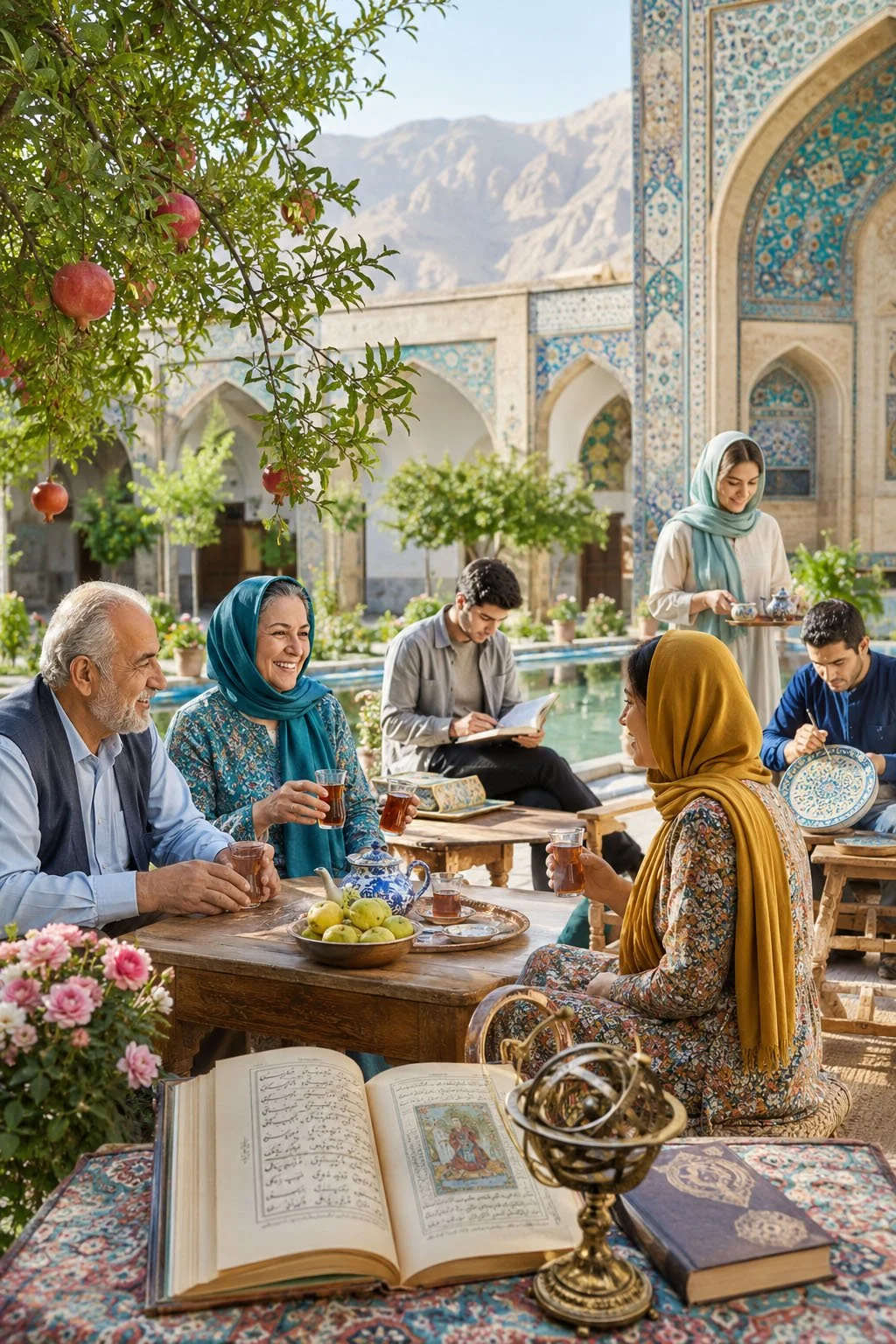
A stranger may be invited to share tea, join a family meal or accept help without any expectation of payment. Guests are treated with great care, and the dining table becomes a place of friendship and conversation.
Iranian cuisine reflects this tradition of hospitality. Fragrant rice, saffron, fresh herbs, breads, pomegranates, stews, dates and sweets are prepared with patience and pride.
Meals are not only about eating. They bring families and generations together.
Education also occupies an honoured place in Iranian society. Families often make enormous sacrifices to educate their children, and Iranian universities have produced generations of talented doctors, scientists, engineers and researchers.
Young Iranians are ambitious, creative and connected to the wider world through technology, cinema, music, literature and art. Many want greater opportunities, greater freedom and the ability to build their futures at home.
Women have played an especially important role in Iran’s education, medicine, science, literature, cinema and cultural life. Their intelligence, courage and achievements form an essential part of the modern Iranian story.
A PEOPLE WORTH KNOWING
Iranians fall in love, celebrate weddings, support football teams, listen to music, argue about politics and worry about their children—just like people everywhere.
They celebrate Nowruz, the Persian New Year, as a time of renewal, family and hope. They remember ancient poets while creating new art, technology and ideas.
To look beyond the headlines is not to ignore Iran’s political realities or the hardships faced by its people.
It is to recognise that no country can be understood through politics alone.
Whatever our political differences, every nation deserves to have its history, culture and achievements recognised with fairness and respect.
Iran’s story is far greater than conflict.
It is a story of civilisation and knowledge.
It is a story of beauty and creativity.
It is a story of endurance and quiet courage.
Above all, it is the story of a proud and deeply human people who have survived, contributed and continued to hope.
After thousands of years, Iran is still standing.
Still creating.
Still questioning.
Still welcoming.
Still dreaming.
And still refusing to bow.