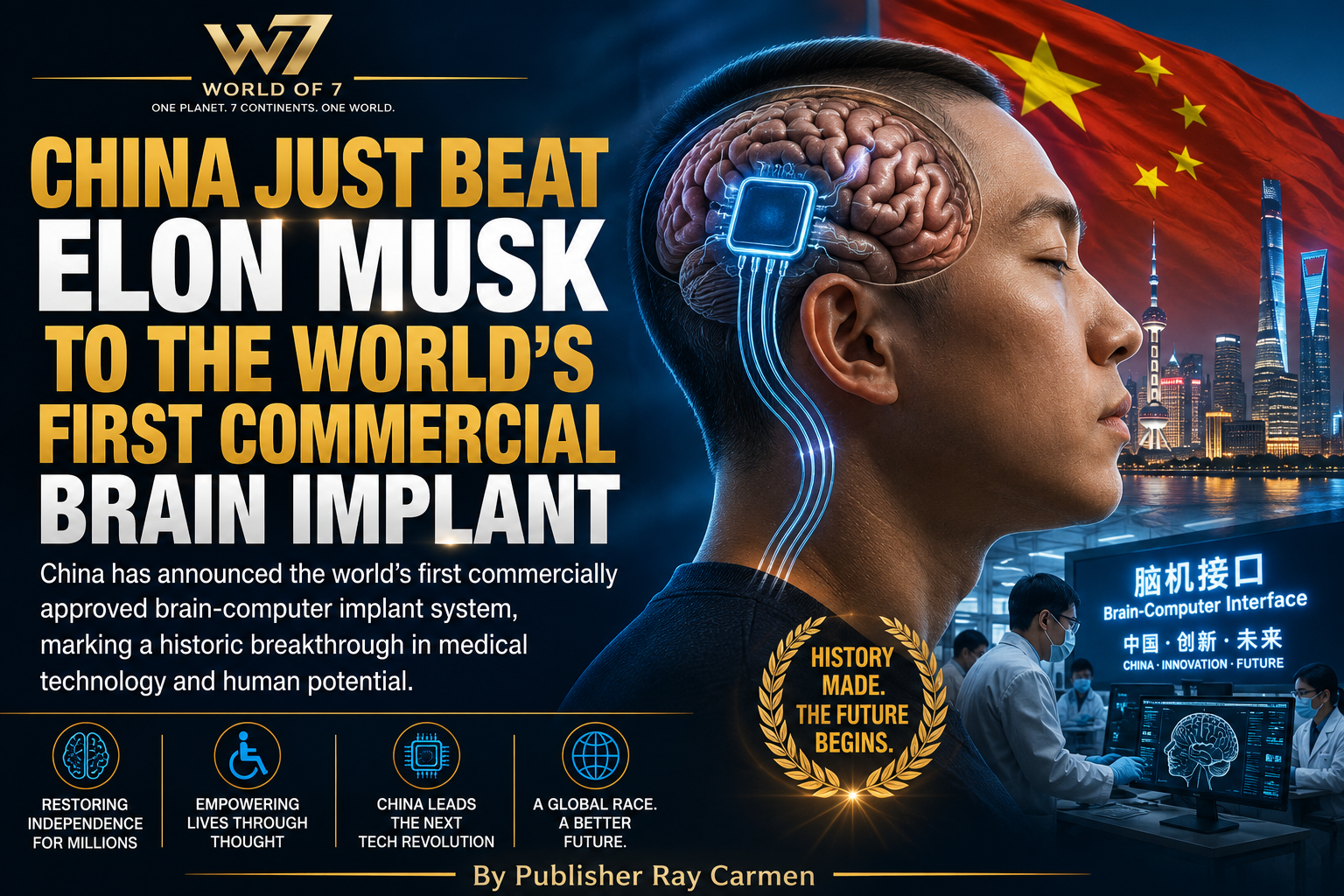
CHINA JUST BEAT ELON MUSK TO THE WORLD’S FIRST COMMERCIALLY APPROVED BRAIN IMPLANT
By Publisher Ray Carmen
The global race to connect the human brain with computers has entered a remarkable new chapter.
China has announced the commercial approval of what has been described as the world’s first commercially available brain-computer implant system, marking a significant milestone in one of the fastest-moving fields of medical technology.
The achievement places China firmly among the world’s leaders in brain-computer interface (BCI) research—a field that aims to help people with paralysis, neurological disorders and severe physical disabilities regain independence by allowing them to control digital devices using only their thoughts.
The development also intensifies competition with companies such as Elon Musk’s Neuralink, which has attracted worldwide attention for its pioneering human brain implant trials in the United States. While Neuralink continues to make important progress, China’s latest announcement highlights how rapidly innovation is accelerating across the globe.
Scientists believe brain-computer interfaces could eventually enable patients to operate wheelchairs, prosthetic limbs, computers and communication devices simply through neural activity. In the future, the technology may also contribute to advances in treating conditions such as Parkinson’s disease, epilepsy and spinal cord injuries.
Despite the excitement, experts emphasise that important ethical, privacy and safety questions remain. Long-term clinical testing, regulatory oversight and patient protection will continue to play a vital role as this technology evolves.
One thing is already clear: the race to shape the future of brain-computer technology is no longer being led by a single country or company. It has become a truly global contest—and the breakthroughs are arriving faster than ever imagined.
The next decade could fundamentally change the relationship between the human brain and technology.