
THE RETURN OF SUPERSONIC — WHO WILL WIN THE RACE?
By Publisher Ray Carmen
More than twenty years after the retirement of Concorde, the dream of commercial supersonic flight is gathering momentum once again.
For decades, passengers accepted that flying between continents would take many hours. But engineers and aerospace companies around the world believe the next generation of aircraft could dramatically reduce journey times while making supersonic travel quieter, cleaner and more efficient than ever before.
The race is on to bring the supersonic age back to life.
Boom Supersonic
Leading the race is the American aerospace company Boom Supersonic, which is developing the Overture, a new passenger aircraft designed to fly at approximately Mach 1.7—almost twice the speed of today's conventional airliners.
The company aims to combine high-speed travel with improved fuel efficiency and the use of sustainable aviation fuel, opening the possibility of significantly shorter international journeys.
NASA's Quiet Supersonic Mission
One of the greatest challenges facing earlier supersonic aircraft was the powerful sonic boom created when flying faster than the speed of sound.
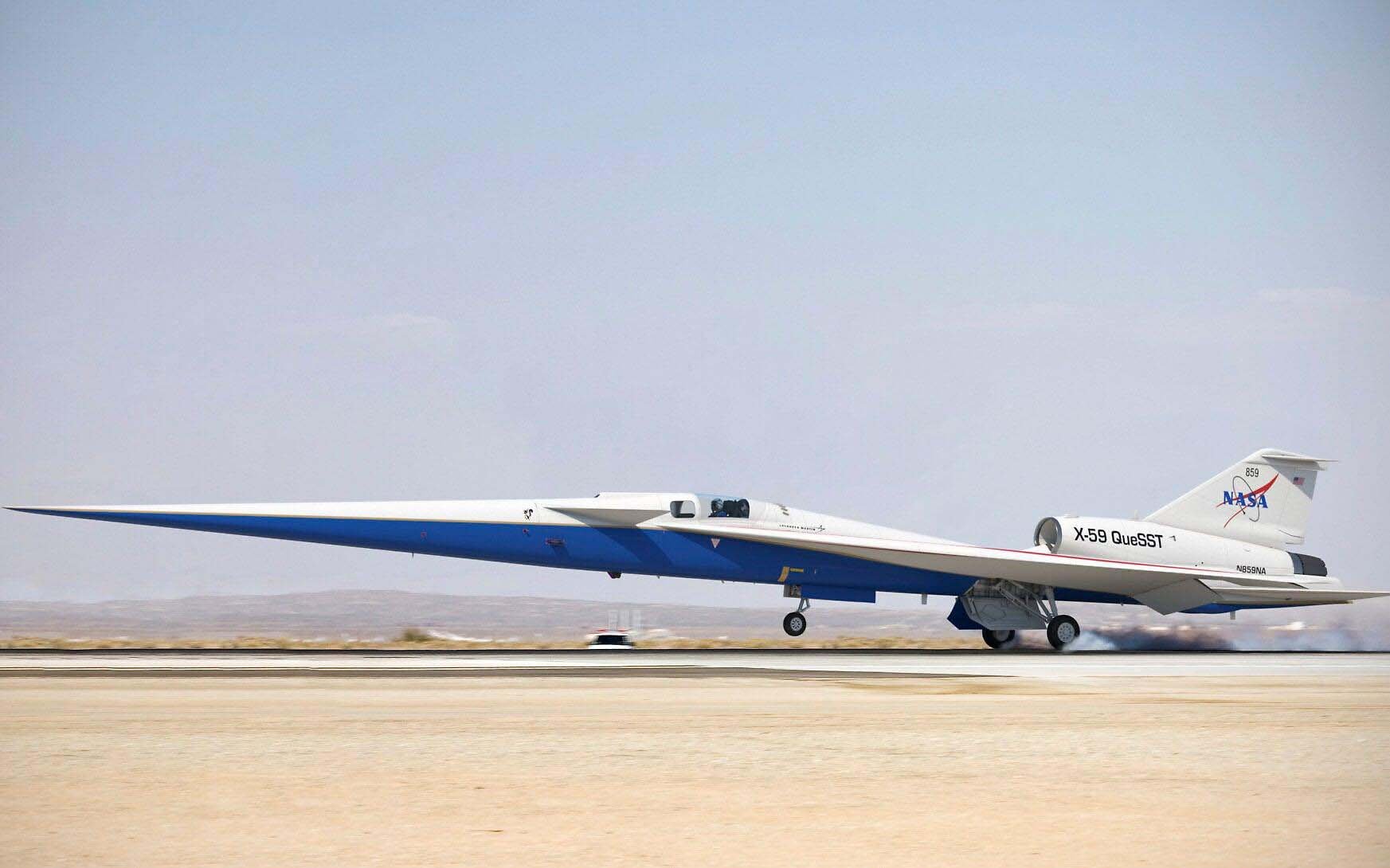
To address this, NASA is developing the experimental X-59 aircraft. Rather than producing the traditional loud boom, the X-59 is designed to generate a much quieter "sonic thump," which researchers hope could eventually allow future supersonic aircraft to fly over land with fewer restrictions.
If successful, this technology could transform the future of commercial aviation.
A NEW ERA OF GLOBAL TRAVEL
Imagine flying from London to New York in around four hours, or reducing travel times between major international cities by several hours.
For business travellers, this could mean same-day meetings across continents. For holidaymakers, it could make distant destinations far more accessible.
While commercial introduction is still some years away, advances in aircraft design, materials and engine technology are bringing the vision closer to reality.
THE CHALLENGES AHEAD
Supersonic travel still faces significant hurdles.
Manufacturers must balance speed with fuel efficiency, environmental responsibility, operating costs and passenger affordability. Aircraft must also meet strict international safety and noise regulations before entering commercial service.
These challenges are considerable, but aviation has repeatedly demonstrated that innovation can overcome obstacles once thought impossible.
THE NEXT CHAPTER OF AVIATION
The return of commercial supersonic travel would mark one of the most significant developments in aviation since the introduction of the Boeing 747 and Concorde.
Whether the next generation of aircraft is built by Boom Supersonic or another aerospace pioneer, the goal remains the same—to make the world feel smaller by connecting people faster than ever before.
The dream that began with Concorde has never disappeared.
It has simply been waiting for the technology to catch up.
THE SUPERSONIC ERA IS NO LONGER A MEMORY—IT MAY SOON BECOME THE FUTURE OF GLOBAL TRAVEL ONCE AGAIN.