
FROM THE WRIGHT BROTHERS TO HYPERSONIC FLIGHT — 125 YEARS OF AVIATION
By Publisher Ray Carmen
On 17 December 1903, two brothers from Ohio changed the course of history forever.
When Orville and Wilbur Wright lifted their fragile wooden aircraft into the skies at Kitty Hawk, North Carolina, they proved that controlled, powered human flight was possible. Their first flight lasted only 12 seconds, but it marked the beginning of one of humanity's greatest technological revolutions.
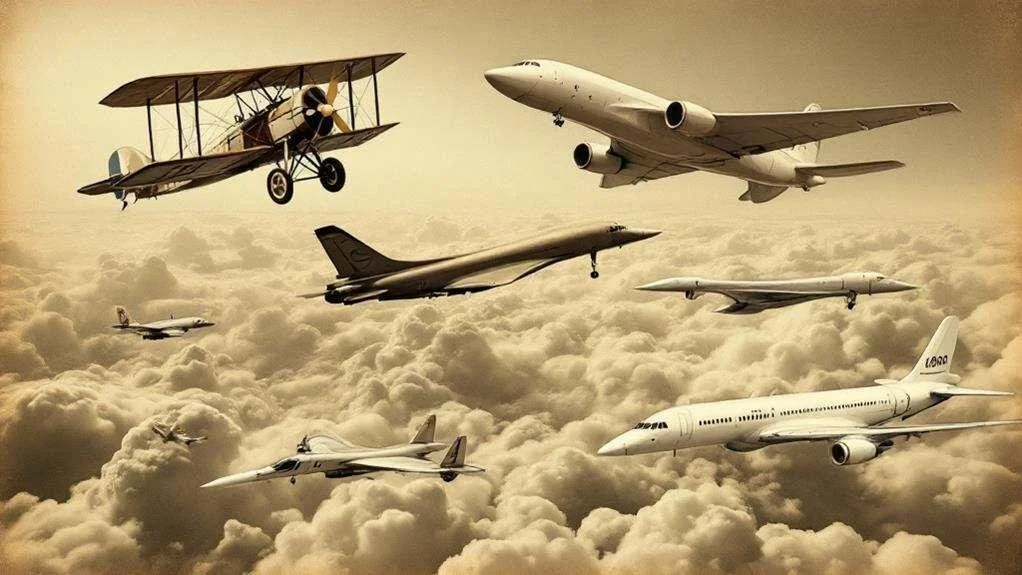
In little more than a century, aviation has transformed from a simple wooden flying machine into aircraft capable of carrying hundreds of passengers across continents, travelling faster than the speed of sound and even reaching the edge of space.
THE AGE OF DISCOVERY
The decades that followed the Wright brothers' historic achievement saw aviation develop at an astonishing pace. Aircraft became stronger, faster and more reliable, opening new possibilities for exploration, commerce and communication.
By the 1930s, aircraft such as the Douglas DC-3 had made commercial air travel practical, connecting cities and countries as never before.
THE JET AGE
Following the Second World War, aviation entered a new era with the arrival of jet-powered aircraft.
The introduction of the Boeing 707 and later the legendary Boeing 747 transformed international travel, making long-distance flights faster, more comfortable and increasingly affordable.
Millions of people who had never imagined flying overseas suddenly found the world within reach.
THE SUPERSONIC DREAM
In 1976, Concorde changed aviation once again.
Flying at more than twice the speed of sound, it reduced the journey between London and New York to around three and a half hours. Although retired in 2003, Concorde remains one of the greatest engineering achievements in the history of commercial aviation.
Its legacy continues to inspire today's engineers.
THE FUTURE IS ALREADY TAKING SHAPE
Aviation is now entering another exciting chapter.
Companies such as Boom Supersonic are developing the next generation of passenger aircraft capable of flying faster than today's airliners, while researchers continue exploring hypersonic technology that could one day reduce international journey times even further.
At the same time, manufacturers are investing in cleaner engines, sustainable aviation fuels, advanced materials and more efficient aircraft designed to reduce emissions while improving passenger comfort.
LOOKING TOWARDS TOMORROW
The future of aviation extends far beyond speed.
Electric aircraft, autonomous flight systems, artificial intelligence and new aerospace technologies are expected to reshape the way people travel during the coming decades.
Engineers are already exploring concepts that once belonged only in science fiction.
THE JOURNEY CONTINUES
The story of aviation is one of imagination, determination and innovation.
Every generation has built upon the achievements of those who came before, turning impossible dreams into everyday reality.
From a fragile aircraft flying just a few metres above a sandy beach to advanced aircraft capable of travelling at extraordinary speeds, aviation continues to inspire the world.
The Wright brothers gave humanity wings.
The next generation of engineers may one day give us the ability to cross continents in just a few hours.
One thing is certain.
The story of flight is still being written.
FROM THE FIRST FLIGHT TO THE FINAL FRONTIER, AVIATION REMAINS ONE OF HUMANITY'S GREATEST ACHIEVEMENTS—AND ITS MOST EXCITING CHAPTER MAY STILL LIE AHEAD.