
THE SONS & DAUGHTERS OF NIGERIA
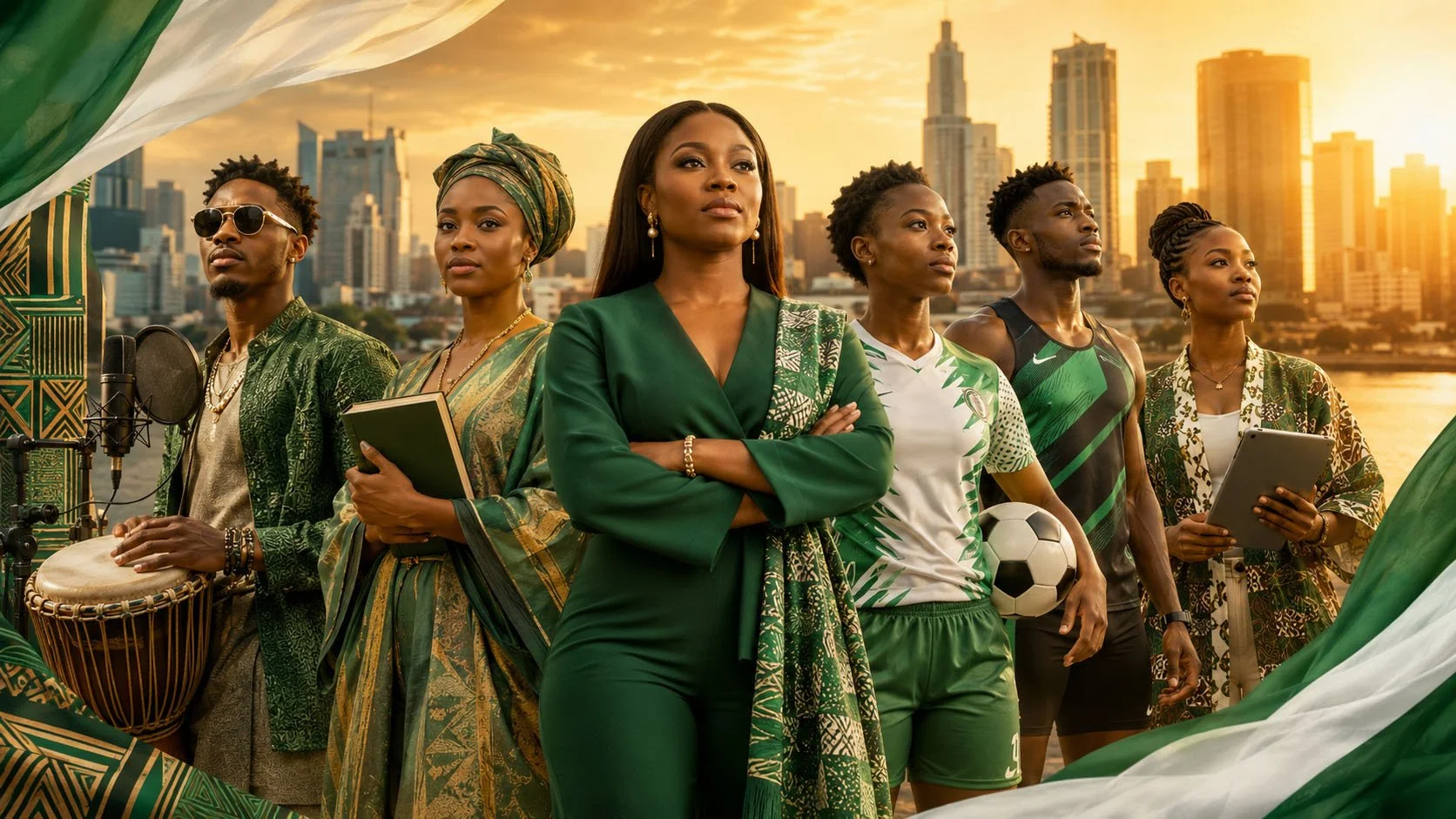
Africa’s giant of literature, music, sport, enterprise and global leadership
By Publisher Ray Carmen
Nigeria is too large, varied and energetic to be represented by a single success story.
Its winners emerge from hundreds of communities and languages, from universities and trading cities, from the music studios of Lagos, football grounds around the world and institutions that shape the global economy.
What unites them is the scale of their ambition. Nigerian achievement may begin locally, but it rarely remains local.
LITERATURE AND CULTURE
Chinua Achebe’s celebrated novel Things Fall Apart helped establish modern African fiction on the world stage. It gave generations of readers an African-centred account of history, dignity and cultural disruption.
Playwright, poet and essayist Wole Soyinka became the first African to receive the Nobel Prize in Literature in 1986.
Chimamanda Ngozi Adichie brought Nigerian history, migration, gender and identity to an enormous international readership through her novels and essays.
In music, Fela Kuti created Afrobeat by fusing powerful rhythms with fearless political commentary. Decades later, Burna Boy helped carry contemporary Afrobeats and Nigerian confidence onto the world’s largest stages.
These artists became international successes without abandoning their roots. Their local language, memory and rhythm became the foundation of their global appeal.
CHAMPIONS OF SPORT
Born in Lagos, Hakeem Olajuwon became one of basketball’s greatest centres. He won two NBA championships with the Houston Rockets and received the Finals Most Valuable Player award twice.
Chioma Ajunwa made history at the 1996 Atlanta Olympic Games. Her long-jump gold medal made her Nigeria’s first individual Olympic champion.
Asisat Oshoala became one of Africa’s most successful women footballers. A multiple African Player of the Year, she has excelled in elite international club football and inspired girls across the continent.
These champions showed that preparation, courage and discipline can turn individual talent into national pride.
WOMEN AND GLOBAL PIONEERS
Ngozi Okonjo-Iweala served as Nigeria’s finance minister and as a managing director of the World Bank. She later became the first woman and the first African to lead the World Trade Organization.
Educator and campaigner Funmilayo Ransome-Kuti challenged colonial authority and fought for women’s political and economic rights. Her courageous work made her one of modern Nigeria’s foundational civic figures.
Businesswoman and philanthropist Folorunso Alakija also demonstrated the expanding influence of Nigerian women in enterprise and charitable work.
Their importance extends beyond being successful or becoming the first. Their achievements widened professional expectations and created stronger foundations for the women following them.
ENTERPRISE AND THE NEXT GENERATION
Aliko Dangote built a major pan-African industrial group spanning cement, sugar and other essential sectors. His achievements demonstrate the extraordinary scale of Nigerian industrial ambition.
Percussionist Babatunde Olatunji introduced international audiences to Nigerian drumming and showed how cultural inheritance can become a powerful form of global exchange.
Today, a new generation of Nigerian founders, filmmakers, musicians, designers, engineers and technology innovators is building companies and creative platforms for a young, mobile-first population.
NIGERIA’S GIANT STORY
The sons and daughters of Nigeria continue to make their mark at home and throughout the diaspora.
Their achievements are supported by families that sacrificed, teachers who insisted upon excellence, communities that preserved culture and individuals who continued working when recognition was slow.
Nigeria’s writers changed world literature. Its musicians created rhythms heard across continents. Its athletes became international champions, while its women broke barriers in politics, economics and global leadership.
Together, they prove that Nigerian success is not confined by geography.
A local story can become a world classic. A rhythm born in Lagos can become the soundtrack of a generation. A childhood sporting dream can cross the Atlantic, and the determination of one reformer can reach the commanding heights of international trade.
Nigeria is not called the Giant of Africa because of population alone.
It is a giant of imagination, courage, culture and ambition—and its remarkable sons and daughters continue to make the world take notice.