
TANZANIA SAFARI ADVENTURE Across the Serengeti, Ngorongoro, Tarangire and the great southern wilderness, Tanzania turns wildlife into the journey of a lifetime.
By Publisher Ray Carmen
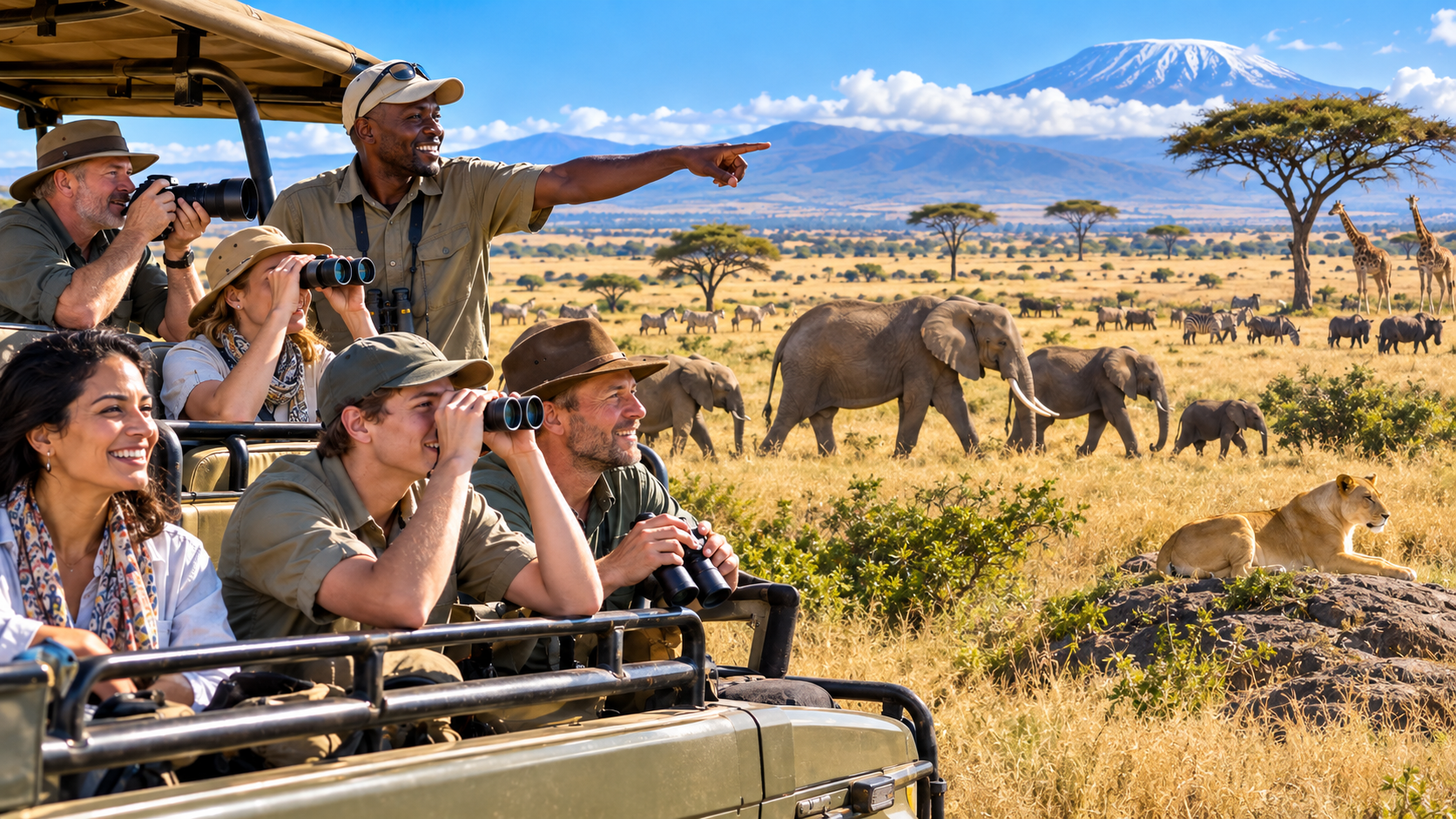
Tanzania does not reveal itself all at once. It arrives in a guide’s quiet hand signal, the sudden lift of binoculars and the shared hush inside a safari vehicle as an elephant family crosses the track.
Here, the landscape is not a backdrop. It is alive, immense and forever moving.
WHERE AFRICA MOVES BEFORE YOUR EYES
The Serengeti is Tanzania’s great theatre of movement. Its open plains carry vast herds of wildebeest, zebra and gazelle, followed by lions, cheetahs and hyenas.
The famous migration is not a single event but a living cycle shaped by rain, grass and instinct. More than a million wildebeest move through the wider Serengeti ecosystem, yet the magic is often personal: a giraffe appearing at sunrise, a lioness watching from the shade, or the first call of a bird before camp begins to stir.
A good safari leaves room for patience. The finest guides read tracks, weather, alarm calls and silence, turning every drive into a story rather than a checklist.
Travellers soon discover that the Big Five are only the opening chapter.
NGORONGORO — A WORLD WITHIN A CRATER
The road climbs through cool highland forest before the Ngorongoro Crater opens below like an entire world held inside an ancient volcanic rim.
Grassland, woodland, marsh and soda lake support an extraordinary density of wildlife, including lion, buffalo, elephant and the critically endangered black rhino.
Ngorongoro is also a cultural landscape. Maasai pastoralists have long lived with livestock across the wider conservation area. Their presence is a reminder that any honest account of Tanzania must include the people whose lives, knowledge and traditions are part of this place.
Respectful visits should be community-led, never staged as a human safari.
TARANGIRE — LAND OF ELEPHANTS AND BAOBABS
Tarangire has a different rhythm.
Giant baobabs rise above tawny grass, and in the dry season the Tarangire River becomes a lifeline. Elephants gather in memorable numbers, often travelling in close family groups beneath the trees.
The park rewards unhurried travellers with subtle encounters: dwarf mongoose at a termite mound, hornbills flashing across the road and young elephants learning the etiquette of the herd.
THE WILD SOUTH
For travellers craving space, Tanzania’s southern parks offer a deeper sense of wilderness.
In Nyerere National Park, the Rufiji River shapes a world of channels, lakes and riverine forest alive with hippos, crocodiles, elephants and more than 430 recorded bird species. The wider ecosystem remains one of Africa’s most important strongholds for African wild dogs.
Farther west, Ruaha gathers wildlife around the Great Ruaha River. Baobab country meets open plains, and the scale of the land makes each sighting feel earned.
These are places where a day may be quieter — and therefore more powerful.
THE PEOPLE WHO MAKE THE SAFARI
A safari is carried by people: the guide who understands animal behaviour, the ranger protecting a threatened landscape, the camp teams welcoming guests and the communities living beside protected areas.
Ask who owns the camp, how local staff progress into senior roles, and whether conservation fees and tourism income genuinely reach neighbouring communities.
The answers matter as much as the thread count.
TRAVEL WITH RESPECT
Give wildlife room. Never crowd, chase or block an animal. Follow your guide and keep noise low.
Protect the landscape. Stay on permitted tracks, avoid litter and choose operators with credible low-impact practices.
Respect people. Photograph only with permission and choose community experiences led by the people themselves.
Travel thoughtfully. Stay longer where possible, travel outside peak weeks and value the entire ecosystem — not only trophy sightings.
THE W7 VERDICT
Tanzania offers the grand spectacle people dream of, but its lasting gift is connection: to wild animals, to skilled local guides, to ancient landscapes and to fellow travellers sharing a moment that needs no words.
Go for the migration, the elephants and the crater. Return remembering the people who opened your eyes.