
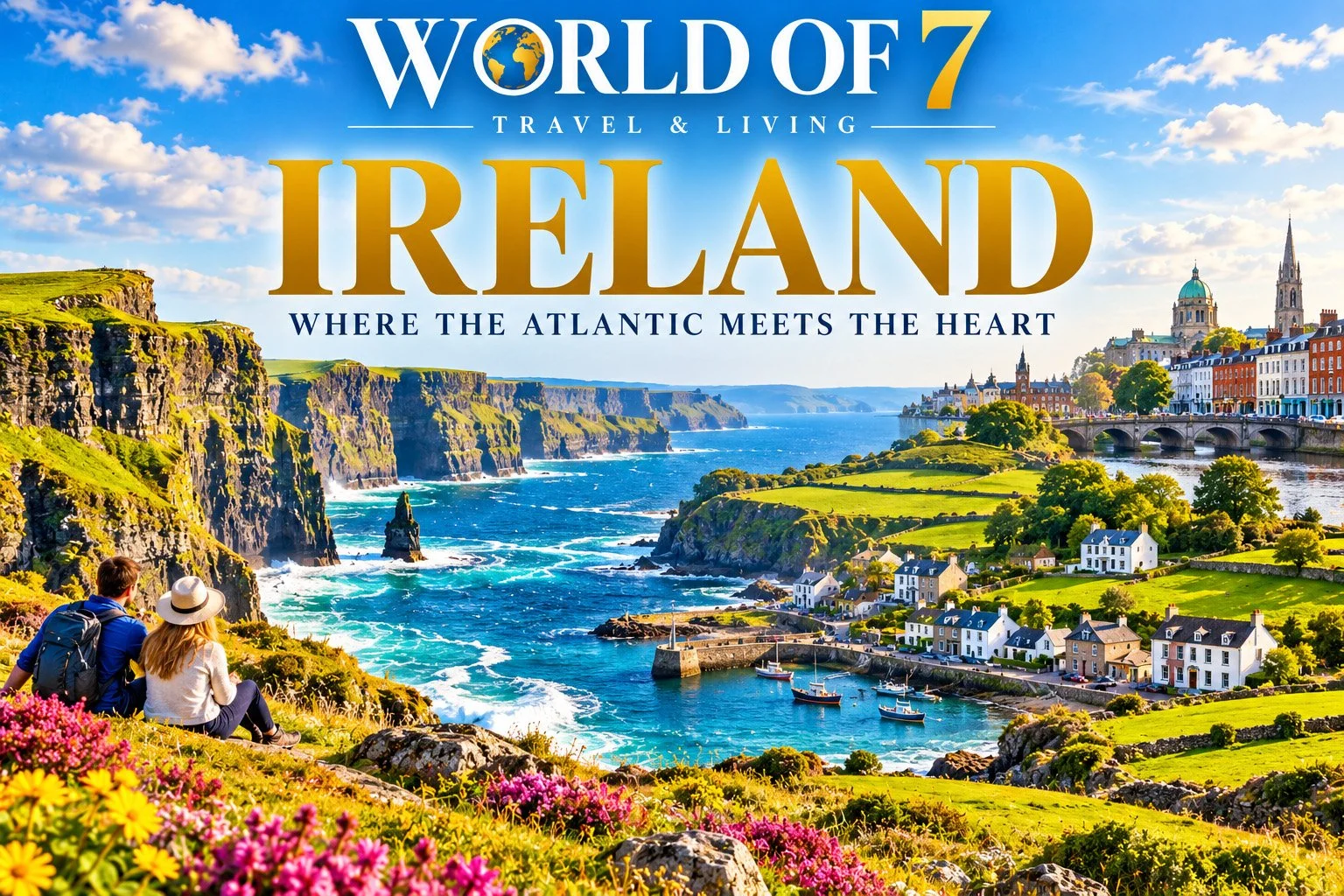
Emerald landscapes, vibrant cities, ancient stories — and the irresistible possibility of making Ireland home.
By Publisher Ray Carmen
A place that stays with you
There are countries you visit and admire. Ireland is one you feel. Beyond its remarkable coast and handsome cities lies something more enduring: a love of storytelling, an instinct for conversation and a deep connection between people and place. Travel here for the scenery — and you may find yourself imagining a longer stay.
Cover note: Original conceptual editorial artwork combining iconic Irish scenery; not a photograph of one real location.
Dublin — a capital of words, warmth and possibility
Dublin wears its history comfortably. Georgian doorways and leafy squares sit beside lively markets, modern restaurants and riverside streets where music seems never very far away. Trinity College and the Book of Kells open a window onto scholarship and craftsmanship; the city’s writers, from Oscar Wilde to James Joyce, remain part of its spirit.
Explore St Stephen’s Green, wander the streets around Grafton Street, or take the DART railway out along Dublin Bay to Howth, Dún Laoghaire and the coastal charm of Dalkey. Dublin offers the advantages of a capital city, with the sea surprisingly close.
The Wild Atlantic Way — Ireland at its most magnificent
Running for about 2,500 kilometres along the western seaboard between Donegal and Kinsale, the Wild Atlantic Way is not simply a road trip. It is a sequence of unforgettable experiences: fishing harbours, windswept headlands, gentle villages, wide beaches and cliffs that rise above the ocean.
The Cliffs of Moher in County Clare provide one of the island’s most famous views. In Connemara, mountain lakes and stone-walled pastures create a wilder, quieter mood; farther south, the Dingle Peninsula and Kerry coastline reward travellers prepared to take their time. It is a landscape to explore slowly, stopping often and respecting local weather and cliff safety advice.
Galway — music beside the sea
Galway is a small city with a generous personality. Its colourful streets, buskers and independent cafés make everyday life feel like a festival. In the Latin Quarter, traditional music spills from welcoming pubs; a walk to Salthill opens onto Galway Bay. The city is also a natural base for the Aran Islands and the dramatic scenery of Connemara.
For those dreaming of a life beyond the capital, Galway offers an appealing combination of community, creativity and western coastal scenery — though housing availability deserves careful research.
Cork — the south’s food-loving city
Cork has confidence, humour and an appetite for excellent food. The English Market showcases the region’s produce, while intimate streets and the River Lee lend the city its own rhythm. County Cork adds the brightly painted harbour town of Kinsale, the maritime history of Cobh and an abundance of bays and peninsulas.
Here, a weekend might include a market breakfast, a coastal walk and a seafood supper. It is easy to understand why some visitors begin looking at property listings before they leave.
Kerry — the Ireland of lakes, mountains and romance
Killarney National Park is among the country’s great natural treasures, with lakes, mountains, native woods and the elegant Muckross House. The Ring of Kerry offers shifting views of villages, green valleys and Atlantic shores. Whether travelling in a comfortable hotel or lingering in a small family-run guesthouse, Kerry brings a slower, more scenic rhythm to the day.
Heritage older than memory
Beyond its castles, Ireland has ancient UNESCO-listed treasures: the Neolithic passage tombs of Brú na Bóinne in County Meath, and Skellig Michael’s remarkable island monastery off Kerry. Access to Skellig Michael is seasonal and weather-dependent; its 2026 season has closed.
Northern Ireland — another remarkable chapter
The island of Ireland also includes Northern Ireland, which is part of the United Kingdom, while the Republic of Ireland is an independent state. Belfast, with its Titanic shipbuilding heritage, Victorian architecture and evolving waterfront, deserves a visit in its own right. The Giant’s Causeway on the Antrim coast, with its extraordinary volcanic basalt columns, is one of the island’s geological wonders. A trip across the island can be richly rewarding, but currency, services and certain travel requirements differ across the border.
A taste of Ireland
Fresh Atlantic seafood, farmhouse cheeses, brown soda bread, warming stews and contemporary cooking give visitors plenty to discover. But the most memorable meal may not be the most elaborate: a simple lunch after a walk, followed by conversation in a village café, can capture the country’s hospitality. Traditional music sessions are not stage shows alone; they are a living part of local culture.
Living in Ireland — the dream and the practicalities
Choosing where to live is a question of lifestyle. Dublin offers employment, universities, cultural institutions and major transport connections. Cork and Galway combine active urban centres with easier access to coastal landscapes. Smaller towns may appeal to those seeking a quieter pace, though healthcare access, transport links and daily services should be examined carefully before moving.
Housing is a serious consideration, particularly in larger cities and desirable coastal areas. Prospective residents should research current purchase prices, rental availability, energy efficiency, insurance and commuting costs rather than relying on holiday impressions. Ireland’s famously changeable weather is another reason to spend time there outside the summer months.
British and Irish citizens benefit from the Common Travel Area, which generally permits them to live and work in either country. Other nationalities should check the relevant immigration rules. The Republic uses the euro; Northern Ireland uses pounds sterling.
When to go — and why to return
Late spring offers long, fresh days; summer brings festivals and busy coastal towns; early autumn can be beautiful for quieter touring. Pack layers and a waterproof jacket in every season. Allow more time than the map suggests: on Irish roads, the best moments often happen when you are not in a hurry.
Ireland’s greatest luxury is not found in any one grand hotel, renowned restaurant or famous viewpoint. It is the feeling that around the next bend might be a place you want to stay — perhaps not for another night, but for another chapter of your life.