
THE FUTURE OF ELECTRIC SAILING
By Publisher Ray Carmen
The sailing industry is entering a new era in which traditional wind power is being combined with batteries, solar energy, advanced materials and intelligent onboard systems.
Sailing has always used one of nature’s greatest renewable resources: the wind. The challenge has been reducing the environmental impact of the engines, generators and hotel systems required when a vessel is not under sail.
Electric and hybrid propulsion systems are beginning to change that.
Modern electric yachts can move quietly through harbours and protected waters without the vibration and local exhaust emissions produced by conventional diesel engines. On suitable journeys, batteries may be replenished through shore power, solar panels or hydro-generation systems driven by the movement of the yacht through the water.
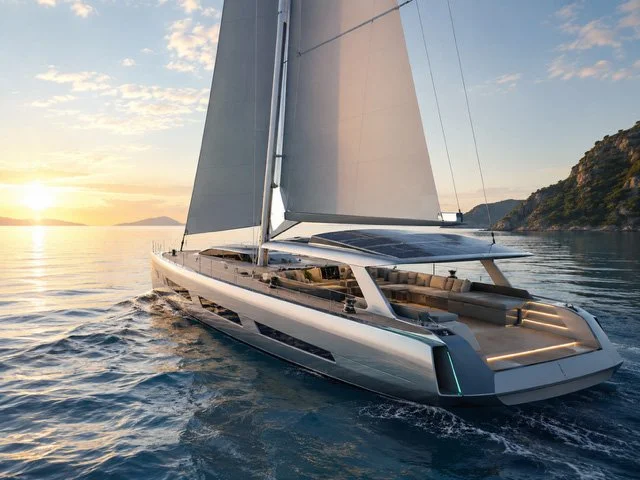
Solar panels are increasingly being incorporated into decks, roofs and rigid sails. Lightweight batteries and more efficient electric motors are extending cruising ranges, while intelligent energy-management systems decide how power should be generated, stored and distributed.
Foiling technology may also play a role by lifting parts of a vessel above the water and reducing drag. Lighter construction materials can further improve efficiency.
For larger yachts, alternative fuels such as green methanol, hydrogen-derived fuels and sustainably produced biofuels are being explored. No single solution is likely to suit every vessel.
Marinas will also have to evolve by installing more powerful charging systems and supplying electricity generated from cleaner sources.
Electric sailing will not remove the need for skilled sailors or responsible seamanship. It will instead provide new tools for navigating the world more quietly and efficiently.
THE FUTURE OF SAILING WILL BE CLEANER, QUIETER AND POWERED BY NATURE.