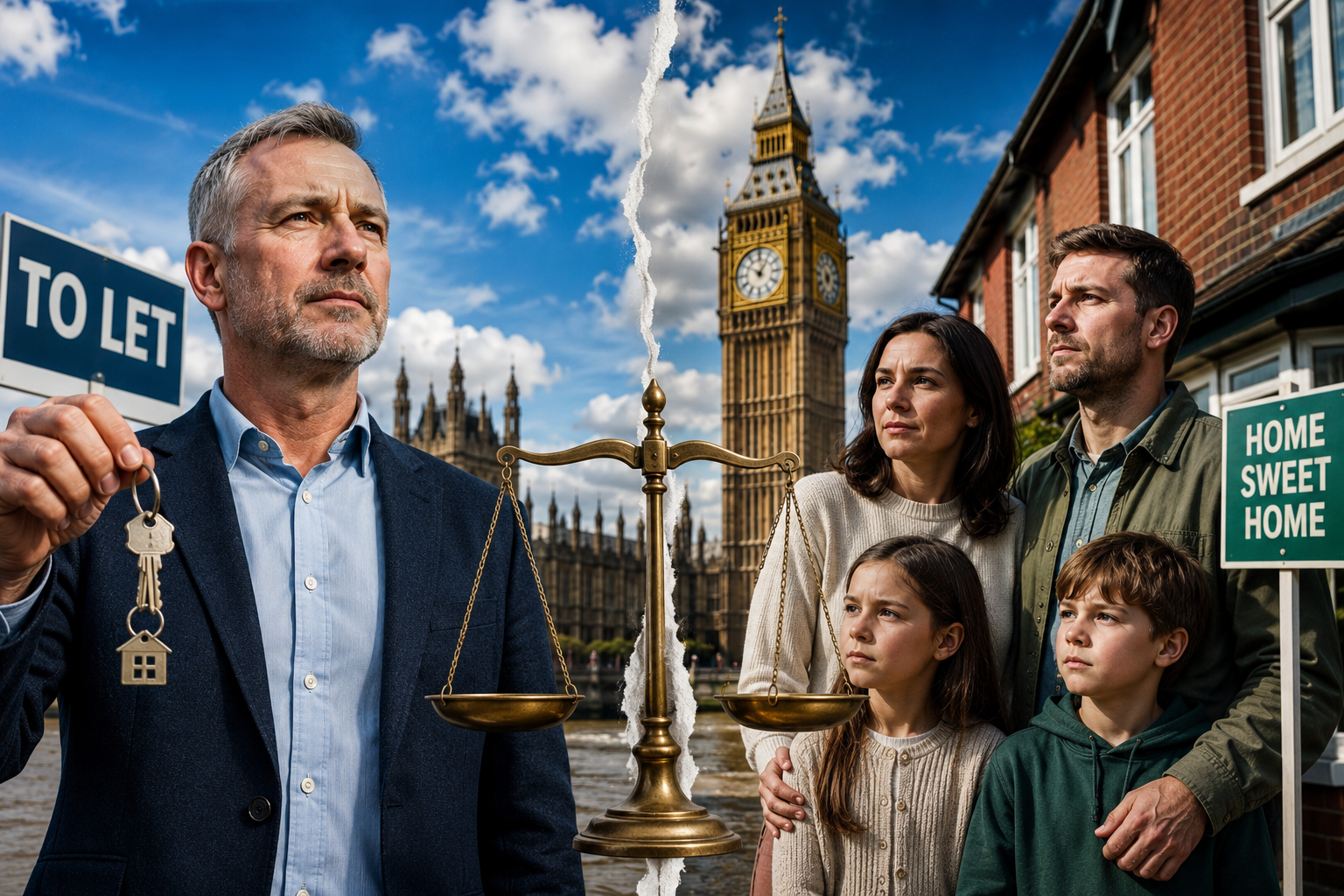
THE GREAT RENTAL DEBATE : HAVE BRITAIN’S NEW RENTAL LAWS GONE TOO FAR?
By Publisher Ray Carmen
For decades, Britain’s rental market has operated on a delicate balance between landlords and tenants.
Today, many property owners believe that balance is being fundamentally rewritten.
The government’s proposed rental reforms have been welcomed by tenant groups, housing charities and campaigners who argue that renters deserve greater protection and security.
Yet thousands of landlords across the United Kingdom are asking a very different question:
Who is protecting the landlords?
The debate has become one of the most controversial issues facing Britain’s property sector.
At the heart of the reforms is the abolition of so-called “no-fault” evictions, often known as Section 21 notices, alongside new protections designed to provide tenants with greater security in their homes.
Supporters argue that families should not live under constant fear of eviction.
Critics argue that the reforms risk creating a system where landlords carry all of the risk while tenants carry very little.
Many landlords point out that they are not giant corporations.
They are ordinary individuals who invested savings, pensions and retirement funds into property, often after decades of work.
Some own a single rental property.
Others own two or three.
For many, rental income forms part of their retirement planning.
Their concern is straightforward.
If a tenant stops paying rent, causes significant damage, or creates persistent problems, landlords fear the process of regaining possession could become increasingly difficult, expensive and time-consuming.
Some argue that the reforms may discourage investment in the private rental sector altogether.
And if landlords leave the market?
The supply of rental properties may shrink.
Economics tells us that when supply falls and demand remains high, rents often rise.
Ironically, the very people the reforms seek to help could ultimately face higher rental costs.
Tenant groups see the issue differently.
They argue that secure housing is a fundamental necessity and that too many renters have faced uncertainty, sudden eviction notices and an inability to challenge poor housing conditions.
From their perspective, the reforms are long overdue.
They believe that responsible landlords have little to fear and that the changes will simply remove unfair practices from the market.
This is where the real debate begins.
Can a system be created that protects tenants from unfair treatment while also protecting landlords from financial loss and unnecessary legal battles?
Many industry experts believe the answer lies not in favouring one side over the other, but in creating a genuinely balanced framework.
A rental market cannot function without tenants.
But it also cannot function without landlords.
The danger for policymakers is that in attempting to solve one problem, they inadvertently create another.
The United Kingdom already faces a significant housing shortage.
Driving private investment away from the rental sector may ultimately reduce housing availability and increase pressure on an already strained market.
Good law should protect the vulnerable.
Great law should protect everyone.
The challenge for Britain’s lawmakers is ensuring that the pursuit of fairness for tenants does not unintentionally create unfairness for landlords.
Because when one side of the housing equation feels ignored, the consequences are eventually felt by both.
THE WORLD OF 7 VIEW
The rental market works best when both landlords and tenants are treated fairly.
Protecting tenants is important.
Protecting property rights is equally important.
The future success of Britain’s housing market may depend not on choosing one side over the other, but on ensuring that neither side is forgotten.
ENDLESS LOVE. ENDLESS STORIES. ENDLESS WORLD OF 7.
Suggested Hero Image Concept (WORLD OF 7):
A dramatic split-screen image showing a British landlord holding house keys on one side and a tenant family standing outside a home on the other, with the Palace of Westminster in the background under bright blue skies. The scales of justice appear subtly between them, symbolising the debate over fairness in Britain’s rental market. Please create an image for this article no mention of world of 7 or caribbean world magazine