
NETHERLANDS BUILT NEW ISLANDS FROM 37 MILLION TONNES OF MUD
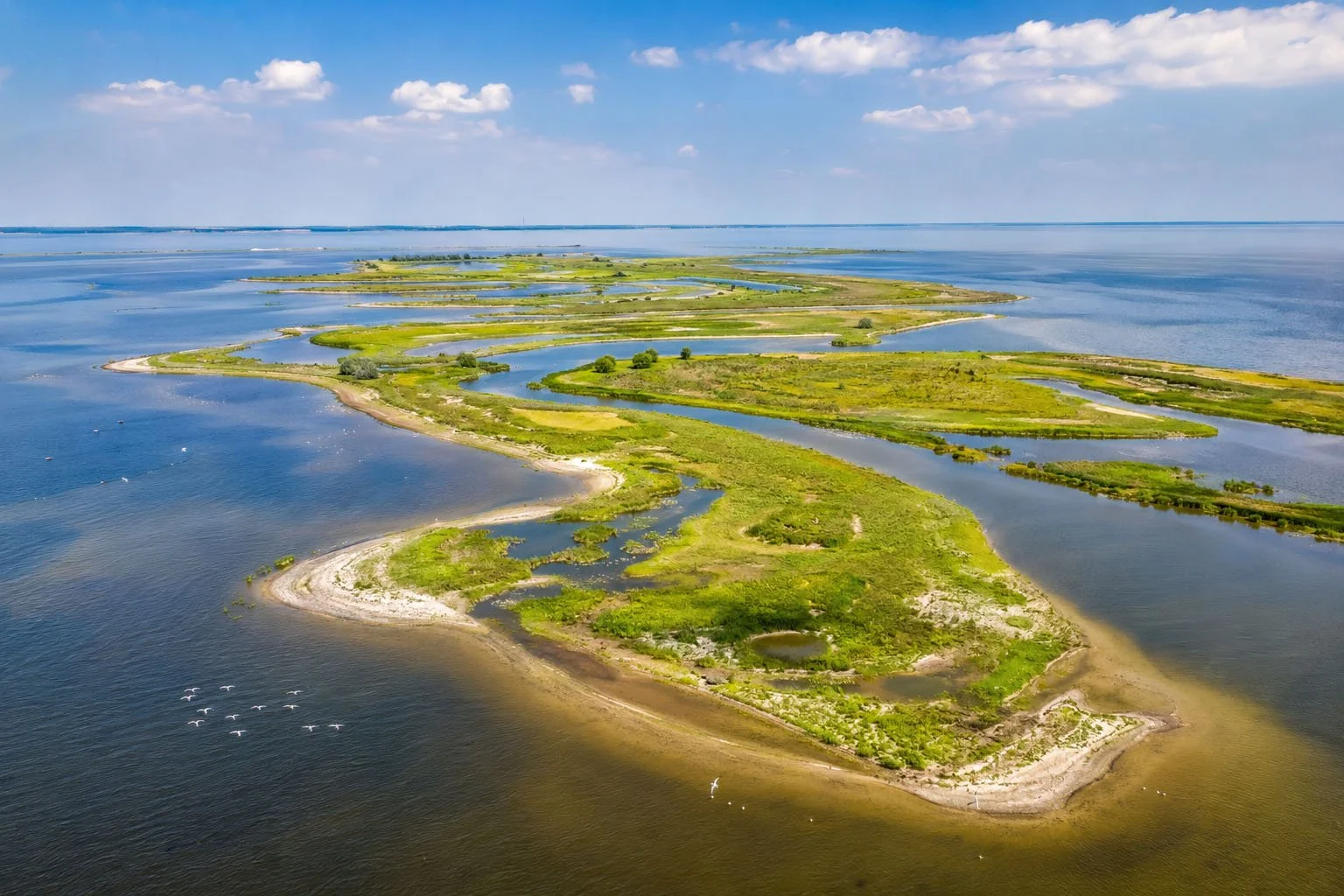
By Publisher Ray Carmen
How Dutch engineering transformed unwanted lake sediment into the Marker Wadden — a flourishing new archipelago for birds, fish and people.
The Dutch have spent centuries mastering the relationship between land and water. At Markermeer, that national talent has taken an extraordinary new direction: instead of reclaiming land for cities or agriculture, engineers have created islands for nature.
Since work began in 2016, enormous quantities of sand, clay, peat and fine lake-bed silt have been dredged and shaped into the Marker Wadden.
Recent reports put the material used at approximately 37 million tonnes. What had accumulated as an ecological problem on the lake floor has become the foundation of beaches, reed beds, mudflats, sheltered shallows and valuable new breeding grounds.
FROM TROUBLED LAKE TO LIVING LANDSCAPE
Markermeer is one of Western Europe’s largest freshwater lakes. After the former Zuiderzee was enclosed, currents weakened and fine sediment remained suspended or settled across the lake.
The water became increasingly cloudy, underwater plant life suffered and the food chains supporting fish and birds declined.
The Marker Wadden concept, led by the Dutch conservation organisation Natuurmonumenten alongside government and engineering partners, tackled both problems simultaneously.
Dredgers removed sediment from the lake bed, while carefully designed sandy barriers held the softer material in position. Nature was then allowed to perform much of the finishing work.
The result is not a conventional land-reclamation scheme. These are low, dynamic wetland islands designed around the important transitions between land and water — precisely the rich habitat that the altered lake had lost.
WILDLIFE MOVED IN ALMOST IMMEDIATELY
Even during construction, birds began arriving.
The new shallows provide feeding grounds; bare sand and mud offer nesting and resting places; while reeds and marsh vegetation create protective shelter.
Avocets, common terns, spoonbills, gulls, ducks and numerous other water birds have been recorded around the reserve.
Below the surface, varied depths and calmer water are helping to rebuild habitats for fish and other aquatic life.
That rapid colonisation is the project’s most compelling achievement. Engineers created the physical conditions, but the ecosystem establishing itself upon them is entirely natural — a striking partnership between technology and rewilding.
A DESTINATION WITH A PURPOSE
Most of Marker Wadden is protected for wildlife, but the principal visitor island provides a carefully managed window onto this extraordinary landscape.
Visitors can travel from Lelystad, follow walking trails, explore the visitor centre and observe the wetlands from bird hides and a watchtower.
It is eco-tourism with a clear purpose: connecting people with environmental restoration without surrendering the reserve to mass development.
For the Netherlands, the islands reinforce the country’s powerful international reputation for water management, landscape design and nature-based engineering.
For the wider world, they provide a living laboratory.
Lakes, deltas and coastal regions everywhere face sediment accumulation, habitat destruction and mounting pressure from climate change. Marker Wadden demonstrates that dredged material does not always need to be treated as waste. Used intelligently, it can become the raw material for ecological renewal.
TURNING MUD INTO HOPE
Thirty-seven million tonnes of mud sounds like an immense industrial burden.
In Dutch hands, however, it became an archipelago alive with wings, reeds and water.
Marker Wadden is far more than a remarkable feat of engineering. It is proof that damaged landscapes can be redesigned around life rather than merely repaired.
The Netherlands did not simply build new islands.
It created a new possibility — showing how human ingenuity can give nature the space, structure and time to return.