THE PEACOCK OF HINDUISM : THE SACRED BIRD OF BEAUTY, WISDOM AND DIVINE POWER
By Publisher Ray Carmen
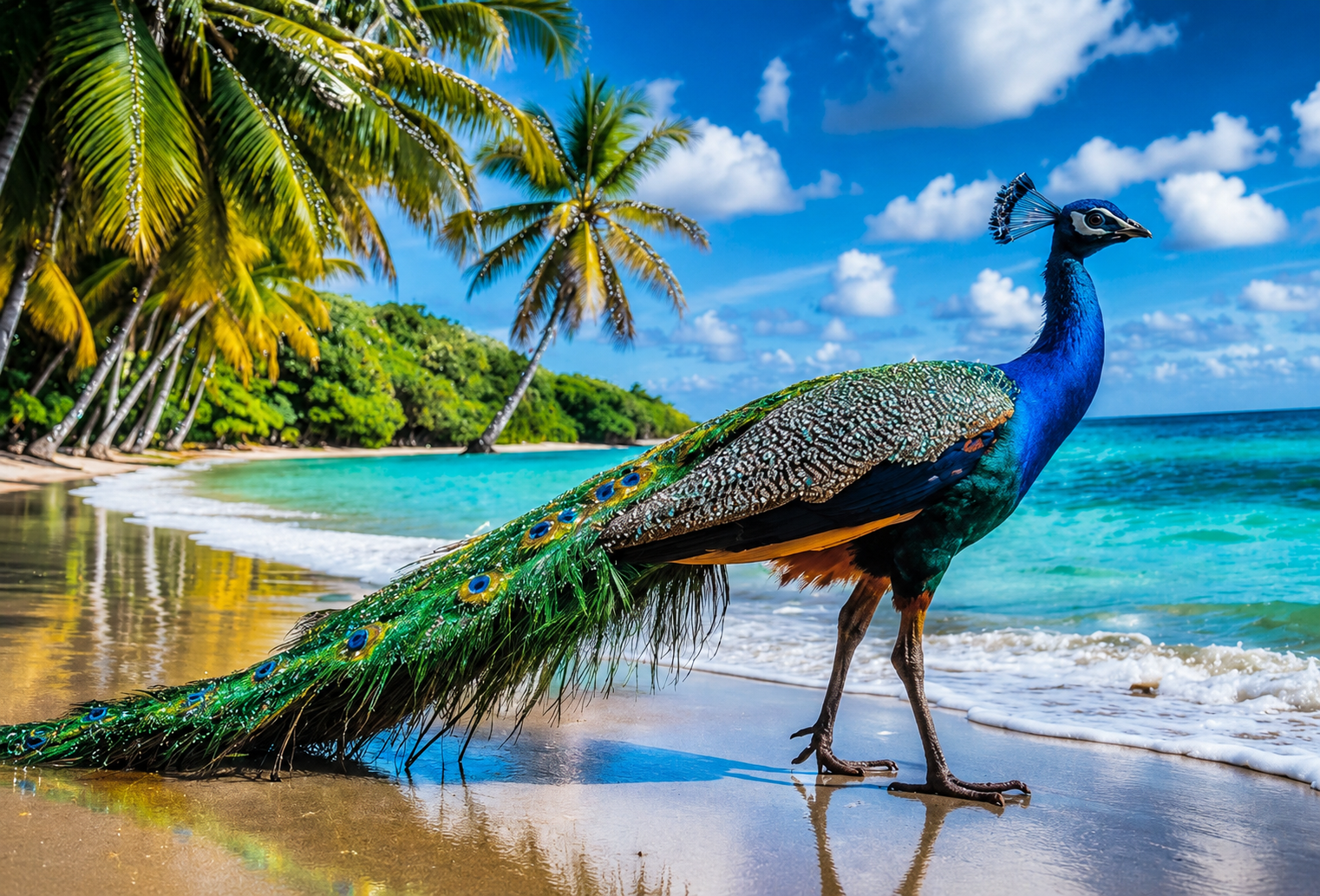
Among all the creatures celebrated in Hindu tradition, few possess the beauty, mystery and spiritual significance of the peacock.
Known in Sanskrit as the Mayura, the peacock is far more than India’s national bird. For millions of Hindus around the world, it is a sacred symbol representing beauty, royalty, immortality, wisdom, protection and divine grace.
Its magnificent fan of iridescent feathers has inspired poets, artists, kings and spiritual seekers for thousands of years. Yet behind its breathtaking appearance lies a much deeper spiritual meaning.
In Hindu philosophy, the peacock represents the cosmos itself : a reminder that beauty and wisdom can triumph over pride, ignorance and ego.
THE FEATHER OF LORD KRISHNA
Krishna is perhaps the deity most closely associated with the peacock.
Ancient legends tell how peacocks became enchanted by the divine music of Krishna’s flute. As they danced in joy, they offered their most beautiful feathers as a gift.
Touched by their devotion, Krishna placed a peacock feather in his crown and promised to wear it forever.
Today, the peacock feather remains one of the most recognisable symbols of Krishna and represents divine love, beauty, humility and the harmony between humanity and nature.
For countless devotees, the image of Krishna beneath a tree with a flute and peacock feather is one of the most beloved scenes in Hindu spirituality.
THE PEACOCK OF LORD KARTIKEYA
Kartikeya — also known as Murugan, Skanda or Subrahmanya : rides a majestic peacock as his sacred vehicle or vahana.
In Hindu symbolism, the peacock represents the conquest of arrogance, vanity and ego.
Kartikeya, the divine warrior and commander of the celestial armies, rides upon the bird to demonstrate that wisdom and spiritual knowledge must always govern human pride.
Throughout South India, Sri Lanka, Malaysia and Singapore, Murugan temples often feature magnificent peacock imagery, reminding devotees that true strength comes from self-mastery.
THE GIFT OF LORD INDRA
Indra is also linked to the peacock through a famous story from the Ramayana tradition.
According to legend, when the demon king Ravana threatened Indra, a courageous peacock protected the king of the gods.
In gratitude, Indra blessed the bird with its spectacular tail, filling it with countless shimmering “eyes.”
These eye-like markings came to symbolise divine awareness, vigilance and heavenly protection.
Even today, many Hindus regard the peacock’s tail as a reminder that the divine sees and watches over all creation.
THE BIRD OF WISDOM AND PROSPERITY
The peacock is closely associated with both:
Saraswati : Goddess of wisdom, learning, music and knowledge.
Lakshmi : Goddess of prosperity, abundance and good fortune.
Because of these sacred associations, peacocks are often viewed as symbols of intellectual enlightenment and material prosperity.
Their presence in temple art and religious imagery reflects the belief that wisdom and abundance flourish together when guided by virtue.
THE CONNECTION TO LORD SHIVA
Shiva is also symbolically linked to the peacock.
Hindu tradition teaches that Shiva consumed the deadly Halahala poison during the churning of the cosmic ocean in order to save creation.
The striking electric-blue colour of the peacock’s neck is sometimes interpreted as reflecting Shiva’s sacrifice.
The bird therefore represents the remarkable ability to absorb darkness, negativity and adversity without being destroyed by them.
In this sense, the peacock becomes a symbol of spiritual transformation — turning poison into beauty and hardship into wisdom.
PEACOCK FEATHERS IN HINDU HOMES
For centuries, many Hindu families have kept peacock feathers in their homes.
Traditionally they are believed to:
Attract prosperity and good fortune.
Encourage positive energy.
Promote peace and harmony.
Offer spiritual protection.
Symbolise divine blessings.
Historically, peacock feathers were also valued for practical purposes, as they were thought to help repel certain insects and protect stored items.
Whether viewed spiritually or culturally, the peacock feather continues to occupy a special place in Hindu households across the world.
A SACRED SYMBOL OF THE ETERNAL
The peacock’s enduring importance in Hinduism lies not only in its beauty but in what that beauty represents.
Its feathers remind us of the vastness of the cosmos.
Its connection to Krishna speaks of divine love.
Its association with Kartikeya teaches the conquest of ego.
Its blessing from Indra symbolises protection.
Its links to Saraswati and Lakshmi represent wisdom and prosperity.
And its connection to Shiva reminds us that even darkness can be transformed into light.
For thousands of years, the peacock has stood as one of Hinduism’s most cherished symbols — a radiant reminder that true greatness is found not in power or pride, but in wisdom, humility and spiritual awakening.
ENDLESS LOVE. ENDLESS STORIES. ENDLESS WORLD OF 7.