
By Publisher Ray Carmen
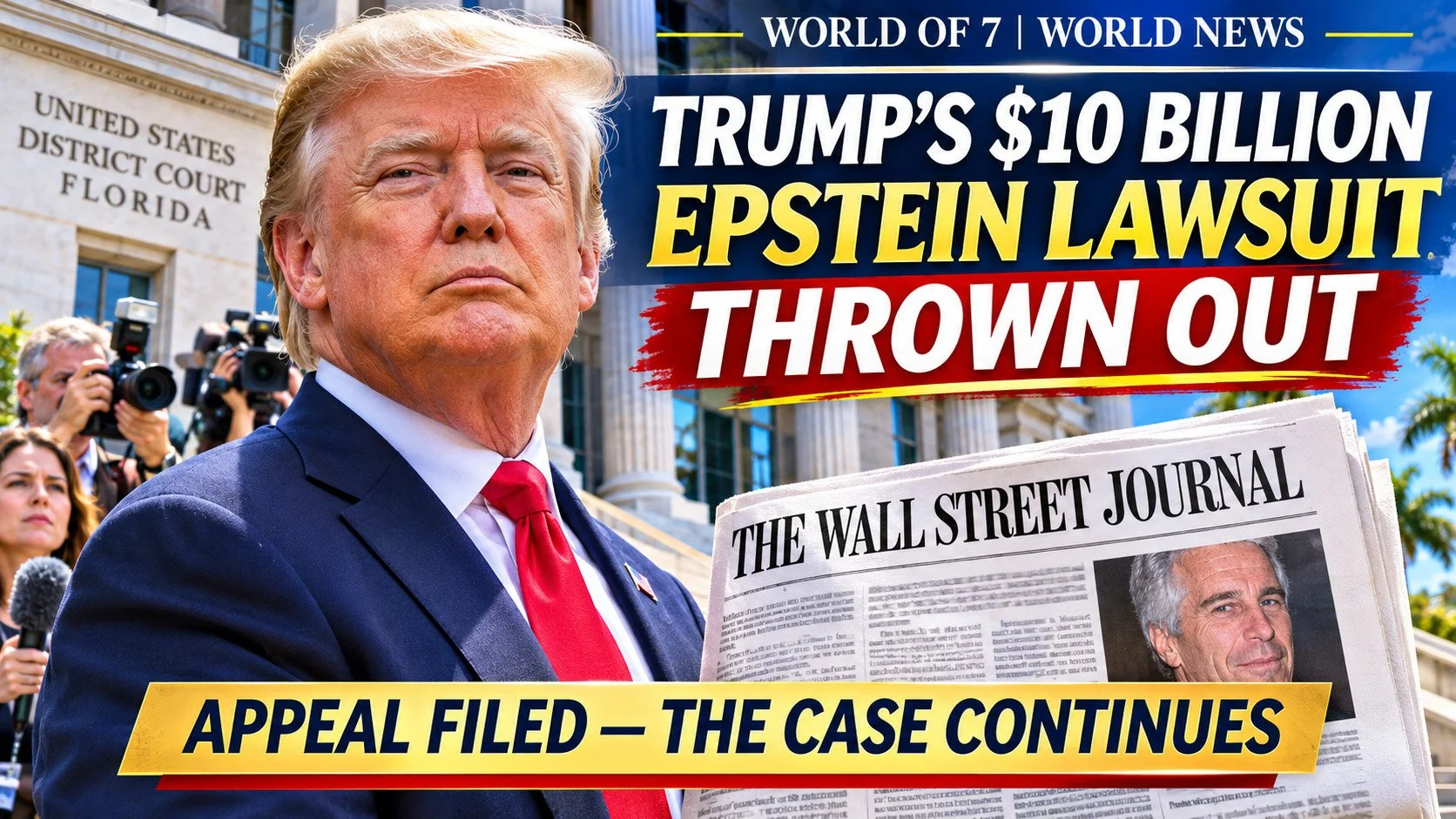
A federal judge rejected the president’s defamation claims against The Wall Street Journal. Days later, Trump filed an appeal. The disputed letter’s authorship remains unresolved.
A courtroom defeat — and a swift appeal
Donald Trump has suffered a significant legal setback in his confrontation with The Wall Street Journal over its reporting on a purported birthday letter to Jeffrey Epstein. On 31 October 2026, US District Judge Darrin P. Gayles dismissed the president’s amended defamation complaint with prejudice, blocking another attempt to rewrite and refile it in that district court. But the fight did not stop there: Trump filed a notice of appeal to the US Court of Appeals for the Eleventh Circuit on 4 November.
The distinction matters. This was a dismissal of a civil defamation lawsuit at the pleading stage, not a jury verdict deciding who created the alleged letter — and not a finding that Trump participated in Epstein’s crimes. The president continues to deny authoring or signing the document.
How an alleged birthday message became a $10 billion case
The controversy began with the Journal’s July 2025 report about a 2003 album prepared for Epstein’s 50th birthday. The newspaper described a suggestive message bearing Trump’s name, including a drawing and a signature reading ‘Donald’. Trump vehemently rejected the story, saying the message was fabricated and insisting that he had not written or drawn it.
He brought a defamation action seeking at least $10 billion against the Journal’s publisher, Dow Jones, and other defendants, including News Corp, Rupert Murdoch, senior executive Robert Thomson and reporters Khadeeja Safdar and Joseph Palazzolo. An earlier version was dismissed in April 2026, but the court permitted an amended complaint. The second dismissal, issued on 31 October, was with prejudice.
Why the judge dismissed it
For a prominent public figure to win a US defamation case, it is not enough to argue that a report was wrong or damaging. The plaintiff must satisfy the demanding constitutional standard known as ‘actual malice’: that the publisher knew a statement was false or acted with reckless disregard for whether it was true. At this preliminary stage, Trump had to allege sufficient facts to make that claim plausible.
Judge Gayles concluded that the amended complaint still did not meet that threshold. He pointed to the Journal’s reporting steps, including requests for responses from Trump and his representatives, law-enforcement authorities and other people connected with the album. Crucially, the published article disclosed Trump’s denial rather than concealing it. The judge said that choosing to publish in the face of a denial, by itself, was not evidence of actual malice.
That ruling is important for press freedom, but its limits must also be respected. The judge expressly declined to determine whether the Journal’s statements were true or defamatory, and said questions about the alleged letter’s authorship were factual matters not resolved by this motion.
What happens next?
Trump’s lawyers have appealed the 31 October decision. An appeal gives a higher court the opportunity to consider whether the dismissal should stand; it does not erase the district judge’s ruling and does not itself prove that either side is right about the letter.
Dow Jones welcomed the dismissal. Trump’s legal representatives signalled that they would continue challenging the newspaper, and the president has maintained his denial. The immediate legal question is whether his complaint met the required pleading standard. The larger public dispute about the alleged 2003 message remains contested.
For WORLD OF 7 readers, the central lesson is one of precision: Trump lost this round in federal district court, but the case moved to the appeal stage. A court’s decision about the legal sufficiency of a defamation claim is not the same thing as a judicial determination of a disputed document’s authenticity.