
EPSTEIN’S BANKERS UNDER THE SPOTLIGHT
By Publisher Ray Carmen
US Lawmakers Introduce Sweeping Legislation to Expose Financial Connections and Hold Banks Accountable
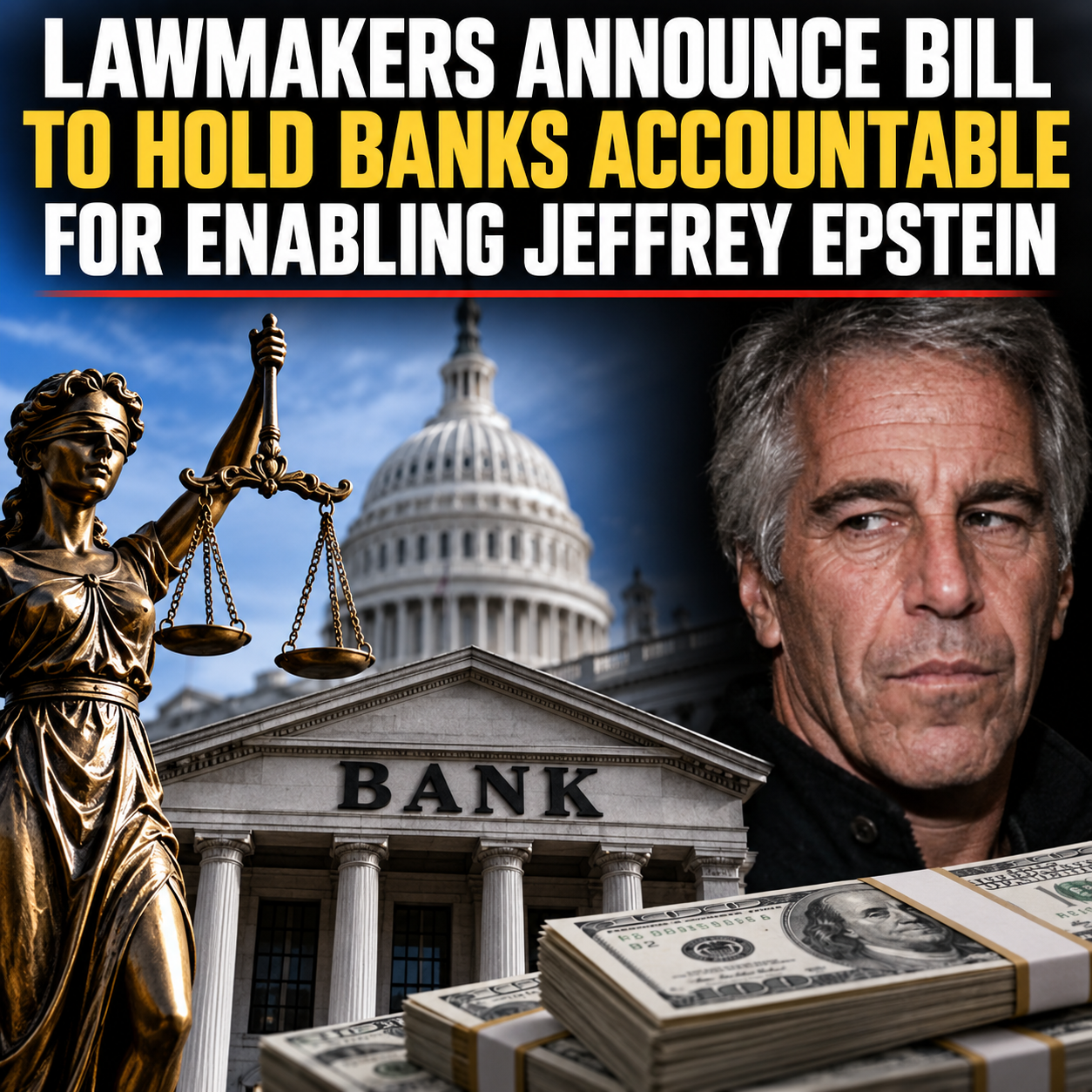
WASHINGTON, UNITED STATES — The financial empire that helped sustain Jeffrey Epstein’s privileged lifestyle is facing renewed scrutiny as American lawmakers introduce legislation designed to expose the banking relationships surrounding the disgraced financier and convicted sex offender.
In a significant development, a bipartisan group of United States lawmakers has introduced the Epstein Wall Street Records Act of 2026, seeking greater transparency from financial institutions and regulators over their dealings with Epstein.
The proposed legislation, introduced on 15 October 2026, could lead to investigations, financial penalties and professional bans for banking executives found responsible for violations of federal law.
It also raises a question that has troubled investigators, survivors and the public for years:
How was Jeffrey Epstein able to maintain extensive financial relationships while allegations of serious criminal activity surrounded him?
THE MONEY TRAIL
For years, investigations into Epstein concentrated on his criminal activities, influential acquaintances and the circumstances surrounding his death in a New York jail in August 2019.
Now attention is turning towards another dimension of the scandal: the financial institutions that handled his money.
The proposed legislation seeks to establish whether banks and their executives complied with federal banking, securities and anti-money-laundering laws when conducting business connected to Epstein.
Its supporters argue that financial records could provide important evidence about how his operations were funded and whether warning signs were overlooked.
The bill is not itself a finding of wrongdoing by any particular financial institution.
WARREN AND GARCIA LEAD THE CHARGE
The legislation is being championed by Democratic Senator Elizabeth Warren of Massachusetts and Democratic Congressman Robert Garcia of California.
They are joined by lawmakers from both major American political parties, including Republican Congressman Thomas Massie and Democratic Congressman Ro Khanna.
The bipartisan initiative reflects growing congressional pressure for greater disclosure of Epstein-related records.
Warren has previously questioned major financial institutions and regulators about their knowledge of Epstein’s financial dealings.
Garcia has similarly called for greater scrutiny of the institutions and individuals involved in Epstein’s financial network.
Their proposed legislation would create additional obligations for regulators to disclose information and investigate potential violations.
WHAT THE NEW LEGISLATION WOULD DO
The Epstein Wall Street Records Act proposes several important measures.
1. Release financial records
Federal financial regulators would be required to disclose relevant supervisory records concerning Epstein and associated individuals and institutions.
2. Investigate financial institutions
Regulators would examine whether banks or executives violated federal banking, securities or anti-money-laundering laws.
3. Pursue accountability
Where qualifying violations are established, regulators would be required to pursue applicable penalties or restrictions against responsible executives.
4. Refer potential crimes
Evidence of possible criminal violations could be referred to the United States Department of Justice.
5. Protect survivors
Public disclosures would be subject to safeguards protecting victims’ identifying information and sensitive personal records.
The House legislation, officially designated H.R. 10820, was introduced on 15 October 2026 and referred to the House Committee on Financial Services.
WALL STREET FACES UNCOMFORTABLE QUESTIONS
The legislation follows years of scrutiny concerning Epstein’s relationships with major financial institutions.
JPMorgan Chase and Deutsche Bank have previously faced civil litigation connected to their banking relationships with Epstein.
Both institutions reached settlements in litigation brought by survivors, without admitting liability.
Congressional investigators have also raised questions about financial transactions, compliance procedures and whether suspicious activities were adequately examined.
These matters remain subject to important legal distinctions.
A bank’s historical relationship with Epstein does not automatically establish that it knowingly participated in his crimes.
Nevertheless, the latest congressional initiative could bring previously confidential regulatory material into public view.
A SCANDAL THAT REFUSES TO DISAPPEAR
Epstein’s death in August 2019 did not end the international controversy surrounding his activities.
Instead, questions about his finances, relationships and the institutions that dealt with him have continued to attract public attention.
His connections extended across business, politics and international society.
But association alone is not evidence of criminal wrongdoing.
The central issue now confronting financial regulators is whether institutions entrusted with monitoring suspicious transactions fulfilled their legal obligations.
For survivors seeking answers, financial transparency represents another possible avenue towards accountability.
THE QUESTION OF RESPONSIBILITY
The Epstein scandal has repeatedly demonstrated how wealth, influence and institutional relationships can complicate the pursuit of justice.
The latest legislation seeks to examine whether financial safeguards operated effectively and whether any failures contributed to the continuation of criminal activity.
Its implications could extend beyond the Epstein case.
If enacted, the legislation could increase scrutiny of how banks identify suspicious financial relationships and how regulators respond when institutions fail to meet their obligations.
However, the proposal remains legislation under consideration.
As of 21 October 2026, the Epstein Wall Street Records Act has not become law.
Its future depends on the congressional legislative process.
A NEW CHAPTER IN THE SEARCH FOR ANSWERS
For years, the Epstein investigation has focused on powerful individuals, secretive relationships and the victims whose lives were devastated by abuse.
Now American lawmakers are seeking to follow the money.
Whether the proposed legislation ultimately becomes law remains uncertain.
But its introduction marks another significant attempt to examine the financial relationships surrounding one of the most notorious criminal scandals of modern times.
The question is no longer simply who knew Jeffrey Epstein. It is also whether the financial institutions that served him fulfilled their responsibilities under the law.
And for the survivors still seeking answers, that distinction could prove enormously important.