
RIO CARNIVAL — WHEN THE FLOAT IS FULL BUT THE PARTY WON’T STOP
FEATHERS FLY, DRUMS THUNDER AND RIO’S MOST GLAMOROUS BEAUTIES DISCOVER THERE IS ABSOLUTELY NOWHERE LEFT TO GO
By Publisher Ray Carmen
There are parties. There are parades. And then there is Rio Carnival—the glorious moment when an entire city appears to throw caution into the Atlantic, dress itself in feathers and dance until sunrise.
At the centre of it all is the Sambadrome, where the lights blaze, the drums shake the concrete and enormous floats roll into view carrying enough colour, sparkle and cheek to power Brazil for a week.
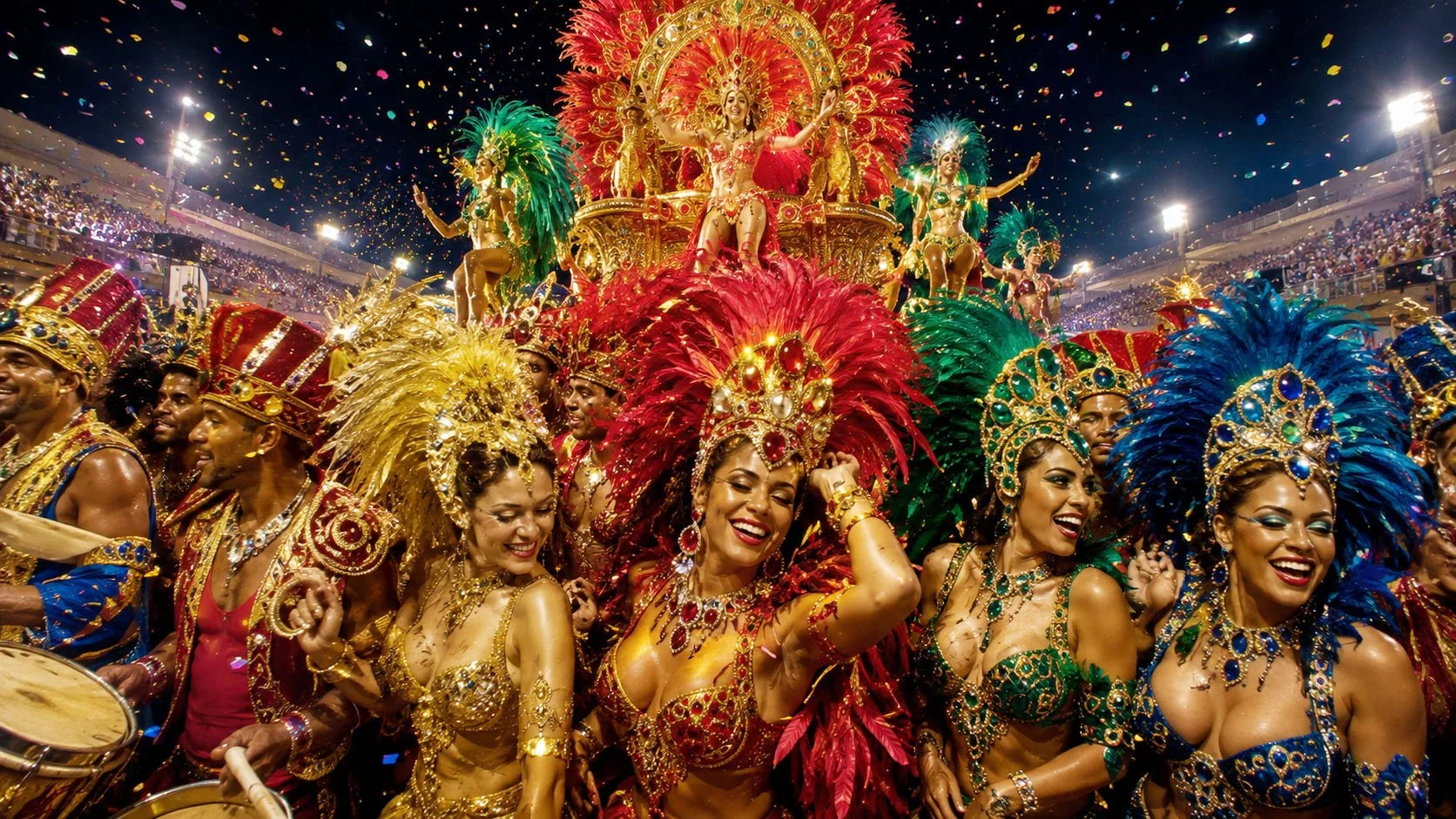
And on one particularly crowded float, the beauties are all dressed up—with absolutely nowhere to go.
Not that they seem worried.
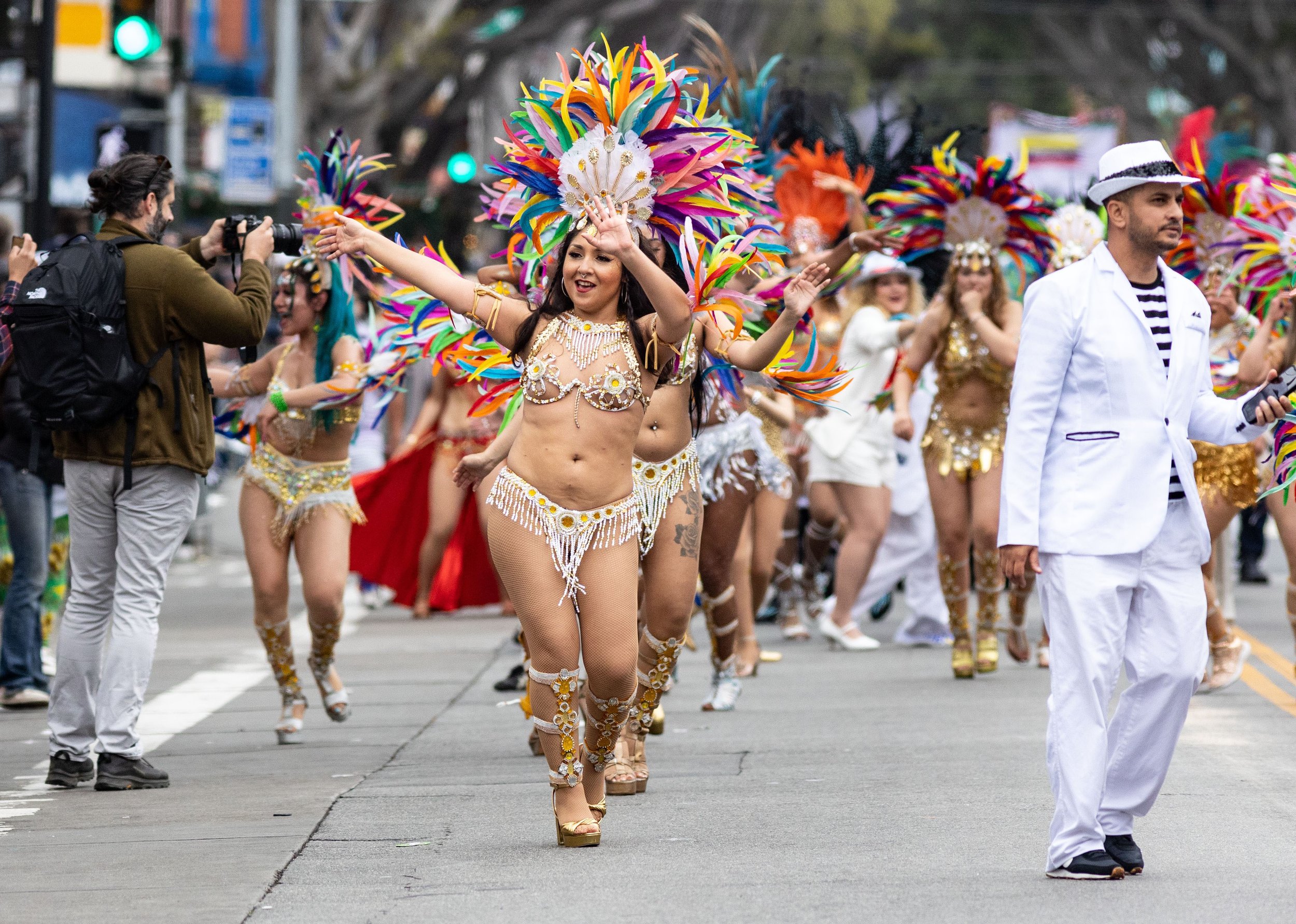
They are laughing. They are dancing. They are shimmying shoulder to shoulder in costumes made from crystals, sequins, feathers and what appears to be a magnificent shortage of fabric. Every inch of the float is occupied. Every beat demands movement. Every performer is determined to find just enough room for one more samba step.
It is glamorous gridlock—Rio style.
THE GREATEST SHOW ON EARTH
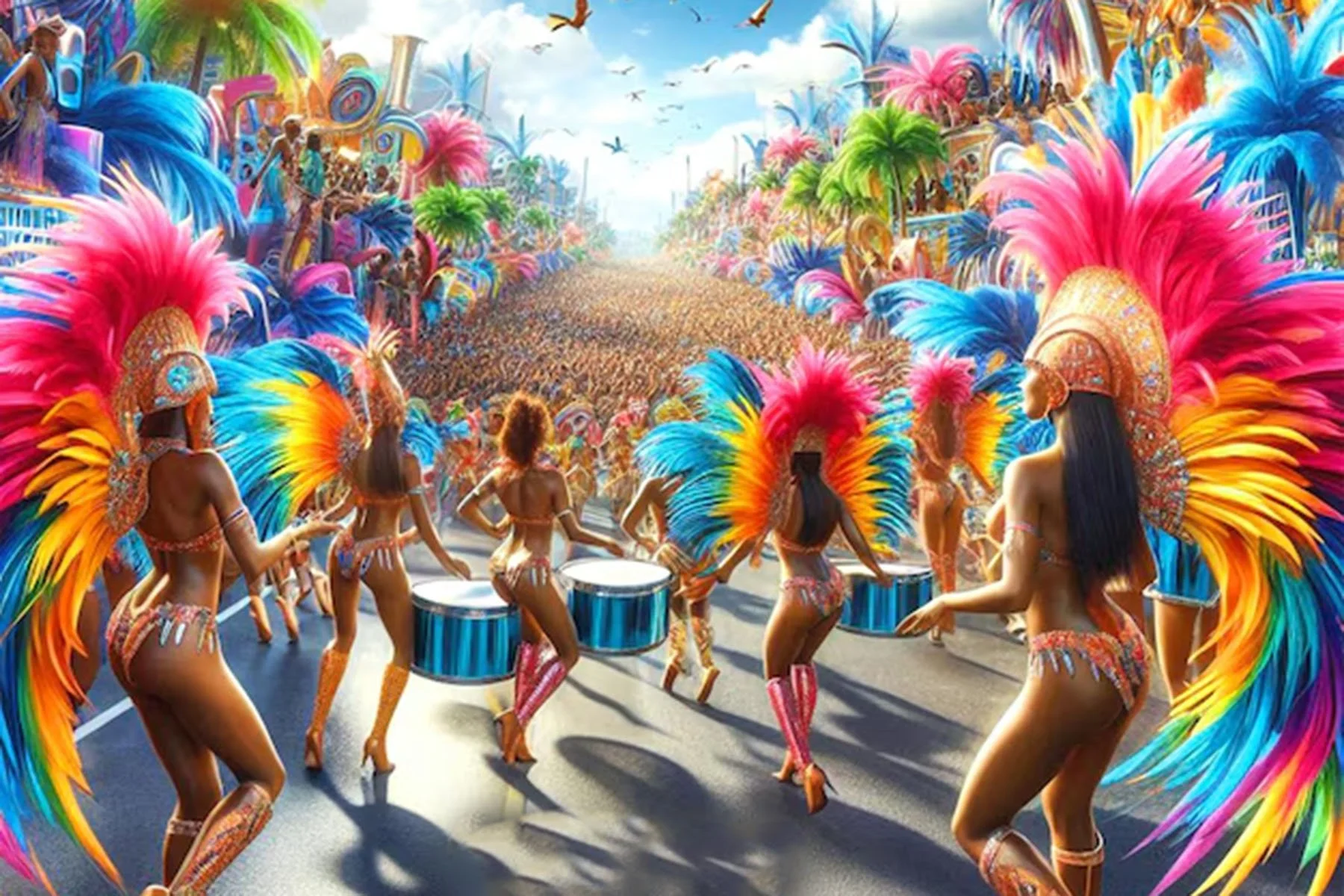
Rio Carnival is not simply a spectacle staged for visitors. It is a vast cultural undertaking rooted in neighbourhoods, community pride and Afro-Brazilian musical traditions.
The samba schools are not schools in the ordinary sense. They are year-round cultural organisations: armies of designers, welders, sculptors, seamstresses, composers, dancers, percussionists and volunteers, all working towards a parade that may last little more than an hour—but can define a community for generations.
Each school chooses an enredo, or theme, and turns it into a complete moving world. Music, costume, choreography and monumental floats must tell the same story as thousands of participants travel down the avenue together.
This is art on an almost impossible scale.
The costumes can take months to create. Floats rise several storeys high. Percussion sections drive the procession with a physical force that is felt as much as heard. Behind the glamour lies discipline: timing, harmony, evolution and visual coherence all matter when the judges deliver their verdict.
In Rio, beauty may arrive in a G-string—but she still has to hit her mark.
THE AVENUE THAT NEVER SLEEPS
The official name of Rio’s Sambadrome is the Passarela Professor Darcy Ribeiro, although almost everyone knows it as the Sambódromo da Marquês de Sapucaí. Designed by the great Brazilian modernist Oscar Niemeyer and inaugurated in 1984, it gave the samba-school parades a permanent theatrical home.
For Carnival, that long concrete avenue becomes a river of light.
The grandstands roar. Fireworks split the sky. Drummers pound out the heartbeat of the school. Singers carry the samba-enredo through the night, while dancers, flag bearers and vast sculpted creations sweep past in waves of gold, emerald, scarlet and electric blue.
From a distance it can look effortless. Up close, it is controlled chaos: towering headdresses, high heels, heat, nerves and thousands of moving bodies all trying to stay perfectly together.
Then comes the float.
It glides into the Sambadrome like a jewelled palace that has decided to go dancing. On top, a dazzling cast of women sparkle beneath the floodlights. Feathers sway above their heads. Crystals flash across sun-kissed skin. The costumes are bold, the smiles are wicked and personal space has officially left the building.
One performer turns sideways to make room. Another squeezes past a golden sculpture. A third throws her head back and laughs because there is no point pretending this is anything other than fabulous mayhem.
There is nowhere to sit. Nowhere to hide. And barely enough space to wiggle.
Naturally, they wiggle anyway.
BEAUTY WITH A BACKBONE
The sensuality of Rio Carnival is impossible to miss—but reducing the parade to bare skin would miss the real story.
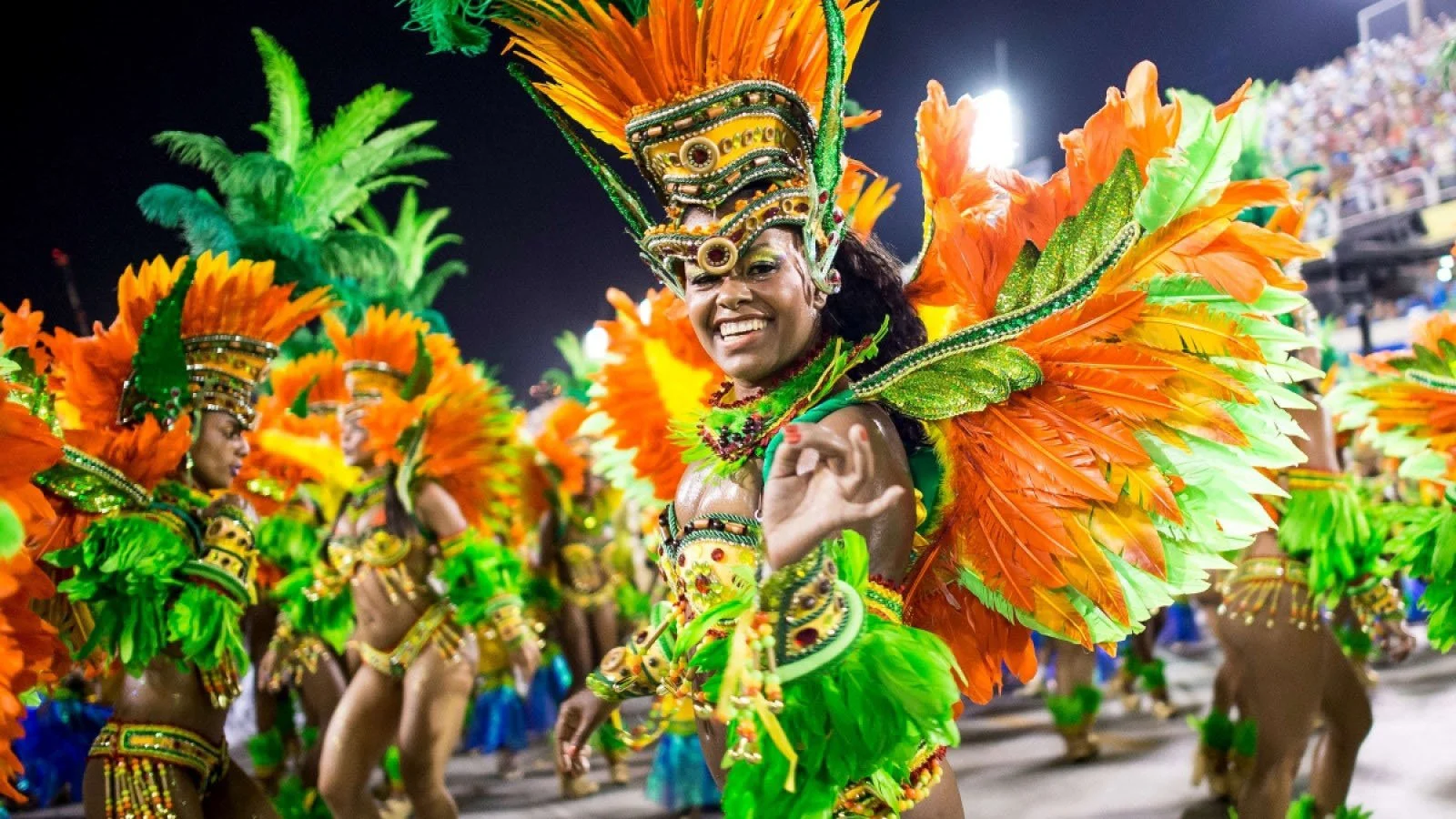
These performers are athletes and artists. Samba in a towering feathered costume, under fierce lights, on a moving platform, while smiling as if gravity has personally agreed to take the night off, and the skill becomes obvious.
The body is not an apology here. It is rhythm, confidence and theatre.
The cheekiness is part of the contract between performer and crowd: a raised eyebrow, a teasing turn, a smile that says she knows the entire Sambadrome is watching—and intends to make the most of it.
Rio does not whisper glamour. It sends glamour down the avenue with a drum corps.
BEYOND THE BIG PARADE
The Sambadrome may provide the world-famous images, but Carnival spills across Rio. Street blocos fill neighbourhoods with brass bands, costumes and spontaneous dancing. Traditional balls bring their own elegance. Rehearsals, workshops and community events stretch the season far beyond a handful of parade nights.
At the City of Samba, the Special Group schools build their floats and costumes in enormous workshops covering about 92,000 square metres. This is where fantasy acquires steel frames, paint, feathers and thousands of hours of human labour before emerging beneath the lights.
That scale explains why the final parade feels less like entertainment and more like a city dreaming out loud.
THE WORLD OF 7 VERDICT
Rio Carnival is loud, lavish, sensual and gloriously excessive. Yet beneath the glitter is something even more powerful: belonging.
Every school carries a flag. Every costume contributes to a story. Every drumbeat speaks for a community. The parade belongs to the designers working through the night, the musicians rehearsing for months, the families who have supported the same colours for generations—and the performers who climb onto a packed float and somehow make overcrowding look irresistible.
The beauties may have nowhere to go.
But with Rio dancing beneath them, why on earth would they want to leave?
RIO CARNIVAL—WHERE EVEN A TRAFFIC JAM COMES DRESSED IN FEATHERS.