
BRAZILIAN TREE SHOWS POWERFUL ANTI-COVID ACTIVITY IN THE LAB
By Ray Carmen
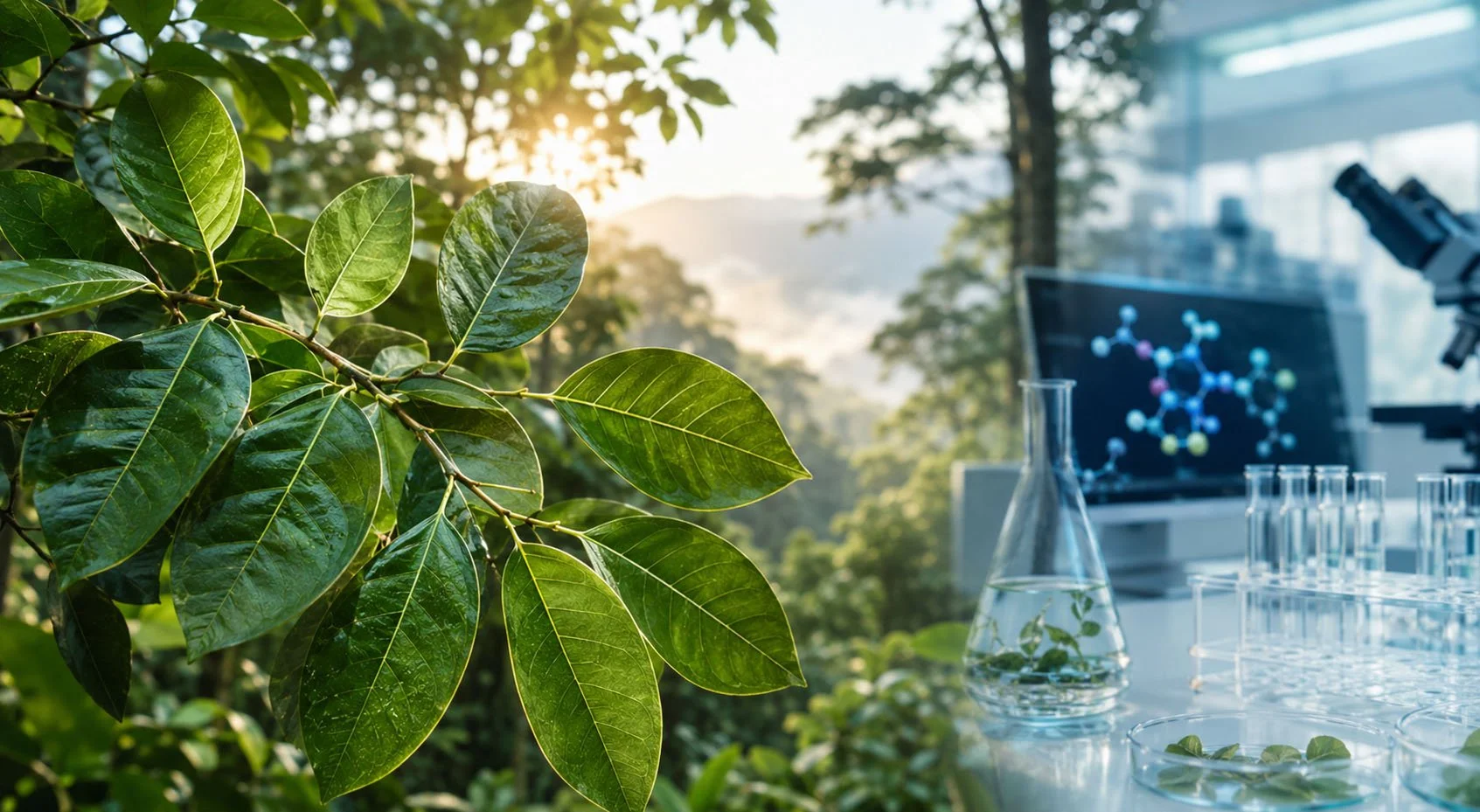
Scientists have discovered promising antiviral compounds in the leaves of Copaifera lucens, a tree native to Brazil’s Atlantic Forest.
Researchers from Brazil and Egypt isolated substances called galloylquinic acids and tested them against SARS-CoV-2, the virus responsible for Covid-19.
In laboratory cell experiments, the compounds interfered with several stages of the virus’s life cycle. They reduced viral entry, disrupted replication and lowered the production of important viral proteins.
Researchers reported up to 93 per cent viral inhibition at one tested concentration.
The compounds also appeared to affect the virus’s spike protein, RNA polymerase and papain-like protease—three important components involved in infection and replication.
The findings are exciting because medicines that attack a virus through several mechanisms may be harder for it to resist.
However, claims that scientists have found a tree capable of “killing Covid” go too far.
The experiments were conducted in cultured cells and involved a SARS-CoV-2 strain collected in 2020. The compounds have not yet been proven safe or effective in human patients, and their performance against currently circulating variants remains unknown.
Further animal studies, safety testing and controlled human trials would be required before any treatment could be approved.
There is also no evidence that chewing the leaves, brewing them as tea or taking unregulated copaiba products can prevent or treat Covid-19.
The discovery is therefore not a Covid cure—but it is a genuinely promising starting point in the search for new antiviral medicines.