
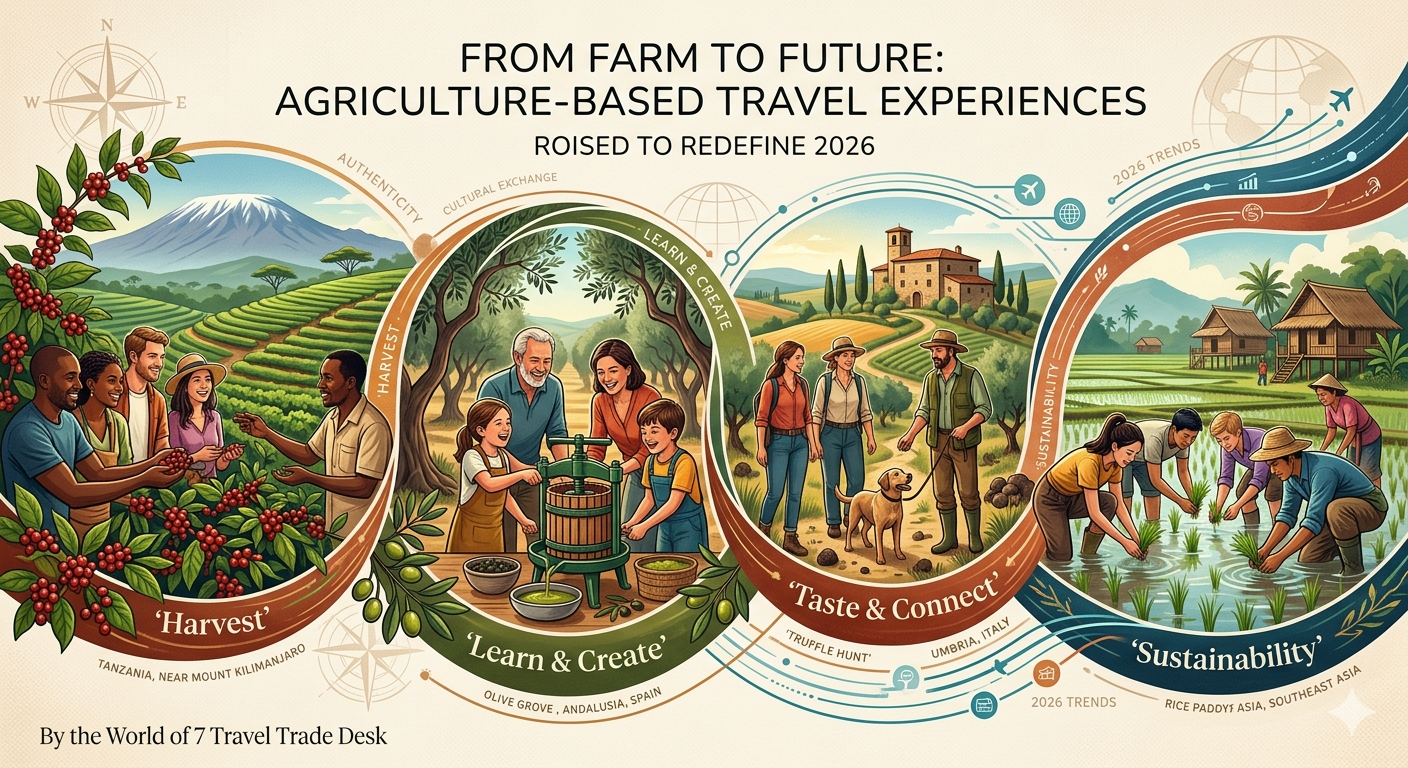
From Farm to Future
Agriculture‑Based Travel Experiences
Poised to Redefine 2026
As travel agents and tour operators plan their content and offerings for 2026, one of the most compelling and distinctive trends emerging globally is the rise of agriculture‑based travel experiences — a move that goes beyond traditional farm stays into immersive, culturally rich, and hands‑on exploration.
Why Agriculture and “Farm Charm” Is Becoming a Selling Point
In 2026, travellers are increasingly prioritising meaningful interaction with local environments and communities. This has given birth to what industry observers are calling “farm charm” travel: a trend where guests opt to participate in agricultural life rather than just observe it. Across regions from Europe to Africa and Asia, lodges and boutique stays are integrating seasonal farming experiences into luxury travel products — whether it’s harvesting coffee cherries at Tanzania’s Arusha Coffee Lodge or truffle hunting in Italy’s Umbria.
This trend isn’t about rustic novelty. It’s rooted in a larger shift toward authentic, narrative‑driven travel — offering travellers the chance to touch, taste, and shape the destinations they visit with meaningful engagement and skill‑building activities.
What This Means for the Travel Trade
1. New Product Development Opportunities
Tour operators and travel advisors now have a chance to diversify offerings with season‑linked, experiential agricultural packages — pairing farm activities with culinary experiences, sustainability insights, and local culture. These can be packaged as short retreats, multi‑week agritourism circuits, or as add‑on experiences in regions known for wine, coffee, olives, spices and more.
2. Seasonal Selling Windows
Unlike static cultural attractions, many of these activities take place only during specific months — harvest time, planting season, or production cycles. This scarcity creates premium selling opportunities, and encourages early‑booking behaviours and creative itinerary structuring — an advantage for travel agents planning shoulder‑season programmes.
3. Aligning with Sustainability and Purpose‑Led Travel
Agriculture‑based stays fit organically into the larger sustainability narrative now dominating travel planning. According to broader 2026 industry insights, travellers are increasingly seeking depth and authenticity — not just crowds and checklists — and want their trips to feel intentional and impactful.
By framing experiences in terms of local community engagement, environmental stewardship, and cultural exchange, agents can appeal to high‑value segments that value purpose and connection.
How to Package and Sell These Experiences
Thematic Journeys: Build trips around harvest calendars — grape picking in Italy’s Tuscany, spice harvesting in Sri Lanka, or olive gathering in Andalusia.
Culinary + Culture: Combine agricultural activity with hands‑on cooking sessions, food markets tours, and local chefs’ insights.
Learning Travel: Position programmes as skill‑building retreats that offer certificates or social media‑ready moments — perfect for younger and experience‑driven travellers.
Family or Multi‑Generational Tours: Intergenerational groups can enjoy meaningful group activities that also make travel feel more cohesive.
A Strategic Product Differentiator for 2026
The agriculture‑based travel movement is more than a “nice to have.” It aligns with the broader shifts shaping travel in 2026: demand for authentic engagement, purposeful experiences, and sustainable footprints. Giving travellers the opportunity to interact with the land, understand local foodways, and participate in traditional practices is a clear way for the trade to differentiate their products — and command higher margin because of the perceived emotional and educational value.