
THE WORLD MEETS AT SEA
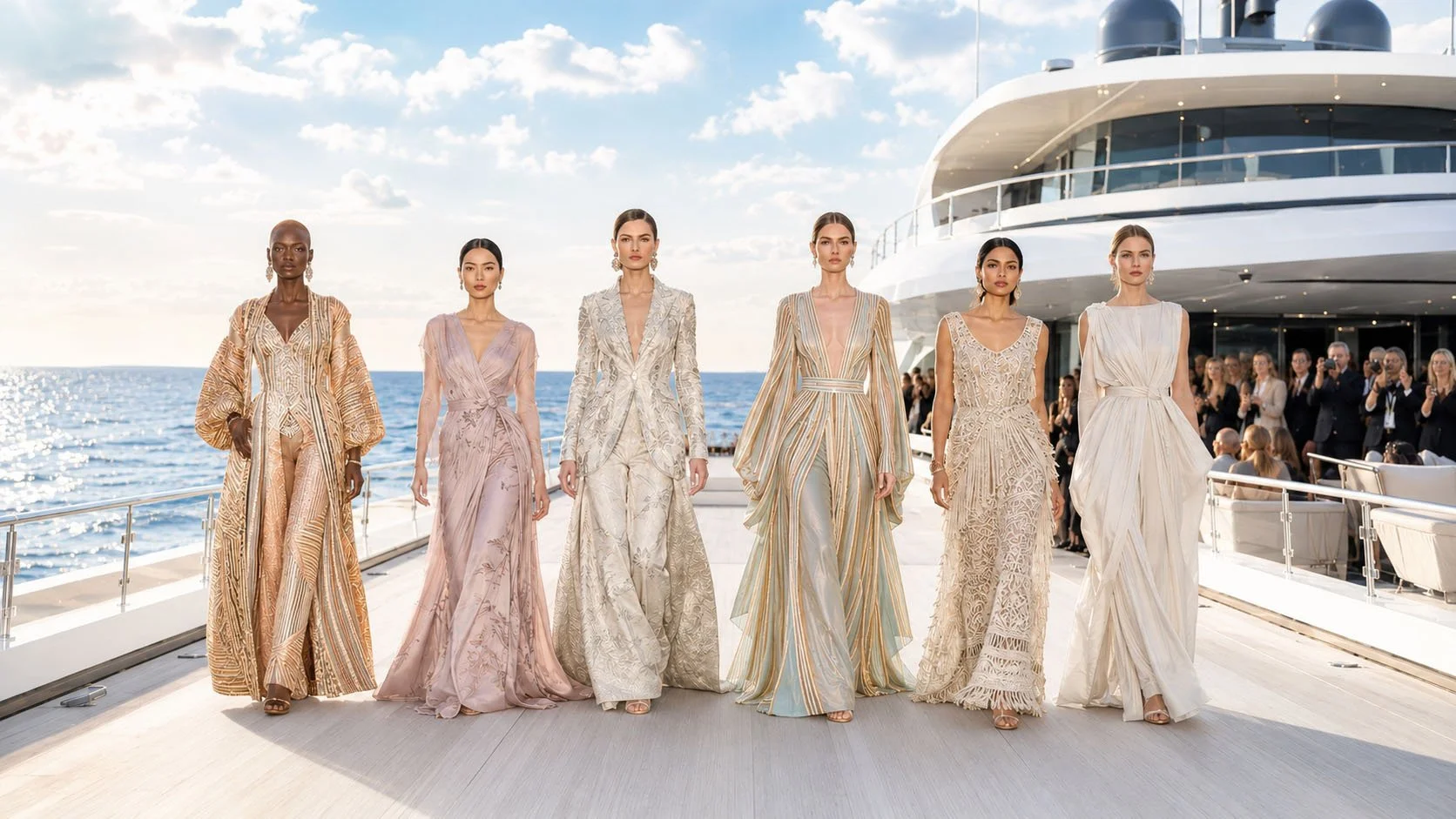
Six Women. Six Continents. One Horizon.
By Ray Carmen
Imagine a magnificent superyacht sailing through the open ocean as the sun begins to descend towards the horizon.
The water turns gold. A warm evening breeze moves across the deck and the upper level of the yacht is transformed into an elegant floating runway.
There are no city buildings, crowded streets or conventional fashion-show surroundings. There is only the yacht, the sky and the endless sea.
Six women step forward, each connected to one of the world’s six inhabited continents: Africa, Asia, Europe, North America, South America and Oceania.
This is “The World Meets at Sea”—an ambitious W7 fashion rendezvous created to celebrate international design, craftsmanship, beauty and identity.
The idea is simple but spectacular: six women, six fashion stories and one shared horizon.
Each model would wear the work of a designer or creative collaboration associated with her continent. The selections would be based upon originality and artistic merit rather than stereotypes. Every look would have its own personality, materials and story while remaining part of one coherent visual production.
The African contribution might explore contemporary tailoring, innovative textiles or the work of artisans transforming traditional techniques into modern luxury. Asia could bring together technological experimentation and ancient disciplines of embroidery, weaving or fabric construction.
Europe might offer couture architecture and generations of atelier craftsmanship. North America could express cultural energy and modern individuality, while South America might introduce exceptional colour, movement and handwork. Oceania could explore the relationship between fashion, landscape, natural materials and environmental consciousness.
These would not be costumes representing entire continents. No single person or garment could ever carry such an enormous responsibility. Instead, each participant would present one authentic creative point of view within a much larger and more diverse story.
The women themselves would be more than models. Each would have a voice.
In individual interviews, they could speak about identity, confidence, beauty and their relationship with the place they call home. Designers and craftspeople could explain the origins of the garments, the techniques used to make them and the ideas they hope to carry into the future.
The runway would begin shortly before sunset. One by one, the women would walk along the yacht’s upper deck as the ocean becomes the theatrical backdrop.
As the light changes, so would the mood of the clothes. Metallic details would catch the final rays of the sun. Lightweight fabrics would move naturally in the sea air. Structured silhouettes would appear almost sculptural against the open horizon.
The six women would eventually come together for the final image—six individual stories united on one stage.
The production could become much more than a series of photographs. It could include a short film, personal interviews and a documentary following the preparation of the clothes and the journey to the rendezvous.
Cameras positioned aboard the yacht and a nearby support vessel could capture the runway from multiple perspectives. Carefully managed aerial photography could reveal the yacht as a small, brilliant stage surrounded by the immense scale of the ocean.
The beauty of the idea lies in its contrast. Fashion is often associated with famous cities, grand hotels and established cultural capitals. By moving the runway to the sea, W7 would create a new space—one belonging to no single country and symbolically open to the entire world.
Such an event would require serious planning. The production should take place in calm, legally permitted waters within reach of professional maritime assistance. An experienced captain, marine safety officer, medical support and a dedicated support vessel would be essential.
Weather conditions would need to be monitored carefully, with a flexible schedule and clear emergency procedures. Every model, crew member and guest would need to understand the safety arrangements before leaving port.
Environmental responsibility must also be central to the project. Efficient routing, responsible sourcing, reduced waste and a properly measured production footprint would help ensure that the beauty of the ocean is respected rather than merely used as scenery.
The words “world first” should only be used after thorough research confirms that no comparable fashion event has previously taken place. Until then, “The World Meets at Sea” can confidently be described as an unprecedented W7 editorial concept.
Its real power would not depend upon making a record. It would come from bringing six different creative voices together without asking them to become the same.
Against the vastness of the ocean, nationality, distance and conventional borders would briefly disappear. What would remain is individuality, artistry and a shared human desire to create beauty.
Six women. Six continents. One superyacht. One extraordinary horizon.
The world would not simply watch a fashion show.
For one unforgettable evening, the world would meet at sea.