
THE 67 WORDS THAT STILL SHAPE THE MIDDLE EAST
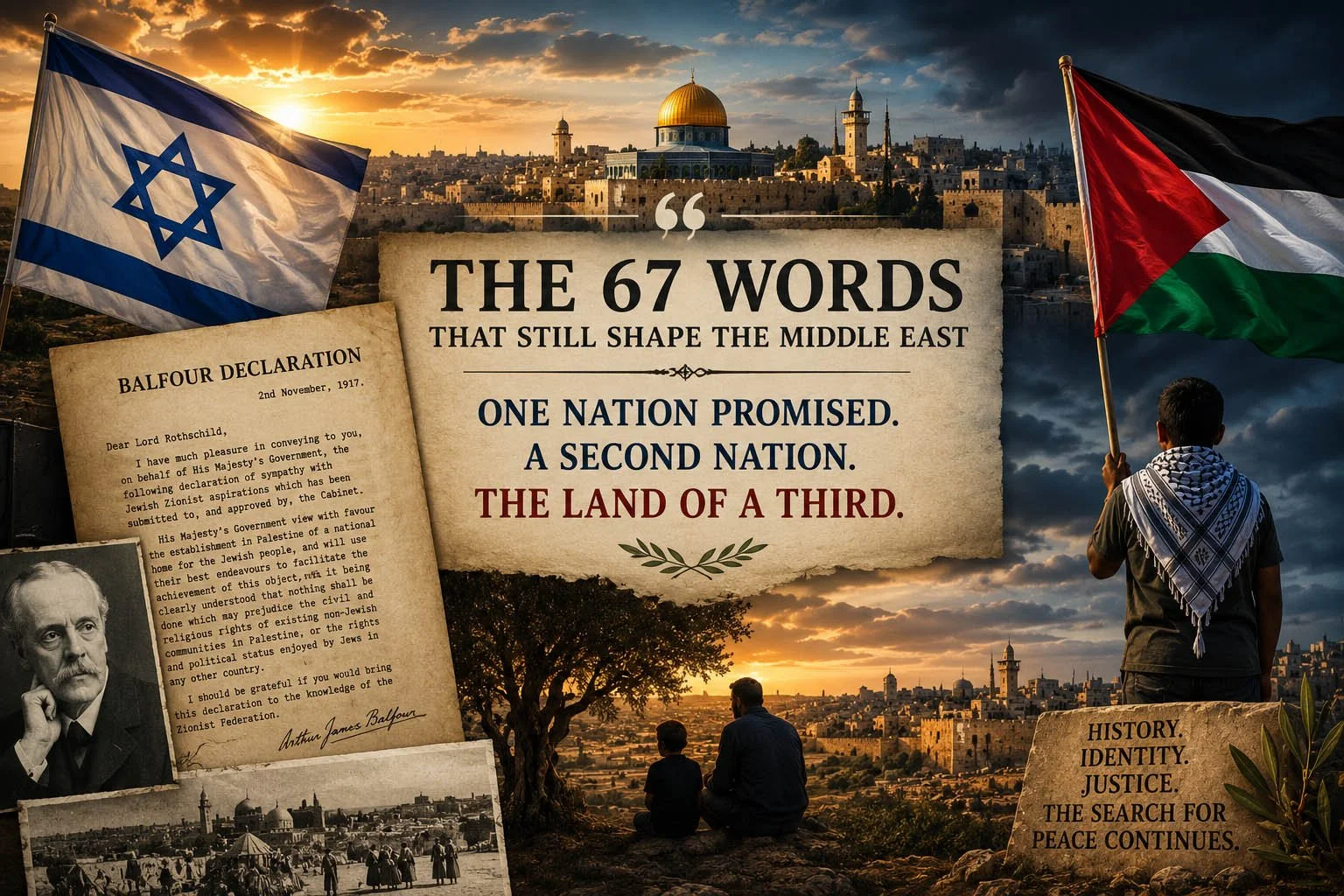
One Nation Promised. A Second Nation. The Land of a Third.
By Publisher Ray Carmen
Few documents in modern history have generated as much debate as the short declaration issued by the British Government in 1917 that became known as the Balfour Declaration.
Containing just 67 words, the letter expressed Britain’s support for the establishment of “a national home for the Jewish people” in Palestine while also stating that nothing should prejudice the civil and religious rights of the existing non-Jewish communities living there.
For supporters, the declaration represented an important milestone in the movement that ultimately led to the creation of the State of Israel in 1948 after centuries of Jewish dispersion and persecution.
For Palestinians, however, the declaration has long been viewed as the beginning of a profound historical injustice. Many argue that Britain made promises affecting a land that was already home to an overwhelmingly Arab population, without consulting those who lived there.
The competing interpretations of those 67 words continue to influence politics across the Middle East more than a century later. Historians continue to debate Britain’s wartime commitments, the collapse of the Ottoman Empire, the British Mandate for Palestine and the events that eventually produced one of the world’s longest-running conflicts.
Today, discussions surrounding the declaration remain highly emotional because they touch on questions of history, identity, sovereignty, displacement and international law. For Israelis and Palestinians alike, the legacy of those few sentences is intertwined with national memory and competing historical narratives.
Whether viewed as a promise fulfilled, a diplomatic milestone or the origin of an enduring dispute, the Balfour Declaration remains one of the most consequential political statements ever written.
More than one hundred years later, those 67 words continue to shape international diplomacy and the search for a peaceful future for both Israelis and Palestinians.