
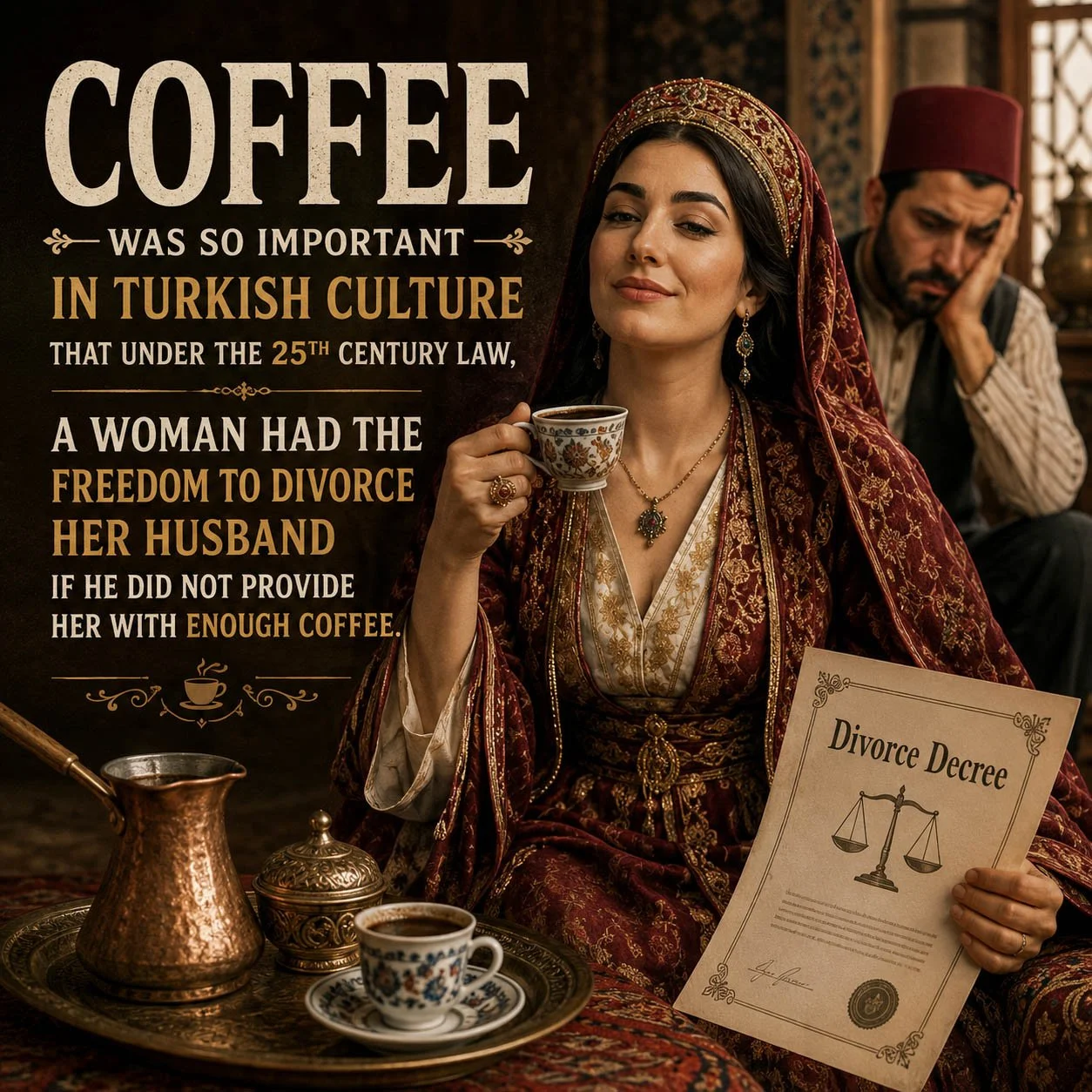
COFFEE WAS SO IMPORTANT IN TURKISH CULTURE…
There are few drinks in the world with a history as rich and celebrated as Turkish coffee. Introduced to the Ottoman Empire during the 16th century, coffee quickly became far more than a simple refreshment. It evolved into a symbol of hospitality, friendship, respect and family life, with coffee houses becoming important centres of conversation, literature and community.
One of the most enduring stories from Ottoman history is that a husband was expected to provide his wife with an adequate supply of coffee. According to long-standing tradition, if he repeatedly failed to do so, it could become grounds for a woman to seek a divorce. While historians continue to debate how consistently this was applied in practice, the story reflects just how highly coffee was valued within Ottoman society.
The tradition also highlights the important role coffee played in everyday family life. Serving Turkish coffee was considered an act of care and respect, and preparing it well became a cherished skill passed down through generations. Even today, Turkish coffee remains an important part of celebrations, hospitality and marriage customs, where it is often served during engagement ceremonies.
In 2013, Turkish coffee culture received international recognition when it was inscribed on UNESCO’s Representative List of the Intangible Cultural Heritage of Humanity, acknowledging its unique place in history and its continuing importance to Turkish identity.
From royal palaces to family homes, Turkish coffee has been bringing people together for more than 500 years. Its remarkable story reminds us that sometimes the simplest traditions can become part of a nation’s cultural heritage.
One small cup. Five centuries of history. A tradition that continues to unite generations.
By Publisher Ray Carmen