
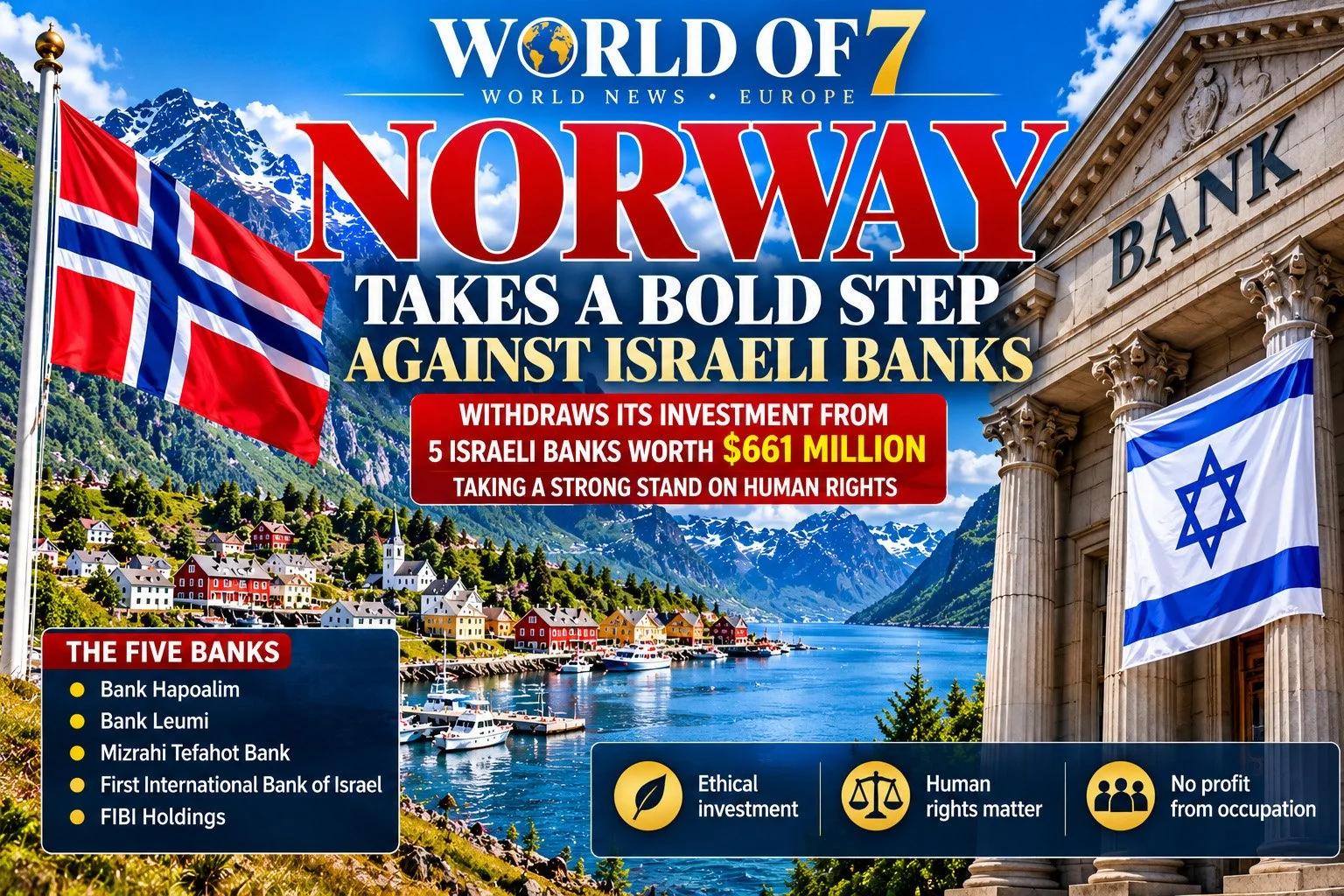
When investment meets human rights
By Publisher Ray Carmen
In August 2025, Norway's sovereign wealth fund excluded five Israeli-listed banking entities from its investment portfolio, citing concerns about their links to Israeli settlements in occupied Palestinian territory. The value of the affected holdings was approximately US$661 million - a significant financial decision with an even larger ethical debate behind it.
A DECISION THAT MADE INTERNATIONAL HEADLINES
On 25 August 2025, Norges Bank Investment Management announced the exclusion of five Israeli banking entities from Norway's Government Pension Fund Global. The exclusions followed assessments by the independent Council on Ethics and were approved by Norges Bank's executive board. The announcement was not made in October 2026: the TikTok story refers to a decision from the previous year.
WHICH FIVE ENTITIES WERE NAMED?
The entities were Bank Hapoalim, Bank Leumi Le-Israel, Mizrahi Tefahot Bank, First International Bank of Israel and FIBI Holdings. FIBI Holdings is the parent holding company of First International Bank, so the five names do not represent five entirely unrelated banking groups. Reuters reported that the Norwegian fund's stakes in these five entities were worth about US$661 million as of 30 June 2025.
WHY DID NORWAY WITHDRAW?
The Council on Ethics found an unacceptable risk that the companies could contribute to serious violations of people's rights in situations of war and conflict. Its analysis examined banking services connected with the development and maintenance of Israeli settlements in the occupied West Bank, including East Jerusalem. The Council argued that financing and financial guarantees can be essential to construction activity in settlements regarded as unlawful under international law.
NOT A FINE - AND NOT A COMPLETE BOYCOTT
The US661 million total.
THE ARGUMENT OVER INVESTMENT AND RESPONSIBILITY
Supporters of the decision see it as an example of investors applying ethical rules rather than focusing exclusively on returns. Critics of divestment more broadly argue that withdrawing capital may reduce the scope for engagement and dialogue, and that economic measures can be politically divisive. Norges Bank said it considered other measures, including active ownership, before concluding they would not be appropriate in these cases.
A LESSON FOR GLOBAL FINANCE
Norway's decision asks a question that extends far beyond the Middle East: when investment decisions intersect with alleged abuses of human rights, how much responsibility belongs to those supplying capital? For one of the world's largest investors, the answer on 25 August 2025 was to sell these holdings and remove the companies from its investable universe. The wider debate - over ethics, law, investment and peace - remains unresolved.