
THE LAST FLIGHT OF CONCORDE — THE DAY THE SUPERSONIC ERA ENDED
By Publisher Ray Carmen.
For nearly three decades, Concorde represented the pinnacle of commercial aviation. Sleek, elegant and capable of flying at more than twice the speed of sound, it transformed transatlantic travel and became one of the most recognisable aircraft ever built.
When Concorde entered commercial service in 1976, it offered something no other passenger aircraft could—speed. Flying at around Mach 2.04, passengers could leave London in the morning and arrive in New York in time for breakfast, crossing the Atlantic in just over three hours.
Operated by British Airways and Air France, Concorde quickly became a symbol of prestige. Its passenger list included royalty, presidents, business leaders, Hollywood stars and musicians. Travelling aboard Concorde was not simply about reaching a destination—it was about experiencing one of the greatest engineering achievements of the twentieth century.
Yet despite its success, Concorde faced significant challenges. High operating costs, limited seating capacity and restrictions on supersonic flight over land meant the aircraft could serve only a relatively small number of routes.
The programme suffered a devastating blow on 25 July 2000, when Air France Flight 4590 crashed shortly after take-off from Paris, claiming the lives of all 109 people on board and four people on the ground. The fleet was grounded while investigators identified the cause and engineers introduced safety improvements.
Although Concorde returned to service in 2001, the aviation industry had changed. The downturn in air travel following the September 2001 terrorist attacks, combined with rising maintenance costs and ageing aircraft, made continued operations increasingly difficult.
In April 2003, British Airways and Air France announced that Concorde would be retired.
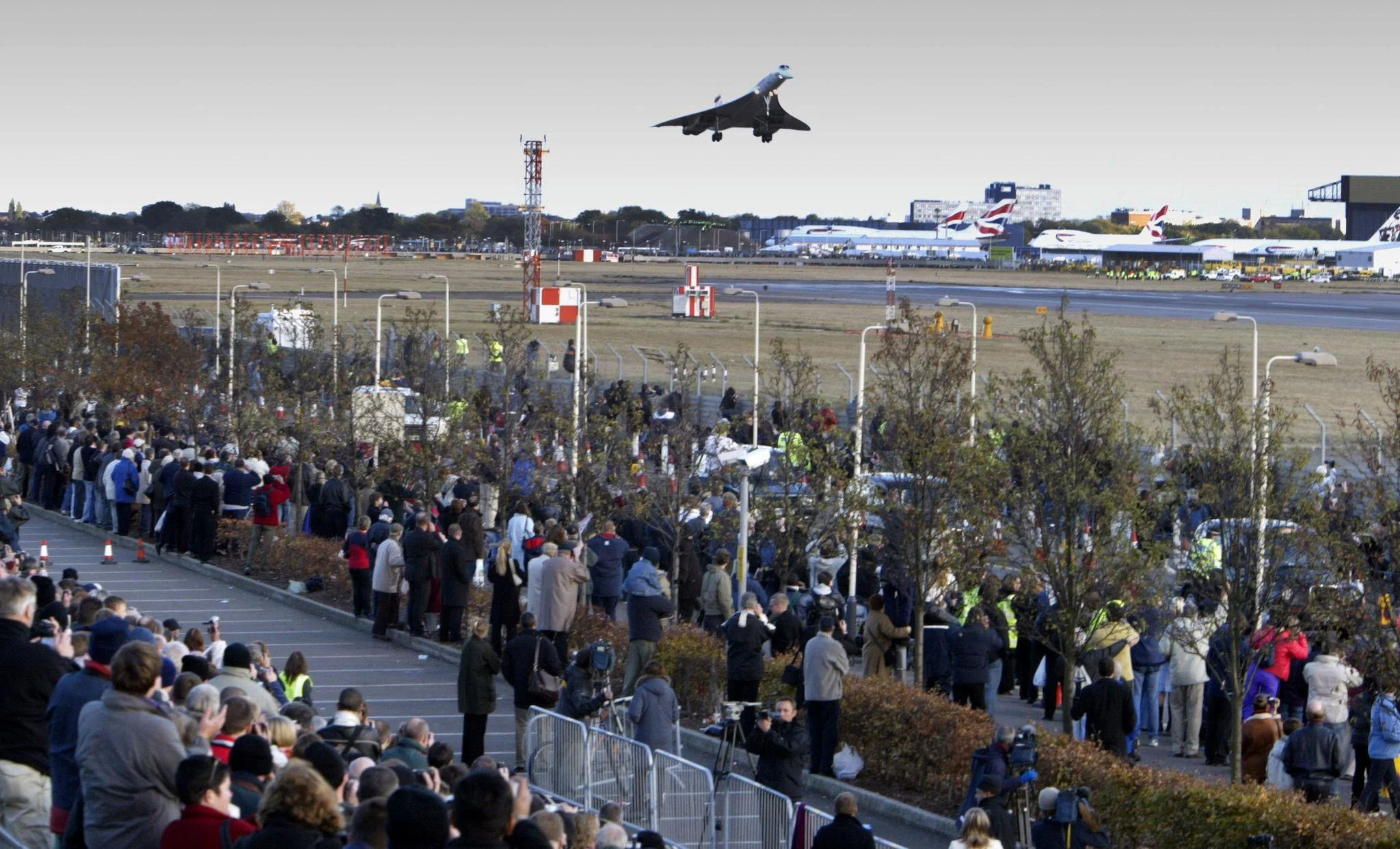
The final commercial flights took place in October 2003, attracting enormous crowds at airports on both sides of the Atlantic. Thousands gathered to watch the aircraft land for the last time, marking the end of one of aviation's most extraordinary chapters.
For many enthusiasts, it was an emotional farewell. Concorde had shown the world that commercial supersonic travel was not only possible but practical. Even today, no passenger airliner has matched its combination of speed, elegance and global prestige.
Although the aircraft now reside in museums across Britain, France, Germany and the United States, Concorde's legacy continues to inspire a new generation of engineers.
Companies such as Boom Supersonic are developing new supersonic passenger aircraft, while researchers continue to explore quieter and more efficient technologies that could once again make high-speed commercial travel a reality.
Concorde may have completed its final flight, but its influence has never faded.
It remains a symbol of human ambition, engineering brilliance and the belief that the impossible can become possible.
THE ENGINES MAY HAVE FALLEN SILENT—BUT THE DREAM OF SUPERSONIC FLIGHT LIVES ON.